Quick Take
- Narration: Hanako Footman brings an unhurried, contemplative quality to the prose that matches the book’s philosophy; Marie Kondo’s own introduction adds a layer of personal intimacy.
- Themes: The cultural roots of mindful living, the Japanese concept of ma (the meaningful pause), mastery as a form of spiritual practice
- Mood: Quietly beautiful, meditative, and genuinely illuminating
- Verdict: A personal and culturally generous book that deepens the KonMari philosophy beyond tidying, though readers seeking the practical guidance of earlier works will find something more contemplative here.
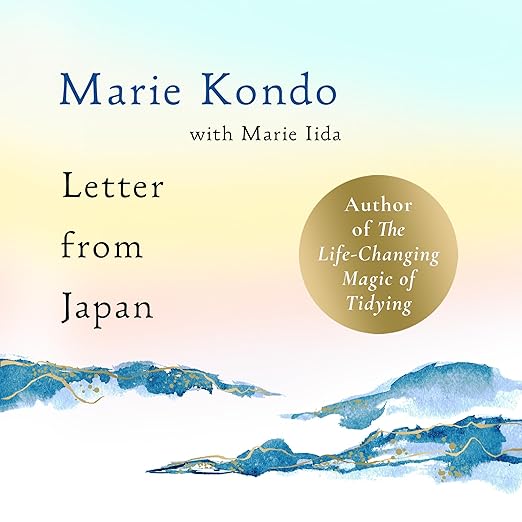
I listened to Letter from Japan over the course of a slow week in October, a little each morning before anything else started. That was the right pace for it. Marie Kondo is not asking for urgency here. She is asking for something closer to what she describes as ma, the Japanese concept of what is left unsaid, the meaningful pause, the space between things that gives those things their definition. To rush through this book would be to miss the point the book is making.
Kondo is known globally for a method, the KonMari approach to tidying, that has spawned television series, certified consultants, and millions of reorganized closets. What Letter from Japan makes clear is that the method was never just about the closets. It was always an expression of a set of Japanese values and sensibilities that Kondo grew up inside, that shaped the way she sees objects, space, ritual, and the relationship between physical environment and interior life. This book is her account of those values: where they come from, how they are expressed in Japanese culture, and what they might offer a reader encountering them for the first time.
Our Take on Letter from Japan
The six chapters, Cherish, Perfect, Consider, Harmonise, Purify, and Savour, each take a guiding principle and explore it through specific Japanese cultural practices and forms. Sakura appreciation as a practice of Cherish, the tea ceremony as an expression of kiwameru, the Japanese concept of mastery through dedicated practice, umami as an illustration of how something simple can nourish the heart. These are not long academic treatments. They are meditations, organized around specific cultural touchstones and written with the clear, unhurried prose that Kondo’s readers will recognize from her earlier work.
What makes this book feel genuinely generous rather than merely decorative is that Kondo places herself within the cultural inheritance she is describing. This is not a book about Japan from the outside. It is a book about how Kondo herself was formed by these practices, how she continues to return to them, and how her global success has given her a perspective on them that she did not have before. Readers who have followed her career report feeling they understand her better as a person after reading this, and that sense of access to the author’s inner life is one of the rarer things a book like this can offer.
Why Listen to Letter from Japan
Hanako Footman handles the narration with a lightness that suits the material. The book does not want to be performed. It wants to be heard the way you hear something you are sitting with rather than processing. Footman provides that quality. The book includes an introduction narrated by Kondo herself, which is a meaningful addition. Her voice in the opening establishes something about the intimacy of the project that carries through the subsequent narration, even as Footman takes over the main text.
The audio format suits this particular book very well. Reading Letter from Japan on the page would work, but hearing it, especially in those morning stretches I mentioned, creates a meditative quality that the content explicitly invites. The chapters are short enough to hold without flagging and substantial enough to stay with after the listening ends.
What to Watch For in Letter from Japan
This is not a how-to book. Readers who loved The Life-Changing Magic of Tidying Up for its clear, practical instructions will find something tonally and formally different here. The practical application is present but implied rather than enumerated. Kondo is offering a philosophical and cultural frame, not a cleaning checklist. Reviewers who went in expecting the latter and found the former report some initial adjustment before settling into what the book is actually doing.
One reviewer noted mild discomfort with a section touching on manga and anime as personal archetypes, finding it somewhat at odds with the book’s otherwise traditional cultural sensibility. This is a small portion of the text, and other readers found it an interesting window into how Japanese popular culture intersects with older traditions. Your experience will depend on your own relationship to that cultural material.
Who Should Listen to Letter from Japan
Kondo’s existing readers who want to understand the philosophy behind the method rather than the method itself will find this the most rewarding thing she has published. Travel readers with an interest in Japan as a cultural and philosophical space rather than a tourist destination will also find it genuinely informative. Those hoping for practical tidying guidance should return to the earlier books. Listeners who find the pace of meditative nonfiction rewarding, who enjoy Anne Lamott or Pico Iyer in contemplative mode, will feel comfortable here. Hanako Footman’s narration and Kondo’s own introduction together make this one worth choosing in audio.
Frequently Asked Questions
Is Letter from Japan similar in format to The Life-Changing Magic of Tidying Up?
No. The earlier books are practical and instructional. Letter from Japan is a meditative, culturally grounded exploration of the Japanese values that underlie the KonMari method. Readers expecting tidying checklists will find something more philosophical and personal.
Does Marie Kondo narrate this audiobook?
Kondo narrates the introduction herself. The main text is read by Hanako Footman. The combination of Kondo’s personal voice in the opening and Footman’s narration of the chapters is described by reviewers as a meaningful choice that preserves intimacy while ensuring consistent professional quality.
What is the concept of ma that Kondo discusses, and how central is it to the book?
Ma refers to the meaningful pause, the space between things that gives them definition, what is left unsaid as a form of communication. It appears in the Harmonise chapter and threads through the book’s overall philosophy about restraint, attention, and the value of what is absent rather than only what is present.
Does Letter from Japan require prior familiarity with Japanese culture?
No. Kondo explains each cultural practice she references with enough context for the reader encountering it for the first time. Several reviewers note learning a significant amount about Japanese philosophy, ritual, and aesthetics without prior background. The book functions as an accessible cultural introduction.