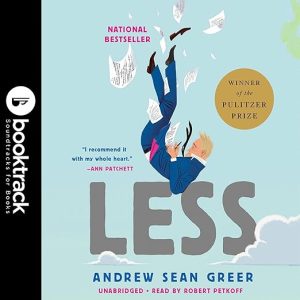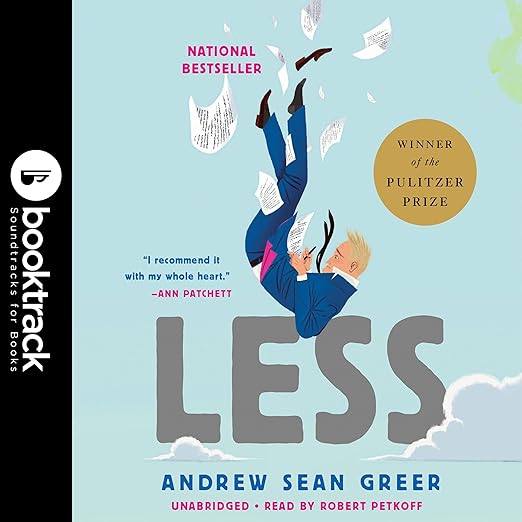
An ex-boyfriend's wedding invitation arrives in the mail, and Arthur Less does the only sensible thing a failed novelist about to turn fifty can do: he accepts every half-baked literary invitation on his desk and flees the country. Andrew Sean Greer's Pulitzer Prize-winning novel turns that flight into a genuinely global itinerary, Paris, Berlin, a Moroccan ski chalet, a Christian retreat center in southern India, a desert island in the Arabian Sea, and this audiobook edition tracks every absurd, escalating stop. Greer won the Pulitzer for Fiction with Less in 2018, a genuinely rare feat for a book this consistently, deliberately funny; comic novels tend to get overlooked by major literary prizes, and the New York Times Book Review's own praise for the novel's lyricism and beauty signals exactly how Greer earned the exception.
The Verdict, Briefly
Greer structures the novel as a chain of comic catastrophes, Less almost falling in love in Paris, almost falling to his death in Berlin, getting swept into a Saharan sandstorm before a Moroccan ski chalet, accidentally landing the sole writer-in-residence post at an Indian Christian retreat center, that never once feel like isolated set pieces. Each stop deepens the same underlying question: whether Less can outrun heartbreak by outrunning geography. The novel's final trick is a quiet one. Beneath all the slapstick and self-deprecation, Greer reveals it's a love story after all, both his first love and his last, and that reveal recontextualizes every earlier pratfall as something gentler in hindsight.
Robert Petkoff narrates, and it's worth naming honestly that his deep, extensively confirmed track record runs through narrative nonfiction and presidential biography rather than comic literary fiction; this is a genuine register departure for him. What does transfer is the control: he's praised elsewhere for bringing gravity without tipping into performative emotion, and Greer's prose specifically rewards that kind of restraint, since the comedy here works through understatement and elegant phrasing rather than broad vocal mugging. No listener review in this book's data speaks directly to his comic timing, so treat this as a promising extension of a proven skill set rather than a confirmed one.
Greer also plays a structural trick worth flagging for attentive listeners: the novel's narrator is never explicitly named through most of the book, someone recounting Less's misadventures from a vantage point close enough to know private details, and the eventual reveal of exactly who has been telling this story recontextualizes the whole novel's warmth in a single, well-earned twist. It's the kind of device that rewards a careful listen, and arguably a second one, more than a first skim.
The Best Parts of Less (Winner of the Pulitzer Prize)
The pedigree here is hard to overstate: winner of the Pulitzer Prize for Fiction, a New York Times Notable Book, a Washington Post and San Francisco Chronicle Top Ten Book of 2017, and a longlist finalist for the Andrew Carnegie Medal, the Lambda Award, and the California Book Award. A 4.1 average across 40 ratings on this particular edition is modest in volume but consistent with the novel's wider reputation as a critical and reader favorite rather than a polarizing prize pick. One reader-review-club member, describing a group of 'well-read, middle-aged, opinionated women,' notes the rare unanimous five-star consensus the book earned among readers who don't usually agree on anything.
This specific listing is the Booktrack edition, which layers an original musical score underneath Petkoff's narration, timed to match the tempo of each scene without talking over the prose. It's the same narration as the standard audiobook, just with music added, so listeners who find scored narration distracting can seek out the plain edition instead; those who enjoy an ambient underscore will find it a genuinely pleasant addition to a novel already built around Less's restless movement from country to country.
The comic sensibility here sits in a specific literary lineage worth naming for genre-curious listeners: campus-novel satire crossed with a picaresque travelogue structure, closer to Kingsley Amis's academic send-ups than to broad slapstick. That blend of highbrow reference and genuinely silly plotting, a Christian retreat center writer-in-residence gig accepted entirely by accident among them, is a big part of what separates Less from more self-serious literary fiction chasing the same prize.
Points to Consider
At eight hours and seventeen minutes, the novel moves briskly through five countries, which means some individual stops get less room to breathe than a reader might want; the India retreat center and the Arabian Sea island in particular compress a lot of tonal shift into a short span. Listeners expecting a slower, more meditative literary novel should recalibrate toward comic pacing instead, since Greer prioritizes momentum and punchlines over lingering scene-work.
Not every reader responds to the specific blend of whimsy and melancholy Greer is working in here. One reviewer frames it as a genuine open question, what actually separates a good book from a great one, before landing on a positive verdict, but the framing itself signals that Less asks readers to meet it partway rather than overwhelming them outright. Listeners who want their literary fiction to announce its seriousness plainly may find the comic surface initially misleading about how much emotional weight the book is actually carrying underneath.
Who Should Listen to Less (Winner of the Pulitzer Prize)
Literary fiction readers who want their prize winners genuinely funny, not just important, are the ideal audience here, especially anyone looking for a queer love story that earns its warmth without leaning on tragedy as the only available register. Book clubs in particular seem to respond well to it, going by the reviewer testimony of a reading group reaching rare total agreement, and the Booktrack scoring makes it a pleasant, low-effort recommendation for a group planning to discuss it afterward.
Skip it if you want plot-forward genre fiction or a novel that wears its emotional stakes on its sleeve from page one; Less reveals its depth gradually and through comic indirection, which won't suit every reader's patience. Anyone allergic to whimsical, slightly absurd international travel comedy, sandstorms and ski chalets and accidental teaching gigs, should also look elsewhere, since that register runs through the entire book rather than easing off after the setup.
In Brief
- Performance: Robert Petkoff, known mainly for narrative nonfiction and biography, brings controlled restraint to a comic register that's new territory for him, with real potential but no confirmed comic track record yet.
- What it covers: midlife reinvention, queer love examined through comic distance, travel as emotional avoidance
- Feel: Wry, warm, and gently melancholic underneath the slapstick
- Our call: A genuinely funny Pulitzer winner worth the listen, especially for readers who want their prize fiction to also make them laugh out loud.
Good to Know
Does the Booktrack edition of this audiobook change the narration itself?
No, the Booktrack edition uses the exact same Robert Petkoff narration as the standard audiobook, simply adding an original musical score underneath it.
Do I need to have read other Andrew Sean Greer books before starting this audiobook?
No prior knowledge is required; this is the first Arthur Less book and stands entirely on its own as a self-contained comic novel.
How long is the Less audiobook and does the pacing feel rushed?
At eight hours and seventeen minutes, it moves briskly through Arthur Less's global itinerary, which suits the comic momentum but means a few individual stops get less room to breathe than others.