Quick Take
- Narration: Johann Kurtz self-narrates with the conviction of someone who has thought deeply about the material, direct and unhurried, matching the book’s philosophical register.
- Themes: Intergenerational wealth and virtue, the distinction between philanthropy and genuine charity, family duty in a meritocratic age
- Mood: Serious and purposeful, grounded in Christian tradition without being exclusively devotional
- Verdict: A substantive and counter-cultural argument about inheritance and family duty that will challenge listeners regardless of where they start, the strongest work in the personal finance philosophy category.
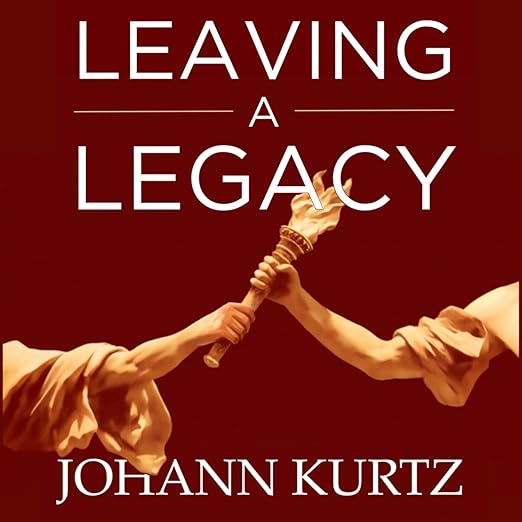
Most books about leaving a financial legacy operate within a narrow frame: estate planning, tax efficiency, trust structures, perhaps a chapter on having difficult conversations with adult children. Leaving a Legacy by Johann Kurtz is doing something entirely different. I came to it expecting a sophisticated personal finance title and found instead a work of philosophy and cultural criticism that happens to use wealth transfer as its organizing question. It surprised me, and it made me think harder about questions I had assumed were settled.
Kurtz self-narrates across 3 hours and 38 minutes, released in February 2026 by Johann Kurtz Publishing. It holds an exceptional 4.9 rating across 107 listeners, the kind of response that suggests a book has found precisely the audience it was written for. The central question is deceptively simple: should you leave your wealth to your children, or to charity? Kurtz argues that the framing itself reflects a confusion about what charity actually is, and that the Western tradition, grounded in Christian theology and practice, provides a more coherent answer than either the philanthropy establishment or conventional estate planning suggests.
Our Take on Leaving a Legacy
The book’s most provocative move is its challenge to the prestige of institutional philanthropy. Kurtz draws a sharp distinction between charity, which he defines as a multi-generational project centered on the family and the community it sustains, and philanthropy, which he views as a more abstract, often self-serving exercise in public virtue. Reviewer Evan, who described underlining half the book, highlighted specifically Kurtz’s challenge to meritocracy and his argument that particularly pathological leaders emerge from meritocratic systems that have severed the connection between success and obligation to one’s own people. That is a pointed cultural argument, and Kurtz makes it without hedging.
The historical and theological grounding is genuine. Kurtz traces the development of inheritance practices in Western civilization through figures and dynasties he uses as both cautionary and inspirational examples. The book does not pretend to be religiously neutral, it is explicitly grounded in the Christian tradition, which will be a feature for listeners aligned with that framework and a limitation for those who are not.
Why Listen to Leaving a Legacy
Self-narration from an author who believes what he is saying has a quality that professional narrators sometimes cannot manufacture. Kurtz reads his own material with the gravity of genuine conviction rather than performed emphasis, and at under four hours, the book moves at the pace of a long argument rather than an extended lecture. The runtime is efficient, Kurtz does not repeat himself or pad the case with anecdotal filler. Reviewer Adam quoted a line that captures the book’s orientation well: one generation gives to and teaches the next, so that each generation might do good and build strong, healthy, and beautiful communities. That sentence is both the thesis and the tone.
Reviewer HarvestSong noted that among the myriad things people feel they ought to read, this stands out, and identified the book’s core purpose as defining the true purpose of wealth, its utility, its power, and strategies to capture and hand it down. That framing is accurate. The book is practical in spirit even when it is philosophical in content.
What to Watch For in Leaving a Legacy
The book’s explicit grounding in Christian tradition is both its coherence and its limitation. The argument for virtuous family dynasties as the indispensable guardians of genuine charity is internally consistent within that framework, but listeners who do not share the theological premises will find some of the conclusions less compelling than the cultural analysis that precedes them. The discussion of nepotism, which Kurtz defends, on specific terms, against the meritocratic dismissal of family preference, is the section most likely to generate friction for listeners with different assumptions. The argument is serious rather than casual, but it requires engagement rather than passive acceptance.
Who Should Listen to Leaving a Legacy
This is the right listen for family leaders, in Kurtz’s phrase, who have accumulated meaningful wealth and find themselves genuinely uncertain whether leaving it to children or to institutions better serves the values they hold. Listeners operating from a Christian framework will find the theological grounding illuminating rather than restrictive. Those interested in the philosophical and cultural dimensions of inheritance, independent of personal wealth level, will find the argument substantive and often original. Listeners looking for practical estate planning advice, specific legal instruments, tax strategies, financial vehicles, should look elsewhere. This is a book about why and what for, not about how.
Frequently Asked Questions
Is Leaving a Legacy primarily a Christian book, or is it accessible to non-religious readers?
It is explicitly grounded in the Christian tradition, Kurtz draws on Christian theology and practice throughout. The cultural and philosophical analysis is accessible to non-religious readers, but the ultimate argument for virtuous family dynasties as guardians of charity is built on Christian premises that secular readers will need to engage with on their own terms.
Does the book provide practical estate planning guidance, or is it purely philosophical?
Primarily philosophical and cultural. The book addresses the question of what inheritance is for and why it matters, drawing on history and theology rather than financial instruments. Readers expecting trust structures, tax optimization, or specific legal advice should look for a different title.
What does Kurtz mean by the distinction between philanthropy and charity?
Kurtz argues that philanthropy as practiced by major institutions is often abstract, self-serving, and disconnected from the communities it claims to serve. True charity, in his framework, is a multi-generational project centered on family and community, giving within a network of obligation rather than toward a distant abstraction.
How does Kurtz defend nepotism, and is the argument credible?
Kurtz distinguishes between family duty, the obligation to prioritize and support one’s own children and community, and corrupt nepotism, which involves using institutional power to benefit family at the public’s expense. He argues that meritocracy’s dismissal of family preference conflates these two things. The argument is philosophical rather than a defense of cronyism, and it is more carefully made than the word nepotism might initially suggest.