Key Details
- Narrator: Scott LeCote's calm, unhurried delivery does not just describe the book's advice, it actively models it in real time.
- Subjects: sustainable study habits, burnout recovery, neuroscience of memory and retention
- Tone: calm, focused, and encouraging
- Bottom line: a compact, science-grounded reset for burned-out students, best treated as an orientation rather than a complete system.
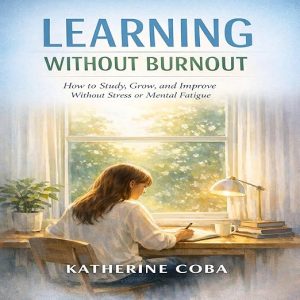
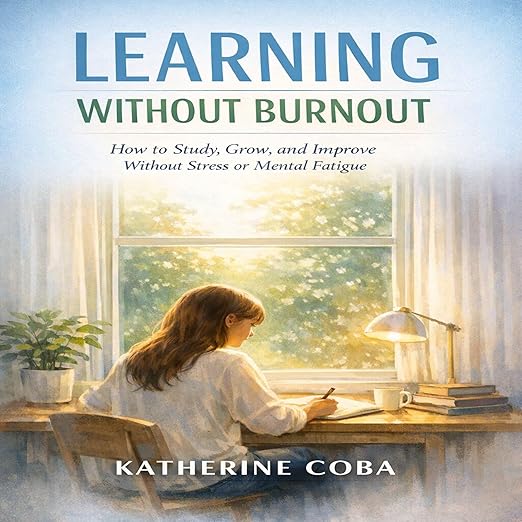
Late-night cram sessions are the enemy this audiobook sets out to defeat, and Katherine Coba spends a tight eighty-three minutes explaining why marathon studying actually undermines retention rather than helping it. Learning Without Burnout draws on neuroscience and psychology to dismantle what Coba calls "hustle culture" thinking around studying, replacing it with sustainable habits built around focused cycles rather than exhausting, willpower-driven sprints that rarely survive an entire exam season. Scott LeCote narrates with the same measured, unhurried delivery he has become known for across similar learning-science material. That eighty-three-minute runtime alone signals the book's own philosophy in action: focused and efficient rather than stretched out to hit some arbitrary industry-standard length.
LeCote's Calm Delivery Models Its Own Advice
The book's real hook is reframing burnout itself as a motivation problem rather than a failure of willpower, a distinction Coba returns to throughout the material covered here. Rather than more discipline or more hours, she argues for structural changes: how sleep, nutrition, and movement affect memory directly, and why studying in short, focused cycles beats grinding through exhausting, unbroken sessions. That reframing gives the book a genuinely different angle than most study-skills content, which tends to stay stuck on time-management tricks rather than addressing the underlying biology. Coba treats these structural factors as equally important to actual study technique, a genuine departure from content that assumes willpower alone should be enough to power through exhaustion.
Coba also spends real, careful time on the underlying biology of memory formation specifically, walking through how the brain actually encodes and stores new information, which gives the book's central argument, that shorter focused sessions beat marathon cramming, a mechanistic explanation rather than just an assertion listeners have to take purely on faith.
LeCote's delivery does something quite specific and genuinely worth noting here: his calm, unhurried pacing does not just describe the book's advice, it actively models it. Listening to a measured, patient narrator explain why marathon sessions backfire lands differently than reading the same argument silently and rushed on a page, and that alignment between form and content is the audiobook edition's clearest advantage over the print version of the same material. Print readers get the same argument intellectually, but only the audiobook edition lets the delivery itself reinforce the point.
Three Pillars and a Blueprint for Exam Week
The book organizes its advice around what Coba calls the "3 Pillars of Burnout-Free Learning" and a broader "Calm Achiever Blueprint", concrete enough frameworks that listeners can actually apply them immediately rather than just absorbing another round of vague encouragement to manage stress better. Coverage extends into recovery specifically, how to bounce back from mental fatigue without guilt, which is a genuinely underserved topic in most study-skills content that tends to focus entirely on prevention and optimization rather than on what to do once burnout has already set in. The framework's specific naming, pillars, a blueprint, gives listeners memorable handles to return to under real exam-week pressure rather than vague, easily forgotten advice.
At under an hour and a half, this is exactly the kind of audiobook a stressed student could listen to in one sitting the night before starting a new study plan, then return to selectively during a stressful exam period without needing to relisten to the whole thing. The short runtime is a genuine strength here, not a shortcoming; Coba's material stays focused and dense rather than padded out to hit some arbitrary length expectation. Students specifically preparing for a single high-stakes exam may find it especially useful as a pre-exam mental reset the week before test day.
The book also draws a useful distinction between rest and recovery, arguing that simply stopping work is not the same as actually recovering from mental fatigue, and Coba walks through what genuine recovery looks like biologically rather than treating a Netflix break as automatically restorative.
Three Ratings Are a Thin Evidence Base
With no listener reviews attached at the time of this review, and only three ratings on record, outside evidence for how the specific techniques hold up under real academic pressure remains limited so far. The perfect five-star average is a mildly encouraging early signal, but a pool this small does not yet amount to a proven track record, and prospective listeners should weigh that thin evidence base honestly before treating the book as a definitive system. Given how directly the book's claims could be tested against a listener's own study results, that thin evidence base is worth taking seriously rather than dismissing.
At eighty-three minutes, this book by definition cannot go as deep as a full-length study-skills text might on any single technique; it functions more as an orientation and mindset reset than a comprehensive system with detailed daily schedules or subject-specific study plans. Listeners wanting granular, day-by-day study planning alongside the underlying psychology should treat this as a starting framework to build on rather than a complete standalone system on its own. That said, the core reframing around motivation rather than willpower is itself a complete, usable idea even without additional scaffolding.
Anyone who has ever finished a marathon study session feeling like nothing actually stuck will recognize the exact problem Coba is diagnosing from the very first chapter, and that immediate recognition is likely part of why the book's small early audience rates it so highly.
Short Enough for Parents and Students Alike
Students and lifelong learners who recognize themselves in the specific cycle Coba describes, cramming, crashing, feeling guilty, then cramming again, will get the most immediate value here, and the short runtime makes it an easy, low-commitment entry point before exam season gets fully underway. Coba's neuroscience grounding also gives the material appeal for adult learners picking up new skills outside a formal academic setting, not just students facing traditional tests and grades, and the low time commitment removes the usual excuse, no time to read a whole book, that often prevents burned-out students from seeking help in the first place.
Parents of students dealing with visible burnout and academic stress may also find this a useful listen alongside their kids, since Coba's framework gives families shared language for talking about study habits without the conversation defaulting immediately to blame or lecturing.
At under ninety minutes, this will not replace a full course on study techniques or executive-function coaching for students who need more structured, ongoing support. Listeners wanting deep citations and academic rigor behind every claim may also want to treat this as an accessible starting point rather than a rigorously footnoted research text, since the format favors usable takeaways over exhaustive sourcing throughout. Even so, as a first step toward breaking an unsustainable cramming cycle, it earns its short runtime.
Frequently Asked Questions
Does this audiobook rely on real neuroscience, or is it mostly motivational content?
It draws specifically on neuroscience and psychology research around memory, sleep, and focus, though at this length the citations stay general rather than deeply footnoted.
Is this audiobook aimed at students specifically, or does it work for adult learners too?
Both; while exam cramming is the clearest example used throughout, the underlying advice about focused cycles and recovery applies to any adult picking up a new skill.
How does Scott LeCote's narration suit a book about avoiding burnout?
Extremely well; his calm, unhurried delivery does not just describe the book's advice about pacing, it demonstrates it in real time through the performance itself.