Quick Take
- Performance: JapanesePod101.com's bilingual teaching format leans on syllable-by-syllable breakdowns, well suited to true beginners but flagged by one listener as too English-heavy.
- What it covers: functional beginner phrases, cultural etiquette alongside language, syllable-level pronunciation training
- Feel: Structured and instructional, aimed squarely at first-time learners
- Our call: A solid two-program bundle for absolute beginners wanting phrases plus cultural context, though listeners past the earliest stage may find the English scaffolding slower than a more immersive alternative.
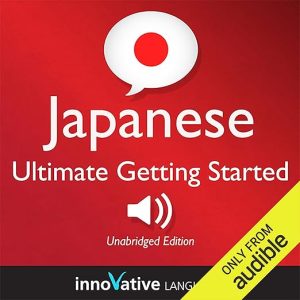
How much English is too much English when the goal is learning Japanese? That's the exact frustration one listener raises about this audiobook, and it's worth sitting with before deciding whether this box set fits your specific learning stage. This release bundles two shorter JapanesePod101 programs, Introduction to Japanese and Gengo Beginner Japanese, into fifty-five lessons totaling just over seventeen hours, built around syllable-by-syllable pronunciation breakdowns and a bilingual teacher walking through target phrases, vocabulary, and cultural context together rather than treating Japanese and Japanese culture as separate subjects.
Real Scenarios, Not Just Vocabulary Lists
The pitch here is genuinely broader than a pure phrasebook: alongside phrase mastery, the program promises listeners can navigate restaurants, taxis, trains, and buses, and understand the etiquette and customs behind common interactions, not just the words for them. A hundred-plus pages of downloadable lesson notes come bundled with the audiobook, extending the material well beyond what fifty-five audio lessons alone could cover on their own.
The specific practical scenarios the synopsis lists, ordering food in restaurants, navigating taxis and trains, understanding manners and etiquette, are worth taking seriously as evidence of real design intent rather than marketing filler. Those are exactly the situations most travelers run into within their first few days after landing in Japan, which suggests the fifty-five lessons were sequenced around real-world usefulness rather than a purely academic grammar progression, a meaningfully different organizing principle than most textbook-derived audio courses default to.
A real tension is worth naming between the synopsis's own claim that this 'is NOT a vocabulary audiobook with just words and their translations' and John's specific complaint about excessive English. Both can be true at once: the program clearly aims for depth beyond simple word lists, weaving in cultural context and full-phrase instruction rather than flashcard-style vocabulary, but achieving that depth requires enough English explanation to convey the cultural nuance, which is precisely the tradeoff a listener wanting maximum target-language immersion will feel as friction.
Nineteen Minutes a Lesson, Fifty-Five Times Over
JapanesePod101.com's house narration style leans on exactly the syllable-breakdown, bicultural-context approach the synopsis describes, and that format genuinely suits absolute beginners who need pronunciation modeled slowly and repeated before it sticks. The 'repeat after the professional teacher' structure gives listeners a built-in practice loop rather than passive listening, which matters more for language content than for most other nonfiction, since the actual skill being built is spoken output, not just comprehension.
The cultural-tips layer woven into each lesson is a real differentiator worth naming specifically: understanding the custom or etiquette behind a phrase, not just its dictionary translation, is the kind of context a pure vocabulary list never provides. For a first-time visitor to Japan trying to build baseline confidence quickly, that combination of functional phrases and the social context around them is arguably more useful in the short term than a grammar-first course that delays real spoken competence for the sake of structural completeness.
Doing the runtime math is useful context here too: seventeen hours and sixteen minutes across fifty-five lessons averages out to a little under nineteen minutes per lesson, a genuinely digestible chunk for a commute or a lunch break rather than a demanding sit-down study session. That pacing, short individual lessons within a large cumulative program, is a real strength for listeners trying to build a consistent daily habit rather than cramming irregularly.
The bundled lesson notes, running past a hundred pages, function as a real extension of the audio rather than a throwaway bonus. Companion materials at that length for a language program typically carry vocabulary reference lists, example dialogue transcripts, and practice exercises that reinforce what's covered in each of the fifty-five audio lessons, giving listeners something to review visually alongside the syllable-by-syllable audio breakdowns rather than relying on audio memory alone.
John Wants Less English, More Actual Listening
This is the one area where a real caveat belongs front and center. The audiobook's only written review, from a listener going by John, is blunt: 'the audio should eliminate all the unnecessary English spoken,' arguing it's 'a waste of audio time that could have been spent listening to more Japanese.' That's a legitimate critique of the format specifically, not a complaint about the teaching content itself, and it's worth taking seriously if you already have some prior Japanese exposure and want maximum target-language immersion rather than bilingual scaffolding.
Worth knowing upfront: this title currently has very few ratings and only that single written review, so there isn't a large body of listener feedback to weigh against that one critical voice. For complete beginners, the English scaffolding John objects to is often exactly what makes a program usable in the first place, since new learners genuinely need explanation alongside repetition. Anyone past the absolute-beginner stage, though, should expect the English-heavy format to feel slower than a more immersive, Japanese-only alternative.
The synopsis promises 'surprise phrases and tips that will leave your guests wondering where you learned them,' a small but telling detail about the program's ambitions beyond basic survival Japanese. That kind of content, idiomatic or culturally specific phrasing that goes beyond textbook basics, is exactly the sort of material that benefits from a real bilingual teacher's judgment about what actually lands naturally in conversation, rather than a direct, literal translation a phrasebook alone would offer.
It's also worth noting this box set combines two previously separate shorter JapanesePod101 programs into one purchase, which means listeners are getting a genuinely fuller beginner arc than either program would offer on its own, even if the combined seventeen-hour runtime asks for more of a real time commitment upfront.
True Beginners Get the Most From This Set
True beginners with zero Japanese exposure, especially anyone preparing for a first trip and wanting functional phrases plus the cultural context to use them appropriately, are the clearest fit for this box set. The bundled two-program structure and hundred-plus pages of lesson notes give genuine depth for the price of one audiobook purchase, and the syllable-by-syllable pronunciation approach is specifically built for listeners who have never tried to produce Japanese sounds before.
The synopsis specifically describes a 'professional, bi-lingual teacher' rather than simply a native speaker, and that distinction is worth taking seriously. A bilingual instructor who has personally navigated learning a language as an adult brings a different, often more useful kind of pedagogical judgment than a native speaker alone would, since they can anticipate exactly where an English-speaking learner's ear and tongue are likely to struggle rather than relying purely on intuition about their own first language.
Bilingual scaffolding, not full target-language immersion, is the design choice throughout, so anyone who already has some working Japanese vocabulary should weigh John's specific critique carefully before buying; the English-heavy format that helps true beginners may feel inefficient once you're past that earliest stage. With the rating count still thin, it's also worth treating this as a program with real structural promise on paper that hasn't yet built up a large track record of listener feedback either way.
Questions Listeners Ask
Does this audiobook teach Hiragana and Katakana, or just spoken phrases?
The described focus is on spoken phrase mastery, pronunciation, and cultural context rather than written script instruction, so listeners specifically wanting to learn to read Japanese script should look for a program built around that goal directly.
Is there too much English spoken in this Japanese-language audiobook?
At least one listener found the amount of English scaffolding excessive, arguing the audio time would be better spent on more Japanese; whether that's a drawback depends heavily on whether you're a true beginner, who typically needs that explanation, or already have some prior exposure.
What's the difference between this box set and buying Introduction to Japanese or Gengo Beginner Japanese separately?
This audiobook bundles both of those shorter JapanesePod101 programs together into one fifty-five-lesson box set, so listeners get both programs' content in a single purchase rather than buying them individually.