
Photographic Evidence of Johnson's Advance Knowledge
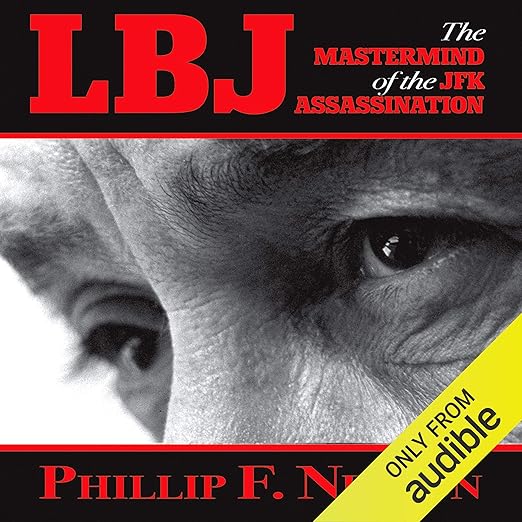
Phillip F. Nelson's LBJ: The Mastermind of the JFK Assassination arrives as an audiobook narrated by Fred Sanders across twenty-seven hours and twenty-eight minutes, which is roughly the runtime you would need to make a genuinely detailed legal argument. That length is appropriate to Nelson's ambition. This is not a book that gestures at Johnson's possible involvement and moves on. It builds a full-scale case, beginning with a psychological portrait of Johnson formed in childhood and extending through what Nelson frames as a coordinated, years-in-the-making plan to remove Kennedy from office by any means available to a man who had spent decades acquiring leverage over the entire machinery of Texas and Washington politics.
Nelson's central argument is that Johnson began planning his path to the presidency before he was even named as Kennedy's running mate in 1960, and that the assassination in Dallas on November 22, 1963 was not a sudden impulse but a meticulously organized removal. The book draws on years of research and includes what Nelson describes as newly uncovered photographic evidence placing Johnson's knowledge of when and where Kennedy would be killed. That is an extraordinary claim, and the audiobook devotes substantial time to walking through the evidential chain that Nelson believes supports it.
Sanders Reads Like Someone Presenting Evidence
The audiobook's strongest sections are its portraits of Johnson's character and psychological development. Nelson's account of LBJ's manic-depressive illness, his documented tendency toward extreme cruelty alongside extreme charisma, and his willingness to use bribery, blackmail, and voter fraud as routine political instruments across his career in Texas politics is grounded in a substantial body of historical record. Reviewer Music Lover noted that no other book points the finger directly at LBJ with this much specificity, and that directness is the book's defining quality. Nelson is not interested in hedging. He presents Johnson not as a possible co-conspirator but as the central organizing intelligence of a political crime.
Fred Sanders' narration is well matched to the book's character. Sanders reads with the even, methodical quality of someone presenting evidence rather than telling a story, which reinforces Nelson's framing of the book as investigation rather than speculation. Across twenty-seven hours, that steadiness is essential. A more dramatically inflected narration would have undercut the prosecutorial tone Nelson depends on. The audiobook rewards listeners who are willing to follow a complex argument at length; it does not reward those looking for episodic revelations spaced across a thriller's structure.
Reviewer Dad, who grew up around hunting and served in the military, found Nelson's argument about bullet trajectories and the implausibility of the Warren Commission's findings particularly persuasive, and that dimension of the book, the physical forensics analyzed against the lone-gunman conclusion, is one of its most extensively developed threads. Nelson places this evidence in dialogue with decades of subsequent declassification, building toward a cumulative rebuttal of the official record that serious Kennedy assassination researchers will want to engage with directly.
Evidence Johnson Was Most Motivated to Destroy
Reviewer Sondra Hix offered the most balanced critical assessment available in the record: this is a book that postulates LBJ as the assassination's progenitor and that, by its own nature, cannot rely heavily on primary source documentation. The most damning evidence against Johnson is, almost definitionally, the kind of evidence that Johnson and those loyal to him would have been most motivated to destroy. Nelson is aware of this and argues from the weight of circumstantial evidence, corroborating patterns, and documentary fragments rather than a smoking-gun primary source. Listeners who need direct documentation to credit a historical argument will find the sourcing structure frustrating.
The book also covers terrain where Nelson's interpretation of events diverges significantly from the mainstream historical consensus. Johnson's role in the Warren Commission itself, his relationships with key figures in Texas business and organized crime, and the specific logistics Nelson attributes to the planning process are all presented with confidence that some historians contest. Approaching this audiobook as a deeply researched argument rather than established fact is the appropriate critical frame, and that framing does not diminish the book's value as a comprehensive synthesis of the Johnson-culpability thesis.
Like Watching a Trial Unfold in Real Time
This audiobook is for serious readers of Kennedy assassination literature who want the most complete version of the Johnson argument in a single source. At twenty-seven hours, it is not an entry point for casual interest; it rewards listeners who already have some familiarity with the basic outlines of the assassination and are ready to follow Nelson's extended case in detail. The audiobook format is actually well suited to a book of this kind, because the cumulative-argument structure benefits from continuous listening rather than the episodic reading that print tends to produce. Sanders' narration keeps the architecture visible even as the detail accumulates, which makes it possible to hold the overall thesis in mind across a very long runtime. The combination of Sanders' methodical delivery and Nelson's building structure means the audiobook feels like watching a trial unfold rather than reading a document dump. Skip it if you approach the assassination from a lone-gunman position and are not open to sustained counterargument, not because the book is poor but because twenty-seven hours of prosecutorial argument against a position you hold firmly will not be productive listening time. For those genuinely open to the evidence, it is among the most detailed resources the genre contains.







