Quick Take
- Narration: Henry Schrader handles Lockwood’s dense, 19th-century rhetoric with appropriate gravity, though the short runtime leaves little room for nuance to develop.
- Themes: ecclesiastical tyranny, freethought and agnosticism, the divinity of human dignity
- Mood: Fierce and rhetorical, like listening to a Victorian lecture hall thunderstorm
- Verdict: A punchy, historically interesting polemic for readers curious about 19th-century freethought, though its brevity means it functions better as a provocation than a full argument.
I came to Ingersoll Lockwood through a circuitous route. A reader emailed me asking whether the Baron Von Trump books were worth the attention they had been getting online, and in researching those I stumbled into the wider Lockwood collection, which includes this slim but surprisingly ferocious anti-ecclesiastical tract. I finished it on a late Thursday afternoon during a walk, which felt appropriate. The 2-hour-and-14-minute runtime meant I was done before my second cup of tea had gone cold.
What I did not expect was just how scalding the prose would be. Lockwood opens with a comparison that he clearly intends to shock: he argues that religious enslavement of the mind is more villainous than the chains of any political tyrant. That is not a throwaway line. He means it, and he spends the rest of the audiobook making his case with a rhetorical fervor that belongs squarely to the tradition of Thomas Paine and Robert Ingersoll (no relation, as far as records show).
Our Take on Lockwood’s Polemic
The audiobook is divided into two distinct movements, and understanding that structure changes how you receive it. The first part is a frontal assault on what Lockwood calls ecclesiastical tyranny, the organized religious systems that he believes have spent centuries driving people away from their own intelligence and conscience. The language is florid, deliberately so. He writes of believers as whipt dogs, trembling and whining in abject submission, and while modern readers may wince at the hyperbole, the underlying argument about institutional religion suppressing critical thought is one that has aged more robustly than the imagery.
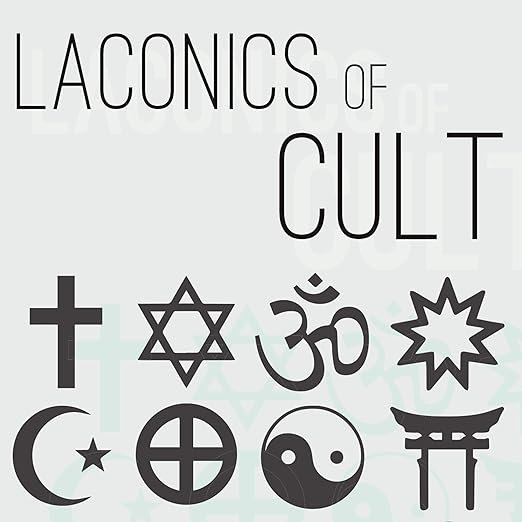
The second part pivots to a genuinely interesting positive proposition: what Lockwood calls The Cult of the Immortal Human. This is where the book becomes more than mere invective. He argues for a society grounded in recognizing the divinity inherent in each person, the god within oneself and within one’s neighbor. Reviewers who call this concept intriguing and note its basis in basic human respect are not wrong. It reads almost as a secular humanism avant la lettre, articulated by a man who clearly understood he was writing against the current of his time.
Why Listen to This Rather Than Read It
Henry Schrader’s narration is well-suited to this material. The text was written to be declaimed, not parsed quietly on a page, and Schrader delivers it with the kind of measured authority that lets Lockwood’s longer periodic sentences land with full weight. There is a patience in his pacing that prevents the denser Latin-inflected passages from becoming impenetrable. One reviewer noted that the language felt so much more learned and erudite than most dumbed down works of today, and Schrader does not try to modernize or soften it. He lets the 19th-century register stand.
The short runtime is both an asset and a limitation. At just over two hours, this is a listening session, not a commitment. But it also means the arguments do not develop as fully as they might. If you are hoping for the kind of sustained philosophical architecture you would find in Robert Ingersoll’s collected lectures, you will be left wanting. This is a pamphlet with literary ambitions, and the audio format reflects that faithfully.
What to Watch For in the Victorian Subtext
Lockwood’s preface to the reader is genuinely disarming. He does not pretend to be writing a neutral work. He knows this is a thankless task, and he says so. The cry of Great is Diana of the Ephesians, which he invokes as a reference to the Acts of the Apostles, is his way of acknowledging that established power always finds a rallying slogan against those who challenge it. That self-awareness gives the text a candor that pure polemics usually lack.
One aspect that surprised me is the copyright notice, or rather the deliberate absence of one. Lockwood explicitly declares the work belongs to anyone who can use it. In an era when intellectual property was actively contested, that gesture toward open dissemination reads as a philosophical act in itself, consistent with his argument that truth should circulate freely. It is a small detail but one that illuminates his character.
Who Should Listen to Laconics of Cult
This audiobook is for readers who enjoy the freethought literature of the 19th century, think Paine’s Age of Reason or the lectures of Colonel Robert Ingersoll, and want a short, intellectually stimulating listen that does not demand extensive background knowledge. It also works for listeners curious about Lockwood’s broader output, especially those who encountered his work through the Baron Von Trump novels and want to understand the political and philosophical mind behind that fiction.
Skip it if you are looking for a comprehensive philosophical treatment of secular humanism or a structured argument. Lockwood’s text is a pamphlet, proud of being one, and listeners who need sustained evidence and counterargument will find it frustratingly thin. Those comfortable with rhetorical literature as a genre will find it sharp and occasionally brilliant.
Frequently Asked Questions
Is this audiobook related to Lockwood’s Baron Von Trump books?
Loosely. It is part of the Ingersoll Lockwood Collection, listed as book 3 in the series, and shares the same author, but it is a work of political and religious philosophy rather than fiction. Reviewers have noted it appeals to the same readers who follow Lockwood’s broader catalogue.
How confrontational is the religious content? Is it offensive or just critical?
Lockwood writes with strong anti-institutional-religion sentiment and some deliberately provocative imagery. He is critiquing organized ecclesiastical power rather than individual faith, but the language is blunt enough that listeners who are comfortable with traditional religious frameworks may find it hostile rather than merely challenging.
Does the two-part structure of the audiobook feel balanced, or is it mostly attack without alternative?
It is roughly split between critique and positive vision. The second part, centering on what Lockwood calls The Cult of the Immortal Human, offers a secular humanist alternative focused on mutual recognition of human dignity. It is underdeveloped relative to the attack, but it is genuinely there.
Henry Schrader is listed as narrator. Is this a professional production or a public-domain recording?
It is a Mockingbird Press production from 2020, which specializes in public-domain texts. Schrader delivers a clean, professional narration suited to the rhetorical register of the original text.