In Brief
- Themes: Emigration and return, a resort built against a collapsing economy, 1922 and 1974 as bookends, exile at home.
- Mood: Admiring, archival, unhurried.
- Verdict: A local history worth having, delivered by a synthetic voice with the photographs left behind.
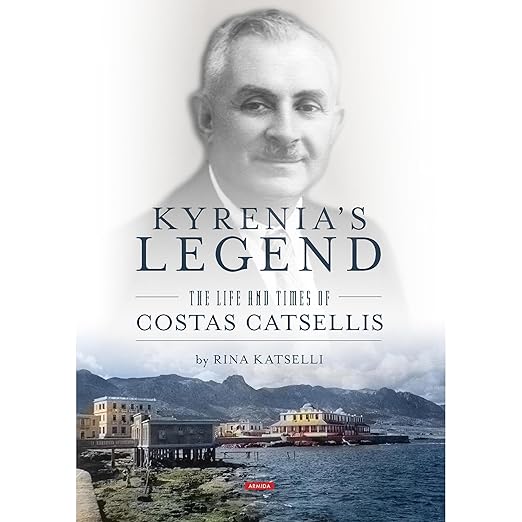
A biography whose description promises a wealth of archival photographic material is a strange object to meet as an audiobook. The photographs cannot travel. Eleven hours and eight minutes of narration will carry the names, the dates and the argument, and every image the publisher went to the trouble of gathering stays behind in whatever edition holds it. Worth knowing before you buy, because the copy sells those pictures as part of the package and this format has no way to deliver them.
A Refugee Twice Over, Inside His Own Country
Virtual Voice sits in the narrator field. That means a synthetic reading, not a person, and the listing states it plainly where plenty of records do not. Across eleven hours of dates, place names and unfamiliar surnames, the choice matters more than it would on a novel. What a synthetic credit really tells you is what to audition for: proper nouns from three countries, numerals read aloud, and the pauses a human reader puts around a long clause to keep a historical sentence intelligible. Sample it before committing an evening, let alone eleven hours.
The life itself carries the book. Costas Catsellis begins in Kyrenia, described in the copy as a forgotten corner of the vast British Empire, crosses the Atlantic to America, learns the art of cooking, gambles away a fortune in the stock market, and volunteers in the US Army during WWI. Then he goes home. That return is the hinge of the whole story, because the second half is about building something permanent in a place the wider world had stopped investing in, and the book treats the decision to come back as the interesting one.
The hotels are where the biography earns its title. After the Asia Minor Catastrophe of 1922 stalled Kyrenia's progress, the copy says everyone lost hope for a recovery except one man, and Catsellis pushed the Sea View and the Dome into existence, turning the town into a booming tourist center and pulling it clear of economic decline. Then 1974 and the Turkish invasion took all of it, and he ended as a refugee inside his own country. The fruits of that work, the description says, remain under occupation to this day.
History at This Level of Detail Rarely Gets Recorded
Eleven hours and eight minutes is a substantial commitment for a single-subject biography, and the span justifies the length. One life running from a British colonial childhood through the American years, a world war, the 1922 collapse, the hotel-building decades and the 1974 displacement is genuinely a long story. Local history at this level of detail rarely gets published at all, and almost never gets recorded, so the existence of the edition is itself part of the argument for it.
For anyone with a connection to Kyrenia, or to the wider Cypriot story of 1974, the value here is obvious and probably not replaceable anywhere else. Biographies of hoteliers and small-town developers do not usually reach print, let alone audio. The book also makes an unusual case, treating one man's commercial ambition as a civic act: he did not merely build hotels, he rebuilt the local economy that the copy says had stopped moving. On the evidence of the description, that argument is made sincerely and at length. The copy names the specific properties too, the Sea View and the Dome, which at least gives a listener something concrete to look up afterward.
How much you take from it depends on your tolerance for a particular kind of book. This one is admiring. The copy calls the achievements forever etched upon the history of Kyrenia and closes on the phrase the Legend of Kyrenia. Nothing in the description suggests any critical distance from its subject, and a listener who wants the counterargument, or the working conditions behind a booming resort town, should expect to look for it somewhere other than here.
A Recommended Read Posted Before the Audio Existed
One person has written about this book, and that entry runs seven words: great book full of history, highly recommended. It carries a five-star grade and an April 2025 date from Australia. This recording was released on March 15, 2026, nearly eleven months afterward. Whatever that reader is recommending, it cannot be this audio edition, because the audio edition did not exist on the day the recommendation was posted.
Nothing in the arithmetic of the rating resolves cleanly either. The badge shows 4.7 across three votes, a figure that only lands under particular rounding conventions, so no total can honestly be stated from it. What can be said is smaller and firmer: the single visible grade is a five, sitting above the badge it supposedly helped produce. Three votes is also a sample small enough that a single additional grade would move the number visibly.
Archival photographs are not the only thing this record leaves unaccounted for. No translator appears anywhere on the listing, no editor, and nobody credited with handling captions or describing images. The author is Rina Katselli, the subject is Costas Catsellis, and the record says nothing whatsoever about what connects them, if anything does. For a biography built on archival material and family-scale detail, the absence of any credit beyond an author and a synthetic voice is the most conspicuous feature of the page.
What Matters Here Is a Human Performance
Cyprus, its diaspora, and anyone curious about how a Mediterranean resort town was actually built will find real material here. So will anybody drawn to biographies of people who were never famous, told at length, with the local detail left in place. The hotel-industry angle is unusual enough to justify a look on its own terms, and the 1974 material gives the book a weight the hotel story alone would not carry. Readers who follow twentieth-century displacement narratives will find the last movement of this biography, a man who loses everything twice and ends known for what was taken from him, harder to shake than the building years.
If a human performance matters to you, audition the sample first and answer honestly, because eleven hours is a long stretch to spend with a voice you are merely tolerating. The same applies to listeners who came for the photographs, to readers who want a biography willing to argue with its subject, and to anyone who wants to know who translated any of this. What you cannot get here is a human being reading it to you.
Before You Listen
What does the Virtual Voice credit mean for this audiobook?
It means the narration is machine-generated, not performed by a person, which the listing states plainly in its narrator field. Across eleven hours of dates, unfamiliar surnames and place names, the choice is worth auditioning before you commit, since those are precisely the elements a synthetic reading has to handle correctly.
Does the audiobook include the archival photographs?
It cannot. The description advertises a wealth of archival photographic material, and audio carries none of that. Nobody on the listing is credited with describing the images either, so if the pictures are part of why you want this book, a printed or digital edition is the format that delivers them.