Quick Take
- Narration: Gretchen Johnson delivers a calm, measured tone suited to guided meditation material, though the production is functional rather than immersive.
- Themes: Chakra activation and energy work, kundalini as dormant spiritual force, third eye opening and higher consciousness
- Mood: Quietly instructional, better suited to dedicated practice sessions than passive listening
- Verdict: A short, accessible entry point into kundalini and chakra concepts for listeners new to the subject who want practical guidance alongside the theory.
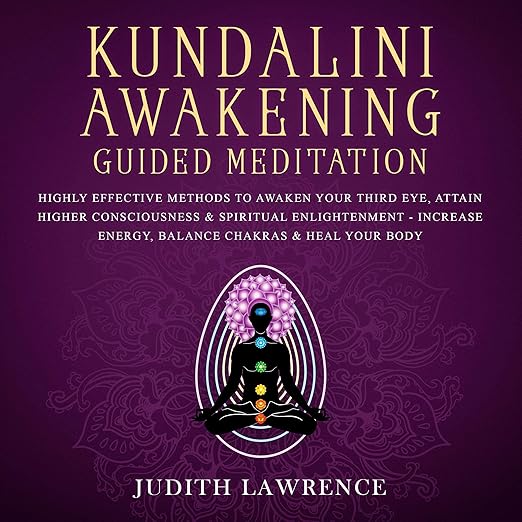
At just over three hours, Kundalini Awakening Guided Meditation is one of the shorter audiobooks in the spirituality and meditation space, and that brevity is both its most practical feature and its main limitation. I listened to sections of this across several early mornings, which is probably the intended use, and found that the format works best when treated as a structured practice guide rather than a cover-to-cover listen.
Judith Lawrence positions the book as an introduction to kundalini energy, the concept drawn from Hindu tantric tradition of a dormant spiritual force residing at the base of the spine, and its relationship to the chakra system. The premise is that modern life keeps us disconnected from this internal resource, and that deliberate practices around chakra healing and activation can restore balance across physical, mental, and emotional dimensions. Lawrence is writing for listeners who may be encountering these ideas for the first time, which shapes both the level of detail and the tone throughout.
Our Take on Kundalini Awakening Guided Meditation
The audiobook covers four main areas: guided meditation for healing and activating the chakras, techniques for awakening kundalini energy specifically, the philosophy of the third eye and its relationship to perception and consciousness, and practices for opening the heart chakra through what the text calls Anahata stimulation. Lawrence does not claim academic authority on the subject. The writing is approachable and practical rather than scholarly, which means experienced practitioners of yoga or Vedantic traditions will find this elementary. For the target audience, someone who has encountered words like kundalini or chakra in wellness contexts and wants a structured audio guide to actually working with them, the coverage is sufficient and reasonably clear.
Why Listen to Kundalini Awakening Guided Meditation
The format has a specific advantage for meditation-related material that print books cannot replicate: you can close your eyes and follow. Gretchen Johnson’s narration is calm and unhurried, and the guided meditation sections of the audiobook are more useful heard than read. The pacing during these passages allows for the kind of breath-synchronized attention that meditation practice requires. Johnson does not add theatrical warmth or an elaborate ambient quality to the delivery, but the straightforward approach avoids the overcrowded new-age styling that makes some guided meditation audio feel dated. At three hours, the time investment is low enough that it functions well as an introductory exploration before a listener decides whether to go deeper into any specific tradition or practice.
What to Watch For in Kundalini Awakening Guided Meditation
There are no reviews available for this title, which makes it harder to gauge how the book lands across a range of listeners. Based on the content, a few things are worth noting. The book’s spiritual framework is rooted in Hindu tantric tradition, but Lawrence presents it in a broadly Western wellness register that strips most of the cultural and philosophical scaffolding. This makes it accessible but also removes some of the nuance that gives the kundalini concept its original meaning. Listeners who want a deeper grounding in the actual tradition would be better served by works that engage with the Sanskrit source material more seriously. Additionally, the very short runtime means some topics, particularly the third eye philosophy and the heart chakra practices, receive fairly surface-level treatment. Think of this as an orientation rather than a complete curriculum.
Who Should Listen to Kundalini Awakening Guided Meditation
Best suited to listeners who are curious about energy-based meditation practices and want a gentle, non-intimidating starting point. The short runtime and practical orientation make it a reasonable choice for someone who has been attending yoga classes and wants to understand more about the chakra system their teacher references. Not suited to listeners who want academic rigour, historical depth in the Hindu or tantric tradition, or advanced practice guidance. Those listeners should look toward more substantive treatments of kundalini yoga philosophy by teachers with deep lineage credentials.
Frequently Asked Questions
Is this audiobook suitable for complete beginners to meditation, or does it assume some prior practice?
It is written explicitly for beginners. Lawrence explains the basic concepts of chakras and kundalini without assuming any prior knowledge, and the guided meditations are paced slowly enough for someone with no established practice.
Does the audiobook guide you through meditation sessions in real time, or is it more of a theoretical overview?
Both. There are sections that explain the philosophy and framework, and sections that function as actual guided meditation practice you can follow along with while listening. The guided portions make up a meaningful share of the three-hour runtime.
How does Gretchen Johnson’s narration compare to other meditation guide audiobooks?
Her delivery is calm and functional. It does not reach the level of specially produced meditation audio with ambient soundscapes or particularly immersive vocal techniques, but it is clear and unhurried, which is the minimum requirement for this kind of material.
Is this audiobook grounded in authentic Hindu or tantric tradition, or is it a Western wellness adaptation?
It is primarily a Western wellness presentation of the concepts. The cultural and philosophical depth of the original tantric tradition is largely absent. Listeners who want authentic grounding in the source tradition should look for teachers and texts more directly connected to that lineage.