At a Glance
- Narration: Moshe Kasher self-narrates with a professional comedian's timing, landing pauses and punchlines the way only the original performer could.
- Themes: addiction and adolescence, comedy as survival mechanism, a chaotic cross-country family upheaval
- Mood: Darkly funny and brisk, never wallowing despite genuinely heavy subject matter
- Verdict: A sharp, self-aware addiction memoir for listeners who want humor alongside honesty rather than straightforward gravity.
Moshe Kasher turns a genuinely alarming childhood into one of the funnier memoirs I have listened to this year, and that tonal high-wire act is the entire achievement of this audiobook edition of Kasher in the Rye. Kasher started using drugs at twelve, had already spent eight years in psychoanalysis by that point, and cycled through mental institutions, rehab, and arrest by the time he was fifteen. Told flatly, that timeline reads like tragedy. Told by Kasher, a working stand-up comedian, it becomes something closer to a controlled demolition of his own worst years, funny specifically because he refuses to let the material intimidate him.
Mayim Bialik's cover blurb calls this 'the finest, most moving and powerful memoir I have ever read,' a genuinely striking claim for a book Kasher himself frames as deliberately resisting the standard addiction-memoir mold. As the synopsis puts it directly, this is not meant as an 'eye opener' to the horrors of addiction; it is built to find the absurdity inside the horror, a much harder tonal target to hit consistently across an entire memoir.
A Title Pun That Signals a Literary Self-Awareness
Reviewer Lisa Dorval described Kasher's account of growing up in Oakland 'to deaf Jewish parents' as a compelling story on its own, before the addiction material even enters the picture, and praised how the book 'pulls you in' to a genuinely desperate period without losing the listener's rooting interest in Kasher himself. That detail, Kasher as a hearing child of Deaf parents, adds a specific layer of family texture that a lot of addiction memoirs, focused tightly on the addiction itself, tend to skip entirely.
Reviewer Heather Safko called it 'a quick read' with genuine 'funny moments and honest writing,' adding that watching Kasher grow across the memoir's arc felt 'amazing' rather than simply grim. That combination, brisk pacing plus real emotional payoff, is a difficult balance for memoir specifically, where either quality alone is common but both together is rarer.
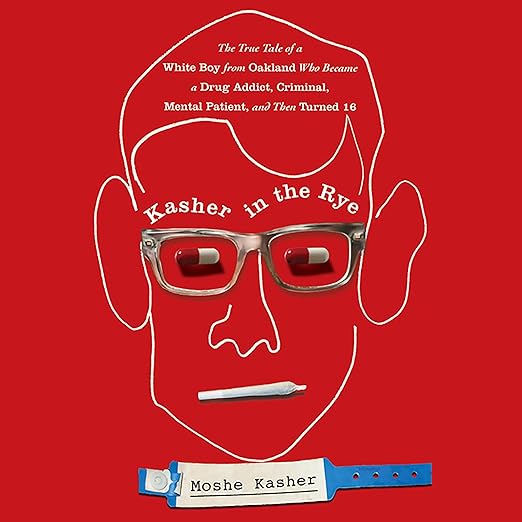
The title's pun on Salinger's The Catcher in the Rye is not just a clever cover line; it signals upfront that Kasher sees his own adolescent chaos through a literary, self-aware lens rather than treating his story as raw, unprocessed testimony. That knowingness runs through the whole memoir, a narrator fully aware he is telling a story, shaping it, choosing what earns a laugh and what earns a wince, rather than simply reporting events in sequence.
Kasher Narrates His Own Comic Timing
Kasher narrates his own book, and self-narration matters enormously here in a way it would not for a more straightforward memoir. Comic timing is a professional skill, not an incidental one, and a hired narrator reading Kasher's jokes off the page, however competent, would be performing comedy rather than delivering it from the person who actually built the timing into the original material. His pauses land where a comedian's pauses land, not where a voice actor guesses they should.
The book's structural device, his mother's move from the East Coast to Oakland with her sons, described in the synopsis as more like 'an abduction, only not officially,' sets up the chaotic Oakland Public Schools years that give the memoir its wildest anecdotes, including Kasher literally being walked around on a leash he eventually chewed through. That level of specific, almost absurdist detail is what keeps this from reading as a generic troubled-teen narrative.
The math behind Kasher's early psychoanalysis is easy to skim past but worth sitting with directly: eight years of treatment logged by age twelve means formal therapy started around age four, well before any drug use began. That timeline suggests a childhood recognized as troubled by the adults around him almost from the start, which reframes the later drug use and institutionalization less as a sudden derailment and more as an escalation of something already visible early on.
Momentum Over Therapeutic-Style Introspection
At eight hours and forty-three minutes, this moves briskly for a memoir covering this much emotional and chronological ground, drug use starting at twelve, years of institutionalization, a chaotic cross-country relocation, all before Kasher turns sixteen. Listeners wanting a slower, more reflective treatment of trauma and recovery should know this book prioritizes momentum and comic timing over lingering, therapeutic-style introspection.
The comedic framing itself is a genuine choice some listeners will need to calibrate for. Kasher is explicit that he is not writing a cautionary tale, and readers expecting a more sober, redemption-arc addiction memoir in the vein of straightforward recovery literature may find the persistent humor an odd fit for material this serious, even though that friction is clearly intentional on Kasher's part.
Darker and Younger Than Sedaris or Notaro
Readers of comedy-adjacent memoir, David Sedaris's family chaos rendered with wit, or Tig Notaro's deadpan handling of genuinely difficult material, will recognize the tonal territory Kasher is working in, though his subject matter skews considerably darker and younger than either of those comparisons typically covers. That combination of youth, addiction severity, and comic control is fairly rare, and it is the main reason this memoir stands out within its genre.
The specific choice of psychoanalysis, rather than a more general child therapy approach, for a boy this young is an unusual enough detail that Kasher's own recurring commentary on the experience becomes one of the memoir's more distinct threads, blending genuine early-childhood strangeness with the same comic remove he applies to everything else. Listeners unfamiliar with psychoanalytic practice specifically may want to know going in that this detail gets real narrative attention rather than a passing mention.
Dark Material Allowed to Breathe, Unexplained
Listen if you appreciate dark comedy applied honestly to genuinely difficult material, or if you are already a fan of Moshe Kasher's stand-up and want to hear the formative years behind it in his own voice. Mayim Bialik's crossover endorsement is a fair signal of how far this book's appeal travels beyond a strictly comedy audience.
Skip it if you want a memoir that treats addiction and institutionalization with consistent gravity rather than persistent, deliberate humor. This book knows exactly what it is doing tonally, but that choice will not suit every listener looking for a recovery narrative.
Listen too if you appreciate memoirists who trust their own comic instincts enough to let genuinely dark material breathe without over-explaining the joke, since that restraint is exactly what makes Kasher's timing work as well in audio as it apparently does on the page, pause for pause, beat for beat.