Quick Take
- Narration: Virtual Voice AI narration handles expository prose adequately but struggles with extensive Sanskrit terminology; print edition is the better format for most.
- Themes: Kula and Kaula lineages, Kali as goddess and practice, cross-traditional esoteric history
- Mood: Dense, scholarly, and genuinely candid
- Verdict: A serious and thorough work on Tantra that rewards preparation; the AI narration is a real limitation on specialized vocabulary.
I want to be upfront about something before discussing Kali Kaula on its merits: this audiobook is narrated by Virtual Voice, which is Amazon’s AI text-to-speech technology. That is not the same as a human narrator, and for a text this complex, this historically layered, and this reliant on the correct pronunciation of Sanskrit terms, Pali vocabulary, and transliterated deity names, that distinction matters. I’m flagging it so you can make an informed decision before purchasing. If AI narration is not something you want to spend twenty-seven hours with, that is a reasonable position.
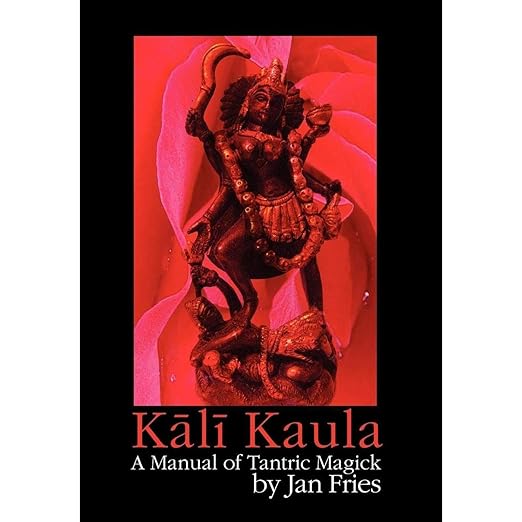
With that said, Jan Fries’s Kali Kaula is a serious scholarly and practical work on Tantra, specifically the early Kula, Kaula, and Krama traditions, and the underlying text has been consistently praised for its depth, its intellectual honesty, and its refusal to sanitize the material for a Western audience.
Our Take on Kali Kaula
Jan Fries occupies an unusual position in the literature on Tantra. He is a Western practitioner and writer who has been working in this territory for decades, and he approaches the subject with both genuine scholarly engagement and a practitioner’s investment in accuracy. Kali Kaula is not an introductory overview; it is a thorough examination of practices, texts, and historical traditions that acknowledges the enormous diversity of Tantric material while focusing on specific early lineages.
The synopsis describes it as more than a manual of tantric magick, a guide to the exploration of the inner soul, and that is accurate. Fries moves through mudra, mantra, pranayama, puja, kundalini arousal, and sexual rites not as a checklist but as an interconnected exploration of how these techniques developed and why they function as they do. The historical grounding is rigorous. One reviewer noted Fries’s honesty about the limitations of surviving texts, the fact that only a small percentage survived, of those only a small percentage are available, and of those the translation itself involves more than syntax but worldview. That intellectual humility runs through the whole book.
Why Listen to Kali Kaula
The case for the audiobook over the print edition is primarily one of convenience. At twenty-six hours and forty minutes, this is a substantial commitment in any format, and for listeners who prefer to absorb dense nonfiction while doing other things, the audio version makes the material more approachable. The Virtual Voice narration is functional for stretches of expository prose but will encounter its limits during extended Sanskrit passages and lists of deity names. That is a real limitation for a text where those proper nouns carry specific meaning.
Reviewers who engaged with the print text have consistently called it a tour de force and noted that Fries leaves no stone unturned. One long-time Kaula practitioner described being humbled by the depth of the research. That quality of the source material is present here regardless of the narration’s limitations.
What to Watch For in Kali Kaula
The text assumes a reader willing to do serious work. This is not an introduction to Hinduism or to Tantra for complete beginners. The web of connections between Tantra, Chinese alchemy, and Taoism that Fries explores requires some foundational knowledge to navigate. Listeners entirely new to these traditions should spend time with introductory material before arriving here.
The candor Fries brings to the darker and more chthonic aspects of Tantric practice, including the sexual rites and the more confrontational aspects of Kali worship, is one of the book’s distinguishing features. He does not shy away from stating his own personal feelings while maintaining analytical rigor. That honesty has been consistently noted in reviews and is worth expecting rather than being surprised by.
Who Should Listen to Kali Kaula
Serious students of Tantra with some foundation in the tradition, practitioners of Kaula lineages looking for rigorous historical context, and scholars of comparative religion interested in how the Kula and Krama traditions developed in relation to broader South and East Asian esoteric systems. This is dense, specialist material that rewards preparation. The AI narration makes the print edition the better choice for most listeners, but for those who genuinely prefer audio and have the background to tolerate its limitations on specialized vocabulary, the content justifies the commitment.
Frequently Asked Questions
Is Kali Kaula narrated by a human voice actor, and does that affect the listening experience?
The audiobook uses Amazon’s Virtual Voice AI narration rather than a human narrator. For dense Sanskrit terminology and deity names, this creates audible limitations. Listeners who prioritize narration quality should consider the print edition.
How much background in Tantra or Hinduism is needed to follow Jan Fries’s argument?
A solid foundational knowledge of Tantric traditions helps significantly. Kali Kaula is not written for complete beginners, and Fries assumes familiarity with the basic vocabulary and geography of South Asian esoteric traditions.
Does the book address the sexual rites of Kaula Tantra directly, and how explicit is that treatment?
Yes, directly and analytically rather than instructionally. Fries discusses sexual rites in their historical and philosophical context without turning the treatment into explicit content. The approach is scholarly even when the subject matter is charged.
Is Kali Kaula primarily historical and scholarly, or does it offer practical instruction?
Both. Fries weaves historical and textual analysis with practical guidance on specific techniques including mudra, mantra, pranayama, and puja. The book functions as both a historical survey and a practical manual.