Quick Take
- Narration: Tim Paulson delivers a measured, respectful read that suits the gravity of the material without being stiff – a steady hand through dense metaphysical territory.
- Themes: Spiritual astrology, tikkun and karmic correction, free will vs. destiny
- Mood: Contemplative and quietly revelatory
- Verdict: Best suited to listeners already grounded in Kabbalah or Western esoteric traditions who want a framework for reading their natal chart as a spiritual map rather than a fortune.
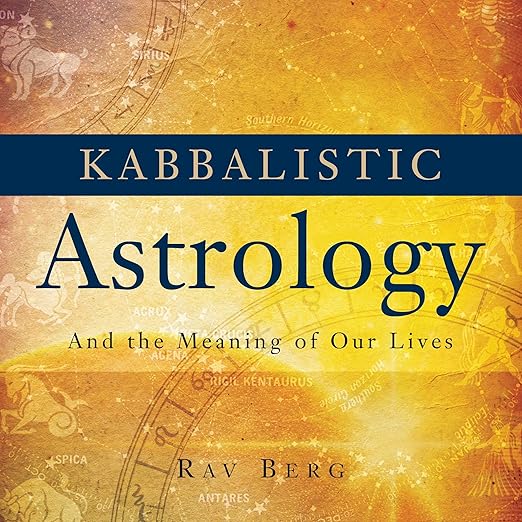
I came to this one during a stretch when I was revisiting foundational texts across different contemplative traditions. A friend who studies Kabbalah seriously had been recommending Rav Berg’s work for months, and one evening I queued up Kabbalistic Astrology while walking the neighborhood after dinner. By the time I circled back home, I had already paused it twice to think through what Berg was actually saying about the nature of destiny. This is not a light listen, even at under four hours.
What surprised me was the precision of Berg’s argument. He does not treat astrology as a predictive system in any conventional sense. The book opens with a philosophical reframing that distinguishes destiny from predestination, and that distinction turns out to carry the weight of everything that follows. If you approach this expecting sun-sign descriptions or compatibility charts, you will be genuinely disoriented. Berg’s Kabbalah is a framework for spiritual accountability, and astrology here functions as a diagnostic tool for understanding what your soul agreed to work through in this lifetime.
Our Take on Kabbalistic Astrology
The central concept around which this audiobook orbits is tikkun, the Kabbalistic idea of spiritual correction. Each person carries wounds or uncompleted lessons from previous incarnations, and the natal chart, in Berg’s reading, maps those unresolved areas. The North and South Nodes of the Moon carry particular weight here, framing the axis between where we come from karmically and where we need to grow. One reviewer with clear esoteric background noted that Martin Schulman’s classical work covers similar nodal territory with more depth, which is a fair observation. Berg writes accessibly but not exhaustively, and listeners who come in wanting granular technical instruction will find this more framework than manual.
What the book does exceptionally well is establish a philosophical scaffolding that makes astrology feel morally serious. There is nothing fatalistic about Berg’s view, which is notable. He argues consistently that we can become masters of our fate once we understand what patterns we are here to break. That idea resonated with at least one listener who described starting her Kabbalistic studies as a teenager and returning to this text decades later to find new layers in it. The intergenerational depth she describes is real. This is a book that will read differently depending on where you are in your own practice.
Why Listen to Kabbalistic Astrology
The reasons to listen are precisely the reasons that distinguish this from generic astrology content. Rav Berg was the director of the Kabbalah Centre International and spent decades synthesizing this tradition for Western audiences. The audiobook brings with it a PDF companion, available through Audible, which matters because some of the astrological diagrams and correspondences Berg references benefit from visual support. The audio alone holds up as a philosophical argument, but the full experience requires the supplementary material.
Tim Paulson’s narration is appropriately restrained. He reads with authority and pacing that allows the listener to sit with Berg’s more demanding claims rather than rushing through them. The duration, just under four hours, feels calibrated: enough to establish the framework rigorously without turning into an encyclopedia. For listeners who have been around esoteric astrology for a while, including those with backgrounds in Tarot, Qabalah, or numerology, the reward is a coherent synthesis that connects these systems at the root rather than grafting them together artificially.
What to Watch For in Kabbalistic Astrology
The honest caveat is the one surfaced most clearly in the reviews: this is not a beginner’s text. One reviewer who described herself as new to astrology but already studying Kabbalah found it practical; another with deep esoteric grounding found it rich but too brief. If you have never encountered the Kabbalistic framework before, and have no background in Western Mystery traditions, significant portions of this audiobook will feel like entering a conversation midway through. Berg assumes a working familiarity with concepts like the sephirot, the Hebrew letters, and reincarnation as understood within the Lurianic Kabbalah tradition.
That said, the book does not wall itself off entirely. Berg is an explainer by vocation, and his tone is inviting rather than gatekeeping. The distinction he draws between what the planets signal and what they demand of you is one of the more useful reframes I have encountered in spiritual astrology writing. He also gestures toward how this system applies in practical daily life, not just in abstract soul-mapping. The book stops short of being a complete guide to that daily application, which is where some listeners may feel it leaves them wanting more.
Who Should Listen to Kabbalistic Astrology
This audiobook will reward listeners who already have some Kabbalistic foundation, who practice or are curious about Western esoteric astrology, or who are drawn to the idea that a natal chart can function as a spiritual curriculum rather than a personality profile. It is also a meaningful starting point for anyone already embedded in the Kabbalah Centre’s teachings who wants to understand how Berg approached astrological interpretation.
Listeners who are brand new to both astrology and Kabbalah may find themselves needing supplementary reading before the framework clicks. Those looking for sun-sign entertainment or compatibility analysis should look elsewhere entirely. At under four hours and with a companion PDF, this is a committed but accessible entry point for the right audience.
Frequently Asked Questions
Do I need to know Kabbalah before listening to Kabbalistic Astrology?
Some background in Kabbalah or Western esoteric traditions will significantly deepen your experience. Rav Berg assumes familiarity with concepts like tikkun and the Hebrew letters. New listeners can follow the philosophical argument but may miss layers of the system without prior context.
Is this audiobook about horoscopes and sun signs?
No. Berg explicitly moves away from horoscope-style astrology. This is a framework for understanding your natal chart as a map of karmic lessons and spiritual correction, rooted in Kabbalistic cosmology rather than predictive fortune-telling.
What is the PDF companion mentioned in the listing, and does it matter?
Audible includes a supplementary PDF in your library when you purchase this title. It contains astrological diagrams and correspondences that support what Berg describes in audio. The narration stands alone, but the visual material fills in technical gaps.
How does Berg define the relationship between destiny and free will in this book?
This is the book’s central argument. Berg draws a clear line between destiny, meaning the spiritual work your soul is here to do, and predestination, the idea that outcomes are fixed. His view is that understanding your chart gives you the awareness to actively shape which of your many possible futures you move toward.