Quick Take
- Narration: Holly Warren handles the romantic comedy register cleanly and gives Quinn the warmth and self-deprecating humor the character requires without overdoing either quality.
- Themes: Self-worth and the habit of settling, viral public humiliation, second chances with corrected timing
- Mood: Light, fun, and emotionally satisfying in the way good romantic comedy is supposed to be
- Verdict: A well-constructed rom-com that delivers on its premise, Quinn is a protagonist worth spending eight hours with, and the British charmer dynamic works reliably throughout.
There is a particular kind of romantic comedy that works because it gets the protagonist exactly right, not perfect, not aspirationally flawless, but specific in her anxieties and recognizable in her failures in a way that makes you root for her with actual investment rather than genre obligation. Just a Girl gets Quinn Pearson right, and that is the main thing the novel needs to do. I listened to the second half on a rainy Thursday afternoon when I had no interest in doing anything demanding, and found myself engaged enough to stay through the ending rather than pausing for a tea break. That is, in the romantic comedy context, a real compliment.
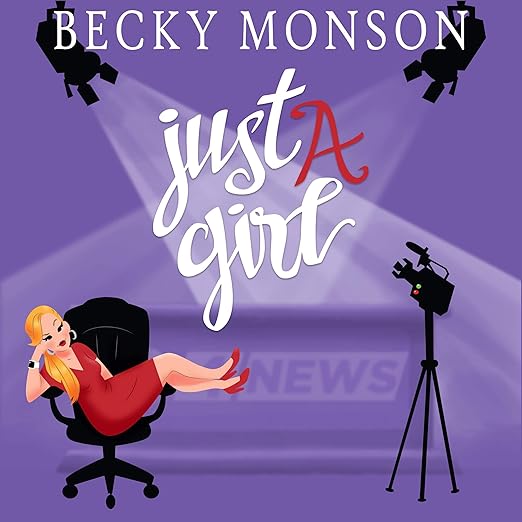
Quinn is a news reporter whose career has just been detonated by an accidental live-broadcast use of a swear word that has since accumulated eighteen million YouTube views. She is simultaneously dealing with the aftermath of that professional catastrophe and the chronic condition of her life: a habit of settling, for the wrong jobs, the wrong men, the wrong version of a future that she has stopped believing in. Then she nearly chokes to death on a powdered sugar donut in front of a dashing British man named Henry, who finds her near-death experience charming rather than alarming, and the novel is off to its central complication: Henry is off limits, for reasons the synopsis declines to specify and the novel deploys as its primary obstacle.
What the YouTube Moment Tells You About Quinn
Reviewer Cheyenne identifies the core appeal precisely: Quinn has body image issues and has settled for things throughout her life, and the novel takes those qualities seriously rather than treating them as quirks to be resolved by the right man’s attention. Becky Monson is interested in Quinn’s settling as a structural problem, a way of being in the world that predates Henry and will outlast him unless Quinn chooses differently. The romantic plot is the vehicle, but the protagonist’s relationship with her own worth is the subject, and the novel maintains that distinction throughout.
The YouTube viral moment is the novel’s sharpest situational comedy: Quinn has become famous for exactly the wrong thing, and the visibility it has created is an amplification of the same tendency to be seen at the worst possible moment that the donut scene literalizes. There is a recurring motif in the book of Quinn’s timing being catastrophically wrong, and Monson uses it with discipline, it is not just slapstick accumulation but a coherent metaphor for someone who has been waiting for the right moment to start her real life and keeps choosing the wrong entry points.
Henry, Thomas, and the Supporting Cast Doing Real Work
Henry is, as reviewers note, a very good British romantic lead. He is charming and slightly bemused by Quinn’s disasters and possessed of that quality in romantic fiction of finding the protagonist attractive at her worst, which is required equipment for this kind of story. Reviewer April May notes that Thomas, a secondary character, warranted an extra star by himself, which suggests Monson’s supporting cast is doing meaningful work beyond the central dynamic. The novel also contains what the same reviewer calls hit kissing scenes, which, in a romance, is the baseline requirement met and exceeded.
Holly Warren’s narration is well-suited to the material. She plays Quinn with a self-deprecating humor that stops short of martyrdom and an underlying warmth that makes the character’s insecurities feel earned rather than performed. The British Henry comes through clearly without becoming a caricature, which is a genuine challenge in this kind of novel.
Series Context and What Comes After
Just a Girl is part of the Just a Series by Becky Monson, though it reads as a complete standalone with its own satisfying resolution. Monson has a recognizable style across her catalog: protagonists with specific professional settings, romantic complications that are practical rather than melodramatic, and endings that resolve with more emotional clarity than most genre examples. If this is your first encounter with her work, it is a representative sample.
Who Should Listen / Who Should Skip
Listen to this if you enjoy contemporary romantic comedy with a protagonist whose insecurities feel human rather than fictional, if you are in the mood for something that moves quickly and ends well, or if a British romantic lead is something you actively seek out in your fiction. Skip this if the off limits love interest trope is something you find structurally predictable, the novel’s resolution is warm but follows a familiar path to get there.
Frequently Asked Questions
Does Just a Girl work as a standalone, or is it part of a series that requires prior reading?
It reads as a complete standalone with a satisfying ending. The Just a Series branding may refer to tone and style consistency across Monson’s books rather than a continuous narrative.
What makes Quinn different from the typical romantic comedy heroine?
The novel specifically addresses Quinn’s habit of settling, for jobs, relationships, and a diminished version of her own potential, as the actual problem the story resolves. The romance is the catalyst, not the cure.
What is the off limits complication with Henry, and does it feel contrived?
The specific reason Henry is off limits is held back as a plot reveal. Reviewers found the setup credible enough not to undermine the story, though this kind of structural device varies in how it lands depending on the reader.
Is Holly Warren’s narration consistent with other Becky Monson audiobooks?
Limited comparative information is available, but Warren’s warm, light touch suits Monson’s prose well. The performance brings Quinn’s self-awareness and humor through clearly without overdoing either quality.