Before You Press Play
- Narration: John Lescault's measured, period-appropriate register brings the 1848 manuscript's voice to life without modernizing its rhythms; the restraint is the right call for a first-person historical document.
- Themes: Frontier survival and danger, fur trade culture in the Rocky Mountains, first-hand witness to a vanishing world
- Mood: Spare and immersive, with the weight of a document that knows it is the only record
- Verdict: Osborne Russell's nine years in the Rocky Mountain fur trade produced one of the most direct primary accounts of that vanishing world, and Lescault's narration gives the 1848 manuscript the steady voice it deserves.
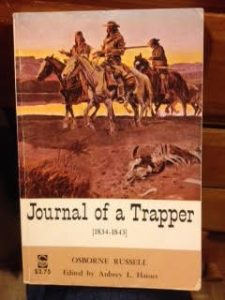
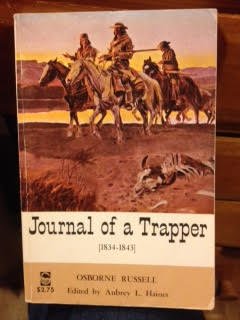
Osborne Russell spent nine years working as a fur trapper in the Rocky Mountain region between 1834 and 1843, and the audiobook version of Journal of a Trapper delivers his account as he left it: transcribed from memory in the Oregon country after his original journals were lost, shaped into narrative from notes and recollection, and published in 1848. John Lescault reads the manuscript at a pace that suits the material well. This is not a romanticized adventure account but a working trapper's record of days spent in dangerous territory, and Lescault's measured delivery honors the documentary nature of what Russell wrote without draining it of the genuine drama buried in the understatement. For listeners who come to historical nonfiction wanting the voice of someone who was actually there rather than a later historian's interpretation of what happened, this audiobook delivers exactly that.
The historical context matters for appreciating what this audiobook actually is. Russell was present during the heyday of the Rocky Mountain fur trade, working alongside the principal figures of that period at a moment when the industry that had drawn European and American enterprise into the northern Rockies was beginning its collapse. The beaver pelt market that powered the whole system was shrinking, the great mountain rendezvous gatherings were ending, and the wilderness Russell describes was on the edge of transformation. He did not know that when he was living it, which is what makes the journal's specificity so valuable: it is a record made without the retrospective clarity that later historians brought to the same events.
What We Made of It
Russell writes in the voice of a man who is reporting rather than dramatizing. The misadventures and good times the synopsis references are present throughout, but they arrive in the register of someone who has survived enough close calls that near-death has become a routine note rather than a dramatic climax. This understatement is the journal's most historically useful quality and also the feature that makes it work particularly well in audio. Lescault's narration delivers the flatness accurately, and the horror of particular passages, encounters with hostile parties, injuries far from any assistance, winters that test the limits of preparation and skill, arrives with more force for being stated simply rather than amplified.
The trapper's world Russell describes operated on a specific economy of knowledge and skill that contemporary listeners have almost no access to through lived experience. The protocols of the mountain rendezvous, the politics between different fur trade parties operating in overlapping territory, and the tracking and survival techniques that sustained men in those conditions are present in the journal as a matter of course rather than as explanation. Russell was writing for readers of his own era who would have recognized the references immediately. Lescault handles the proper names and geographic references with confident familiarity rather than the fumbling delivery that signals unfamiliarity with the material, which significantly affects how the historical texture lands.
The Best Parts of Journal of a Trapper
The audiobook format is a particularly good match for primary source historical documents, for a counterintuitive reason: the listening experience enforces the chronological forward motion that diaries and journals were designed to operate in. When you are reading a trapper's journal in print, the temptation to skim forward to the dramatic passages or to flip back to cross-reference earlier entries breaks the immersive effect of following a man's movements across seasons and territory. Audio locks you into Russell's temporal experience in a way that serves the document's fundamental form more faithfully.
At just over six hours, this is one of the shorter substantial historical audiobooks available in the adventure travel and frontier history category. The tight runtime reflects Russell's spare prose rather than any abridgment; he wrote economically, and Lescault reads economically in kind. The density of historical and geographic detail per hour is high, which rewards attentive listening rather than background audio use. Listeners who engage with the material actively, rather than having it run while occupied with something else, will get more out of the experience and follow the chronological thread more clearly.
What Might Not Land
Listeners accustomed to narrative nonfiction that provides historical context and interpretive framing will find Russell's journal more demanding. He does not explain who the figures he mentions are, what the political dynamics between competing fur companies involved, or how the Rocky Mountain trapping system worked as an economic structure. He assumes a reader contemporary with him who would already know those things. Modern listeners benefit from having some background in the fur trade era before pressing play, or from pausing to research context as unfamiliar references arise throughout the narrative.
The lack of any reviews attached to this particular audio edition is notable, and listeners may want to compare available audio versions of the manuscript before committing, especially given how many public domain recordings of this text already exist. The journal itself has a substantial historical reputation and the public domain status means multiple recordings exist. Narration style and recording quality can vary significantly across public domain productions, and Lescault's approach, measured and historically grounded, may not suit every listener's preference for how a primary source document should sound.
Who Should Pick Up Journal of a Trapper
This audiobook rewards listeners with existing interest in American frontier history, the Rocky Mountain fur trade era, or primary source historical documents generally. It is also an excellent choice for anyone who wants Western American history delivered in the voice of someone who was actually present rather than in the interpretive register of a later historian working from secondary sources.
Listeners who want modern narrative framing, contextual explanation provided alongside the primary text, or dramatic structure imposed on historical events will find the journal's raw documentary form a different experience than they may be expecting. Russell's account is most powerful when you allow the understatement to work on you rather than waiting for a narrator's dramatic commentary on what you are hearing.
Good to Know
Is the Journal of a Trapper audiobook an abridged version, or does it cover the full 1848 manuscript?
Based on the runtime of just over six hours, this appears to be a complete reading of Russell's manuscript. His spare prose is genuinely short by the standards of modern nonfiction; the runtime reflects the economy of his writing rather than any abridgment.
Do I need background knowledge of the Rocky Mountain fur trade to follow this audiobook?
Some background is helpful. Russell wrote for contemporary readers who already knew the key figures and context of the fur trade era. Modern listeners will follow the daily record without difficulty, but references to specific parties, companies, and geographic features benefit from prior familiarity or supplementary research alongside the listening.
How does John Lescault's narration handle the 19th-century voice of Russell's manuscript?
Lescault's approach is measured and period-appropriate, honoring the spare documentary quality of Russell's prose without modernizing its rhythms or adding interpretive drama. He handles the proper names and historical references with confident familiarity, which keeps the material grounded.
Is this audiobook a dramatized account or a straight reading of the original manuscript?
It is a straight reading of Russell's journal as transcribed. It adds no dramatization, added narration, or contextual framing beyond what Russell wrote. The experience is that of a primary source document read aloud, which is both its limitation and its value.