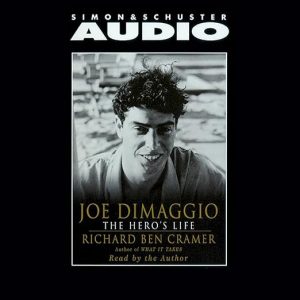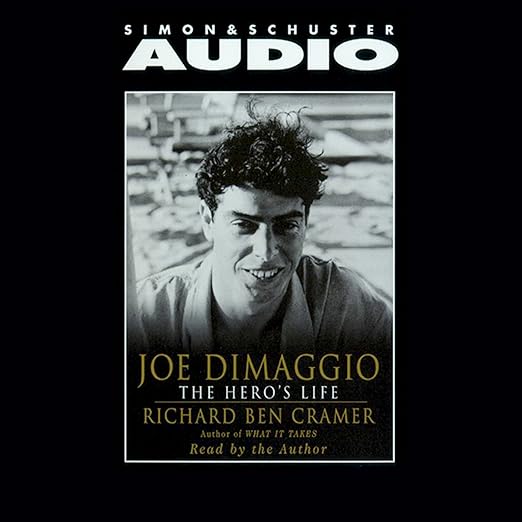
At a Glance
- Read by: Richard Ben Cramer narrates his own dense, digressive reporting with a plainspoken delivery that keeps the density from feeling rushed.
- At its heart: celebrity's hidden cost, immigrant ambition, the gap between legend and man
- Vibe: Clear-eyed and unsentimental
- Short version: A sharply reported biography that trades hero worship for something far more interesting.
How does a fifty-six-game hitting streak turn a private, guarded man into a national obsession he spent the rest of his life trying to escape? That's the real question Richard Ben Cramer chases across this audiobook, and he narrates his own reporting on Joe DiMaggio's life in a voice that matches the book's central discovery: the closer you get to the actual man behind the Yankee Clipper myth, the less he resembles the myth at all. I came to this expecting a straightforward baseball biography and got something closer to an investigation into how American celebrity itself gets manufactured, and who pays for it.
Verify Everything, Follow the Uncomfortable Thread
Cramer narrating his own reporting carries real weight, since so much of the book's authority rests on the specific texture of his research rather than just its conclusions. One reviewer, MBS, initially bristled at Cramer's unusual, detail-dense prose style and its stream-of-consciousness digressions into obscure incidents and trivia, but ultimately found the book "a fabulous read the more you get into it". Hearing that same idiosyncratic, digressive style in the reporter's own voice makes it read less like eccentricity and more like a journalist thinking out loud through everything he uncovered.
At six hours and eighteen minutes, this audiobook moves at a notably brisk pace for a book built on the kind of exhaustive, name-dense reporting MBS describes, and Cramer's narration keeps that density from ever feeling rushed by leaning into a plainspoken, unhurried delivery rather than trying to race through the material. It reads less like a comprehensive replica of his full print reporting and more like Cramer walking a listener through the reporting's sharpest, most revealing threads directly.
Cramer's own credentials matter for how much authority his narration carries. He won a Pulitzer Prize for his Middle East foreign correspondence before turning to book-length biography, and that investigative-reporter instinct, verify everything, follow the uncomfortable thread rather than the flattering one, shapes every chapter of this book. Hearing that same rigor in his own reading voice, rather than filtered through a separate narrator's interpretation, reinforces exactly the quality that made his DiMaggio reporting land as trustworthy in the first place.
DiMaggio's father was a Sicilian immigrant fisherman who expected his sons to join the family trade, and Joe's early ambivalence about baseball, before it became his entire identity, is part of what makes the "immigrant boy who made it big" framing more than a marketing tagline. Cramer spends real time on the fishing-family texture of DiMaggio's San Francisco childhood before the fame arrived, and that grounding pays off later by making DiMaggio's total transformation into a national icon feel like an even sharper break from where he actually started.
Cramer Can't Be Called a DiMaggio Fan
The book tracks DiMaggio from an immigrant's son who became the dominant star of the Yankees dynasty, through the fifty-six-game hitting streak after which, in the synopsis's own words, "the nation literally sang his name", into the postwar years when he became "Broadway Joe, the icon of elegance and class", married Marilyn Monroe, and finally into what the synopsis calls "a decade of national bereavement" following her death in 1962. Cramer's real subject is the cost of that visibility: a man who wanted little more than to be left alone spent his entire adult life as the nation's most public symbol of dignity, and the book is unusually honest about how much that arrangement actually cost him.
Reviewer Frank Scoblete offers a sharp observation worth repeating: Cramer "can't be said to be a Joe DiMaggio fan", which is exactly what makes the book compelling rather than hagiography dressed up as journalism. As Scoblete puts it, "DiMaggio comes across as the greatest baseball player who ever lived, despite his many eccentricities", and Cramer's narration never softens the uncomfortable material to protect the legend.
The fifty-six-game hitting streak the synopsis references remains, decades later, one of the most famous unbroken records in American professional sports, and Cramer treats it less as a triumphant highlight than as the moment DiMaggio's private self effectively stopped being his own. Every subsequent chapter of the book reads, in some sense, as the aftermath of those fifty-six games: a level of fame so total and so sudden that DiMaggio spent the following four decades trying to manage it rather than simply living his life.
Provocative, Poignant, and Willing to Accept Truth
Listeners should know upfront that Cramer writes about DiMaggio's era with the period's own attitudes intact rather than sanitized for modern ears, including a period ethnic nickname for DiMaggio that reviewer MBS specifically singled out as something they "didn't like". Cramer is documenting, not endorsing, the casual prejudice DiMaggio actually faced as an Italian immigrant's son breaking into professional baseball in the 1930s, but it is worth knowing this book does not soften that history for comfort.
Not every listener responds the same way to Cramer's warts-and-all approach. Keith D. Bertrand's review calls the book "very provocative, poignant, and thoughtful, provided one is willing to accept the truth", a fair way of flagging that some of what Cramer uncovers complicates the tidy hero narrative DiMaggio spent his life cultivating. Readers attached to the clean, uncomplicated version of the DiMaggio legend, hero, gentleman, national treasure, may find this account harder to sit with than a more celebratory sports biography would be.
The private grief the synopsis describes following Monroe's death in 1962 is not abstract in the book. DiMaggio took charge of her funeral arrangements himself, kept the guest list deliberately small, and maintained a standing arrangement to send fresh flowers to her crypt for years afterward, the kind of quiet, sustained devotion that never matched his careful public silence about their relationship. Cramer treats that gap, between what DiMaggio felt and what he was willing to show anyone, as the emotional key to understanding everything that came after.
Complicating the Image Is the Entire Project
Baseball history fans and anyone interested in the mechanics of mid-century American celebrity will find this a genuinely revealing listen, especially those who already know the broad strokes of the DiMaggio legend and want the more complicated version underneath it. Cramer's own journalistic reputation, and the fact that he is narrating his own years of reporting, makes this a natural pick for listeners who value narrative nonfiction built on real shoe-leather research over a quick highlight-reel biography.
A complete, unhurried replica of Cramer's full original reporting is not what this runtime sets out to deliver, and listeners wanting the absolute fullest version of his research should adjust their expectations accordingly before pressing play. Anyone hoping for a warm, uncomplicated tribute to an American sports hero should also reconsider, since Cramer's entire project is complicating that exact image.
Common Questions
Is this audiobook narrated by Richard Ben Cramer himself?
Yes. Cramer narrates his own reporting, which gives the book's idiosyncratic, detail-dense prose style real authority in audio.
Does this audiobook soften DiMaggio's more unflattering personal qualities?
No. Cramer, who by one reviewer's account can't be said to be a DiMaggio fan, documents DiMaggio's vanity and pettiness alongside his athletic greatness without softening either.
How long is the Joe DiMaggio: The Hero's Life audiobook?
Six hours and eighteen minutes, a notably brisk runtime for reporting reviewers describe as dense and detail-heavy.