Quick Take
- Narration: Shevon Amos brings warm Caribbean authenticity to every phrase, making the pronunciation lessons feel lived-in rather than textbook.
- Themes: Language immersion, Caribbean culture, folk wisdom through proverbs
- Mood: Warm, celebratory, and unexpectedly meditative in the proverbs sections
- Verdict: A short but genuinely useful listen for anyone planning a trip to Jamaica or simply curious about how language carries an entire way of life.
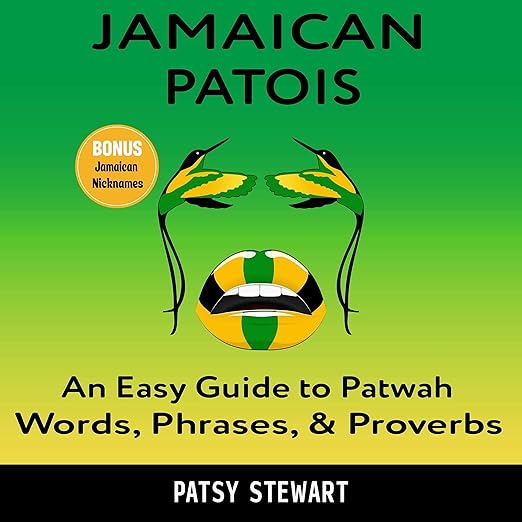
I came to this one through an unusual door. A friend had just returned from Negril and could not stop quoting Jamaican proverbs at me for an entire dinner. One of them stopped me cold: the idea, loosely translated, that you should learn to dance at home before dancing abroad. Within the week I had queued up Patsy Stewart’s Jamaican Patois, narrated by Shevon Amos, and I finished it on a long Sunday afternoon walk, letting the phrases wash over me with the volume high enough to block out the traffic.
At two hours and twenty-three minutes, this is not a long listen. But the brevity is part of the design, and once you understand the structure, it makes complete sense.
Our Take on Jamaican Patois
Stewart organizes the material alphabetically, moving through common words, short phrases, and proverbs letter by letter. That might sound dry, but in practice it creates a pleasant rhythm. The words ground you, the phrases give you something useful, and the proverbs are where the book genuinely comes alive. Reviewer S. Wiley put it well, noting that the proverbs section had her smiling throughout, feeling like things her grandmother might say. I had the same reaction. There is a quality of compressed wisdom in Jamaican proverbs that rewards slow listening, and Amos delivers them with the right weight.
This is not a comprehensive language course. It does not attempt grammar instruction or verb conjugation charts. What it offers instead is immersion through exposure, a sense of how Patois sounds, how it plays with English roots while departing from them in delightful ways, and why the language is so deeply tied to Jamaica’s history, its music, and its humor. Stewart herself notes that connection throughout, and Amos makes it feel natural rather than annotated.
Why Listen to Jamaican Patois
The audiobook format is genuinely the right choice for a language-adjacent title like this. Reading Patois on a page gives you spelling; hearing Amos speak it gives you musicality. Several reviewers mentioned planning trips to Jamaica as their primary motivation, and for that use case this title works well. You will not leave it fluent, but you will leave it with your ear trained to the rhythms, capable of recognizing phrases in conversation and showing the kind of cultural respect that comes from at least trying.
What surprised me was how much the cultural content deepened the language lessons. Stewart’s framing of Patois as a language of experience, one that carries Jamaica’s history of resilience and creativity, gives the word lists a context that purely utilitarian phrasebooks lack. By the time you reach the proverbs for a given letter, you are not just learning expressions; you are learning a worldview.
What to Watch For in Jamaican Patois
Manage your expectations around depth. If you want to hold a sustained conversation in Patois after this listen, you will need considerably more study. The alphabetical structure, while convenient for reference, does mean the listening experience can feel episodic rather than cumulative. Some listeners may find themselves wishing for more narrative connective tissue between sections. The format is closer to an enriched reference guide than a storytelling journey, and if you approach it as such, you will enjoy it considerably more than if you expect a conventional audiobook arc.
There is also an implicit focus on tourist-adjacent and everyday social Patois, which is exactly right for the stated audience. Stewart is not trying to teach academic linguistics. She is trying to help you walk into a conversation in Kingston with some warmth and recognition on your face.
Who Should Listen to Jamaican Patois
This title is well suited for travelers heading to Jamaica who want more than a hotel-lobby vocabulary, fans of reggae and dancehall who want to understand the lyrics they have been singing along to for years, and educators or curious readers drawn to the intersection of language and cultural identity. It is less suited for listeners who want systematic grammar instruction or a deeply researched sociolinguistic study of Creole language development. For the latter, you will need academic texts. For the former, Shevon Amos and Patsy Stewart have produced something warm, accessible, and worth your two and a half hours.
Frequently Asked Questions
Does this audiobook teach Jamaican Patois from scratch or assume some prior knowledge?
It assumes no prior knowledge. Stewart starts with the most common everyday words and builds through phrases and proverbs, making it accessible to complete beginners.
Is the alphabetical structure easy to follow as a listener rather than a reader?
Yes. Amos narrates each section clearly and the transitions between words, phrases, and proverbs for each letter are distinct enough that you can follow along without a physical text in hand.
Does the audiobook cover Jamaican history and culture as well as the language itself?
Stewart weaves cultural context throughout, particularly in the proverbs sections, so you get a sense of how the language connects to Jamaica’s history, humor, and music rather than just a list of translations.
Is two hours and twenty-three minutes enough time to actually learn useful Patois phrases?
You will come away with a working vocabulary of common words and expressions and a feel for the language’s rhythms. Fluency requires more, but for conversational warmth and travel preparation, the length is well matched to the goal.