Quick Take
- Narration: AI-generated Virtual Voice narration, mechanically adequate for reference material but lacking the warmth and interpretive judgment this scholarly subject deserves.
- Themes: Egyptian goddess worship, Greco-Roman religious syncretism, divine iconography and symbolism
- Mood: Academic and thorough, best treated as a reference listen rather than a flowing narrative
- Verdict: The scholarship is genuinely comprehensive and Lesley Jackson is the right author for this subject, but the Virtual Voice narration is a meaningful obstacle to full engagement.
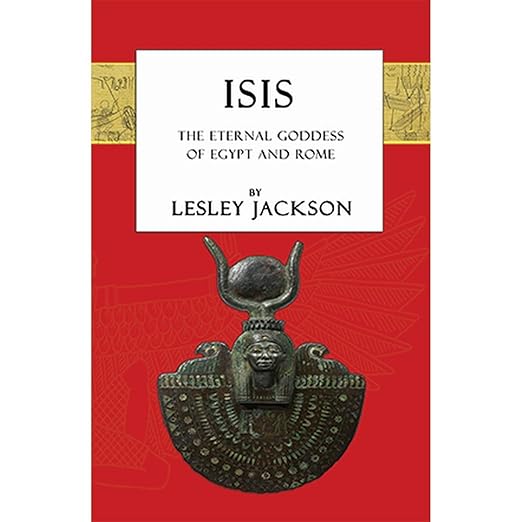
I want to address the narration first, because it shapes the entire listening experience in ways that cannot be separated from a fair assessment. Isis by Lesley Jackson is narrated by Virtual Voice, Audible’s AI-generated narrator technology. I flag this not as an automatic disqualifier but as a material fact that should inform your decision about format. For dense scholarly content about an ancient Egyptian goddess covering thousands of years of religious evolution, the absence of human interpretive judgment in the narration matters more than it might for lighter material. The AI reads the text; it does not understand it, and the difference is audible.
That said, Jackson’s scholarship is substantial enough to deserve serious attention regardless of delivery format.
Our Take on Isis
Jackson approaches her subject with the same methodological rigor she brought to earlier volumes on Hathor, Thoth, and Sekhmet in her Egyptian Gods and Goddesses series. Isis traces the goddess from her earliest appearances in the Old Kingdom, where she appears primarily in association with the dead pharaoh and the myth of Osiris, through her transformation into a universal goddess during the Hellenistic and Roman periods, when her cult spread across the Mediterranean world and absorbed attributes from Demeter, Aphrodite, and other traditions. That historical arc is the book’s spine, and Jackson follows it through primary sources: Egyptian temple texts, Greek and Roman literary accounts, and the material evidence of iconography and ritual objects.
Reviewer Melrose, who described Jackson as their go-to author for Egyptian deity scholarship, captured the book’s appeal well: comprehensive coverage that does not sacrifice accessibility for scope. Reviewer Violet Bunny noted her pleasure at a second Jackson book after finding the Thoth volume excellent, which confirms the series consistency.
Why Listen to This Volume in Jackson’s Egyptian Series
The section covering Isis’s transformation in the Greco-Roman period is where the book becomes most intellectually interesting. Jackson documents how Isis accumulated attributes, epithets, and worshippers from across the ancient world without losing the essential characteristics that made her worship distinctive, her association with magic, with healing, with resurrection, and with maternal power. The process by which a specifically Egyptian goddess became something approaching a universal deity in the ancient Mediterranean is genuinely fascinating, and Jackson explains the mechanism without reducing it to simple cultural borrowing. The treatment of the Isis and Osiris myth across different textual traditions is similarly careful.
What to Watch For in the Virtual Voice Narration
The AI narration handles Egyptian, Greek, and Latin proper nouns with inconsistent pronunciation, some terms are rendered plausibly, others in ways that will grate on listeners with any familiarity with the subject. More significantly, the narration cannot modulate emphasis to flag which concepts are central and which are contextual. Jackson writes with scholarly nuance, using careful qualifications and hedging language that a human narrator would naturally stress; the Virtual Voice flattens this. For a text this dense and this long, nearly ten hours, that flatness accumulates. My strong recommendation is to read this in print or ebook format if possible. If audio is your only option, treat it as a reference listen rather than an immersive one.
Who Should Listen to Isis
This book is for serious students of ancient Egyptian religion, practitioners of contemporary Kemetic tradition, and scholars looking for a comprehensive reference on Isis worship from Old Kingdom through late antiquity. Reviewer Jorge noted that orthodox Kemetics may find the historical-evolutionary approach challenging, since it documents how substantially Isis changed over millennia, which conflicts with ahistorical theological readings. That tension is real and worth knowing about before you listen. For casual interest in ancient Egypt, there are more accessible entry points. For a thorough, source-grounded study of one of the ancient world’s most enduring deities, Jackson is the author you want, ideally in a format with a human narrator. The scholarship amply justifies the investment; only the delivery method remains genuinely in question.
Frequently Asked Questions
Does Lesley Jackson’s Isis require prior knowledge of Egyptian mythology to follow?
Jackson writes for readers with genuine interest in the subject rather than complete novices, though she explains terminology and historical context as she introduces it. Listeners with no background in ancient Egyptian religion can follow the argument, but the experience is considerably richer with some prior familiarity. Her earlier books on Hathor or Thoth serve as useful preparation.
How does this book handle the relationship between the historical Isis and contemporary goddess spirituality?
Jackson’s approach is historical and scholarly rather than devotional. She traces how Isis worship developed and changed across thousands of years of documented history, drawing on primary texts. Contemporary spiritual practice is not her subject, though the historical account she provides is directly relevant for practitioners seeking grounded sources.
Is the Virtual Voice AI narration usable for a 10-hour scholarly audiobook?
Usable, but with significant caveats. The AI narration reads the text clearly and at a steady pace, which handles the reference function adequately. It struggles with the interpretive dimensions of scholarly prose and handles the extensive proper nouns from Egyptian, Greek, and Latin with inconsistent results. Listeners with the option to read in print would likely prefer that format for this material.
How does this volume compare to Jackson’s other books in the Egyptian Gods and Goddesses series?
Jackson’s previous volumes on Hathor, Thoth, and Sekhmet have received consistent praise from reviewers who work through her series methodically. Reviewer Melrose specifically described becoming a go-to recommender of Jackson’s work after encountering multiple volumes. The methodology and depth appear consistent across the series, making Isis appropriate for readers who have enjoyed the others.