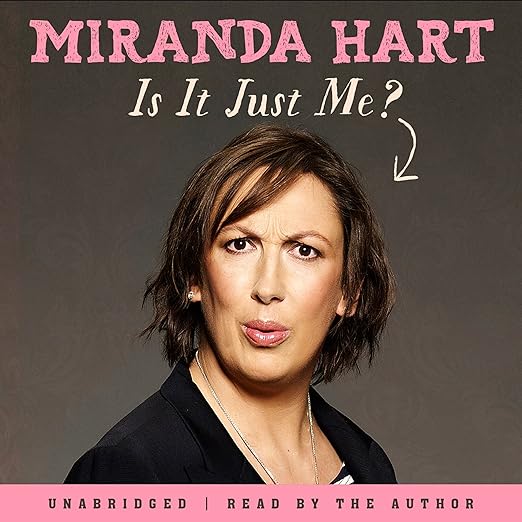
Key Details
- Narrator: Miranda Hart narrates her own material with the comic timing that built her television career, landing beats a hired narrator would have to guess at.
- Subjects: Self-deprecating comedy, adulthood's ongoing awkwardness, direct-address confessional memoir
- Tone: Breezy, warm, and consistently funny rather than emotionally heavy
- Bottom line: A genuinely funny self-narrated comic memoir best enjoyed in short bursts, chronological-memoir fans should look elsewhere.
Folding laundry while Miranda Hart's own voice ran through her audiobook confessions turned into forty straight minutes of laughing out loud instead of finishing the basket. Hart wrote and narrates every word of this collection of, as she calls it, a 'Miran-ual,' her own irreverent attempt at the life manual nobody actually gets handed at eighteen. The premise is direct address from the first line: she is talking to 'dear listener' specifically, not writing at arm's length for a generic reader, and that distinction matters enormously once the audio starts playing. Anyone who has watched her BBC sitcom already knows her comic instincts are built on physical awkwardness and perfectly timed self interruption, and both translate into audio far better than they would sit on a printed page.
The 'Point-ettes' Built for Hart's Own Delivery
What makes the direct address structure work so well in audio specifically is that Hart never has to translate her own comic rhythm through someone else's voice. She wrote lines clearly built for her own delivery, the kind of aside that needs a specific pause or a mock serious tone shift to land as intended, and reading them cold off a page would lose exactly the beats that make them funny. Reviewer Jennifer Hiscox specifically calls out the 'point-ettes' Hart makes throughout, small, sharp observations dressed up as throwaway asides, and those land with real comic precision because Hart knows exactly where she buried the punchline in her own sentence. A narrator working from someone else's script, however skilled, would have to guess at that timing rather than simply deliver it from memory of writing it.
The 'Miran-ual' framing, offering guidance to her own eighteen year old self and by extension to the listener, gives the collection a loose organizing spine without forcing her scattered chapter subjects, bar stools, chopsticks, pedicures, the general indignity of adulthood, into an artificial narrative arc they were never going to support anyway. Reviewer Mimbelina describes feeling like Hart's 'long-lost twin sister' after listening, which captures something real about how the direct address format works on a listener: it creates the sensation of a specific, particular friendship rather than a generic celebrity memoir being performed at you. That intimacy is the entire appeal, and it depends entirely on hearing these stories in Hart's own voice rather than someone else's interpretation of her page.
One specific list from the synopsis is worth close reading as an example of exactly how Hart's comic engine works: balancing on a bar stool, wrestling with chopsticks, faking comprehension of economic news, and enduring a pedicure all show up as entries in her running catalog of adulthood's supposed hazards, the last one flagged directly as wrong because, as she puts it, 'it's plain wrong for a stranger to fondle your feet?' That escalation, physical clumsiness, to cultural illiteracy, to a genuinely funny complaint about bodily autonomy, all inside one breathless list, is a compact demonstration of how she builds a joke, starting small and relatable, then letting the final item swerve somewhere sharper than the setup promised. Hearing that escalation performed rather than read silently makes the swerve land with real comic timing rather than just reading as a clever line on a page.
A Runtime Made for Commute-Length Listening
Self narrated comedy lives or dies on whether the author can actually land her own written jokes out loud, and Hart's television career gives her a real advantage most first time memoirists narrating their own work do not have. Years of physical sketch comedy and audience facing timing translate directly into knowing exactly how long to hold a pause before the next line undercuts it. That is a skill you either have from stage and camera experience or you don't, and no amount of studio coaching reliably substitutes for it in a book built almost entirely around comic rhythm rather than plot.
Seven hours and twenty-one minutes is a genuinely efficient runtime for this kind of loosely structured comic memoir, short enough to finish across a handful of commutes without the material wearing thin the way a longer, more padded comedy collection sometimes does. The chapters function almost like standalone bits, so dipping in and out across several days works fine structurally, unlike a memoir built around a single continuous narrative thread where missing a session means losing the plot. That flexibility suits exactly the kind of listening pattern most people actually have with comedy audio, a chapter during a commute, another during a workout, rarely the whole thing in one sitting.
Temping Stories Stand in for a Timeline
This is not a chronological memoir, and anyone expecting a clean timeline from childhood through television fame will keep waiting for a structure that never fully arrives. Hart jumps between school days, life as an office temp, and general adult bewilderment by theme and comic opportunity rather than by date, which suits the 'manual' framing but means the book resists being summarized as a story with a beginning, middle, and end. Readers used to standard celebrity memoir pacing, career milestone, career milestone, reflective conclusion, will need to recalibrate their expectations before pressing play.
Worth flagging directly: the material here draws specifically from Hart's pre-fame years, office temping and school era humiliation rather than her later television success, so listeners hoping for behind the scenes stories from her sitcom's production will not find much of that here. What they will find instead is a more universal, less industry specific comic sensibility, arguably a stronger choice for listeners who have never seen her show at all, since nothing about the humor depends on already knowing her television persona going in.
Production values stay minimal by design here, no music, no sound effects, just Hart's voice carrying the entire runtime, which fits a memoir this intimate but is worth knowing upfront for anyone expecting the kind of layered audio production some celebrity memoirs now include. The simplicity keeps the focus exactly where it belongs, on the writing and the delivery, rather than dressing up thinner material with unnecessary polish.
British Sitcom Fans Fit This Best
Comic memoir at its loosest and most confessional finds its ideal audience here, especially listeners who have ever laughed at their own most humiliating memory only years after the fact. It also works well for existing fans of Hart's sitcom who want more of her specific voice and timing without the constraints of a scripted television format, and for anyone who just wants a genuinely funny audiobook short enough to finish in a single busy week.
Straight autobiography with a clear chronological arc is not what's on offer here, so listeners wanting a traditional memoir structure, career highlights building toward a defined narrative, will find the constant tangents frustrating rather than charming. Listeners entirely unfamiliar with British sitcom-adjacent humor and self-deprecating tonal registers more broadly may also find some bits land softer than they do for an audience already tuned to that specific comic wavelength.
Does Miranda Hart narrate this audiobook herself?
Yes, she wrote and reads every word, and her comic timing from years of television work carries directly into the audio performance.
How long is this audiobook, and does it work well for short listening sessions?
It runs seven hours and twenty-one minutes, broken into largely standalone chapters that suit dipping in and out across several days rather than one long sitting.