At a Glance
- Performance: Virginia Catmur guides the Intermediate Portuguese course with clear, measured pacing that suits the method's teaching structure , a distinct voice from Thomas's own teaching in the earlier courses, but equally purposeful.
- What it covers: Confident self-expression in Portuguese, idiomatic fluency, real-world conversational range
- Feel: Methodical and confidence-building, with cumulative satisfaction across sessions
- Our call: The third step in the Michel Thomas Portuguese sequence delivers on its promise of solid working knowledge, but only for learners who have completed the Foundation and Language Builder courses first.
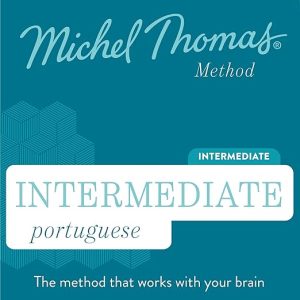
The Intermediate Portuguese (Michel Thomas Method) audiobook sits at position three in the recommended sequence , Foundation first, Language Builder second, this course third, followed by Vocabulary and Insider's. Virginia Catmur takes over teaching duties from Michel Thomas himself here, which represents a significant shift in the learning dynamic from the earlier courses. Thomas built his method on the particular authority of a single teaching voice developed over fifty years. Catmur establishes her own version of that presence across six hours and nineteen minutes of audio: clear, deliberate, and calm in a way that the method's framework both requires and rewards.
Stephen Fry's endorsement of the method as a unique and perfectly brilliant way of learning languages, recorded in his memoir Rescuing the Spectacled Bear, captures something that Intermediate Portuguese confirms: the approach does not feel like studying. At the intermediate level, when the building blocks introduced in the Foundation and Language Builder courses are already in place, the accumulation of expressive range feels less like acquisition and more like remembering things you already knew but had not yet found words for.
Confidence in Conversational Territory Beyond the Basics
What the Intermediate course does that the Foundation and Language Builder courses cannot is build confidence in unfamiliar conversational territory. By this point in the sequence, learners can construct sentences. What they often cannot do is reach for an expression in the moment without freezing. The Intermediate level targets that gap by introducing constructions that sound natural to Portuguese ears , phrases that communicate fluency rather than mere competence , and by building the flexibility to adapt those constructions to different contexts and situations.
The method remains consistent regardless of narrator: building blocks introduced sequentially, no books required during the session, no homework, no rote memorization. Learners are asked to construct answers, pause the recording, respond aloud, then continue. The six-hour audio content is designed to require fifteen to twenty hours of actual engagement when used as intended. The difference between passive listening and active participation with this method is the entire difference between what you retain and what you forget.
Catmur's Measured Voice Replaces Thomas as Teacher
Virginia Catmur's teaching voice is a key variable for learners coming from Thomas's narration in the Foundation and Language Builder courses. Thomas had a specific charisma rooted in decades of teaching and a particular manner of presenting material that many learners describe as both authoritative and surprisingly patient. Catmur's voice is distinct , clear, measured, with an authority that suits the teaching format well , and whether the transition feels seamless or requires adjustment will depend on how attached a learner has become to Thomas's specific register through the earlier courses.
An accompanying booklet is available via the audiobook library or at michelthomas.com. As with the other Michel Thomas courses, the method does not require reading along during the session , the entire approach is built around avoiding the visual dependency that conventional language learning encourages , but having the booklet available for post-session review helps anchor what has been absorbed aurally. The additional one-hour review component built into the six-hour course also provides meaningful consolidation time for the material introduced in the main teaching sessions.
Skipping the Prerequisite Courses Breeds Real Frustration
The sequential prerequisite caveat applies here with full force: arriving at this course without completing both the Foundation and Language Builder Portuguese courses will produce frustration rather than progress. The building blocks assumed at the intermediate stage are substantial. The course is genuinely intermediate , not an alternative entry point for listeners who want to skip ahead or who have some casual familiarity with Portuguese from other sources.
The audio quality reflects the recording origins. These are seminar-style teaching recordings rather than studio productions, and while the audio is clear and functional, it lacks the production polish of modern audiobook narration. Some learners find the informal, live-session quality enhances the sense of being taught in person. Others find it takes a session or two to adjust. At six hours and nineteen minutes of content requiring fifteen to twenty hours of active engagement, the investment is significant , and the returns are commensurate only for learners who approach the method as it is designed to be used rather than treating it as background listening.
Learners who have made it through the Foundation and Language Builder Portuguese courses with the method intact will recognize in the Intermediate course the same cumulative satisfaction that characterized the earlier stages. The difference is in scale: the confidence gains at the intermediate level are larger because the gap between what you could say before the course and what you can say after is wider. The ability to express yourself confidently in a variety of real situations , which is the explicit goal Catmur works toward across the six hours of audio , is qualitatively different from being able to construct grammatically correct sentences.
This Course Assumes Foundation and Builder Are Done
This audiobook is specifically for learners who have completed both the Michel Thomas Foundation and Language Builder Portuguese courses and are ready to move from structural competence toward genuine expressive fluency. It is not appropriate as a starting point, and it is not designed for casual review. The commitment the method requires , active engagement, pausing and responding, fifteen to twenty hours of real study time , means it rewards learners serious about reaching conversational ability in Portuguese. If that is your goal, this is a serious and effective tool. If Portuguese is a passing interest, the Foundation course is where to begin and the Language Builder is where to assess whether the method suits your learning style before committing to the full sequence.
Frequently Asked Questions
How does Virginia Catmur's teaching in this audiobook compare to Michel Thomas's own narration in the Foundation course?
Catmur maintains the method's pedagogical framework , sequential building blocks, no memorization, active pause-and-respond engagement , but her teaching voice is distinct from Thomas's. The structure is identical; the personal register is her own. Learners who developed a strong attachment to Thomas's specific voice through the earlier courses may need a session or two to calibrate to the change.
How long does it actually take to complete this audiobook properly using the Michel Thomas method?
The audio content runs 6 hours and 19 minutes, but the publisher estimates 15 to 20 hours of real study time when the method is used correctly , pausing to respond before the answer is given, reviewing sessions, and repeating where needed. Budget several weeks of regular practice rather than a single listening block.