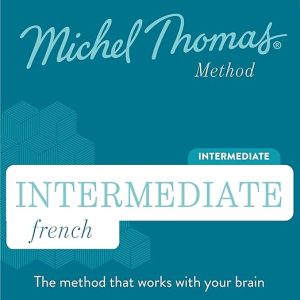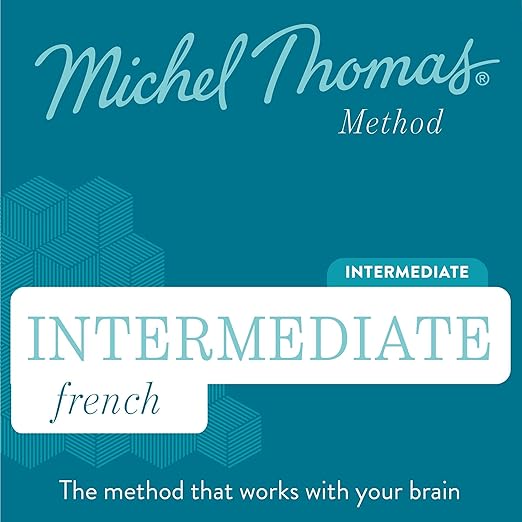
Michel Thomas built his teaching reputation on a single, counterintuitive claim: the responsibility for learning belongs to the teacher, not the student. The craft behind that claim is what makes the Intermediate French (Michel Thomas Method) - Full course worth careful attention as an audiobook experience rather than simply as a language product. Thomas understood something fundamental about how stress and anxiety block language acquisition - he had watched it happen in decades of classroom instruction - and the entire architecture of the course is designed around eliminating that barrier before a single new word is introduced.
This audiobook runs to 6 hours and 18 minutes and sits at the third recommended step in the Michel Thomas Method sequence, after Foundation and Language Builder. The Intermediate course assumes some working knowledge of French and builds directly on the structural vocabulary and construction techniques from those earlier stages. New learners should be aware of that context: this is not a from-scratch beginner course, and the progression in difficulty makes sense only if the prior architecture is already in place.
Fry Calls It a Perfectly Brilliant Method
Thomas narrates his own course throughout, and that self-delivery is the heart of the method. His approach in the studio sessions recreates the dynamic of a small private lesson: you hear Thomas working with two students, building each new construction incrementally, and your role as the listener is to be the third student - pausing to form your own answer before you hear the response. That pause is not a gimmick. It is the mechanism through which the method actually works. By requiring you to retrieve information and construct a sentence before hearing the confirmation, Thomas encodes the knowledge through production rather than passive reception.
The language that emerges from this process feels different from what you take away from phrase-list study or grammar-rule memorisation. Stephen Fry, quoted in the synopsis, described it as a perfectly brilliant way of teaching languages, and while the endorsement is characteristically effusive, the underlying point is accurate: the method produces language knowledge you can actually use because you have built it yourself rather than received it pre-assembled.
At the intermediate level, the course covers the more demanding structural territory: complex tenses, conditional constructions, formal registers, and the kind of nuanced sentence-building that separates competent speakers from beginners. Thomas introduces each new element in relation to what the learner already knows from earlier in the method, which creates a genuine sense of the language as a coherent system rather than a list of disconnected rules.
The PDF companion referenced in the course notes is available alongside the audio and provides a written reference for learners who want to review what they have built in a visual format. It is not required to use the audio course, but it extends the value of the product for learners who process written reinforcement alongside audio work.
Six Hours on Paper, Twenty in Practice
The core case for the audio format here is that the method cannot be separated from the listening experience. Thomas's pacing, his timing of questions, and the particular quality of his patience when a student makes an error are all embedded in the audio. Reading about the method does not deliver the method. You have to hear it working to understand what makes it distinctive.
The 6-hour-18-minute course is designed to be completed across 15 to 20 hours of active listening, which accounts for the pausing and responding the method requires. That is a realistic investment for learners with a genuine intermediate-level French goal, and the course is replayable in ways that grammar books are not. Going back to a session where a particular construction gave you trouble, hearing Thomas build it again from its components, is an efficient use of review time.
Studio Imperfections Some Find Human, Others Distracting
The method does not teach reading or writing, and it does not deliver systematic vocabulary lists. Learners who need those dimensions of French alongside their audio work will need supplementary resources. The Michel Thomas Method is explicitly an oral and aural method, and the Intermediate course is consistent with that scope. It will not prepare you for written French examinations on its own.
The studio recordings also reflect the production era: they are not slick modern audio productions, and the classroom dynamic between Thomas and his two students occasionally shows the imperfections of live teaching. Some learners find this human quality engaging and authentic. Others find it slightly distracting. Knowing that in advance helps calibrate expectations for the listening experience.
Brittle French Knowledge Finally Becomes Spontaneous
This audiobook is designed for learners who have completed the earlier Michel Thomas French courses and are ready to advance their spoken and comprehension skills into more complex territory. It is also well-suited to learners who have prior French exposure from another source but find that their knowledge feels brittle - they can recognise structures but cannot produce them spontaneously. The method's emphasis on construction over memorisation addresses precisely that gap.
Learners who need writing, grammar tables, or systematic vocabulary alongside their audio work should complement this course with other resources. For learners who are committed to an audio-primary approach to French and want to progress beyond the beginner phase, this course remains one of the most effectively designed language products available in audio form.
Before You Listen
Do I need to complete earlier Michel Thomas courses before using this audiobook?
Yes. The Intermediate French course is the third step in the Michel Thomas Method sequence and builds directly on the Foundation and Language Builder courses. Starting here without that prior structure means missing the grammatical scaffolding the intermediate material depends on. The method works as a progression, not a set of standalone options.
How does listening to Michel Thomas himself narrate the audiobook differ from having a professional narrator?
Thomas's self-narration is the method. His pacing, his timing of questions and corrections, and the way he builds each construction incrementally are not just presentation choices - they are the pedagogical architecture. A professional narrator reading the same content would lose precisely what makes the course effective.
What level of French do I need before this audiobook will be useful?
The course is designed for learners who have completed the Foundation and Language Builder stages of the Michel Thomas Method, which corresponds roughly to low-beginner to beginner-plus. If you have studied French elsewhere and can manage basic present-tense conversation, you likely have enough foundation to benefit from the Intermediate course, though the progression will feel most natural following the prior stages.
Does this audiobook include a PDF, and is it necessary for the course to work?
A PDF companion is available alongside the audio when you purchase the title. It provides a written reference for what you cover in the sessions, which is useful for learners who want visual reinforcement. The audio course is self-contained and functional without the PDF, but the written reference extends the value of the product for learners who benefit from seeing constructions in print.