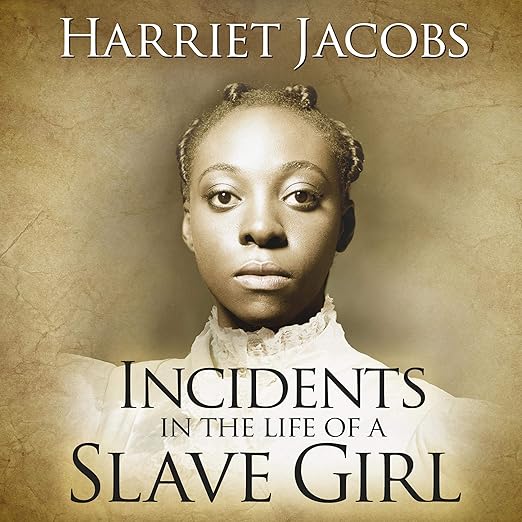
I first read Harriet Jacobs in a graduate seminar on American autobiography, and coming back to it in audio form is a different kind of reckoning. Jacobs published under the pseudonym Linda Brent in 1861, partly for her own protection and partly because the abolitionist movement needed her voice to reach audiences who might otherwise dismiss firsthand testimony from an enslaved woman. That calculated act of self-concealment within an act of radical self-revelation is one of the most layered gestures in American literary history.
Mia Ellis's narration for the 2018 Dreamscape Media release runs just over eight hours. Ellis does not perform grief; she inhabits a measured authority that suits Jacobs's own prose style, which is itself restrained and deliberate in ways that make the violence underneath more devastating for being stated plainly.
Where This One Lands
Jacobs's narrative does something unusual for 1861: it addresses itself directly to free Northern women, asking them to see slavery not as an abstraction but as a system that specifically targeted Black women's bodies and family bonds. The sexual abuse she endured from her enslaver Dr. Flint is described with a candor that was considered too shocking for publication when the manuscript was first completed. That reception tells you something about what white abolitionist audiences were actually prepared to confront. Jacobs pressed forward anyway, and the result is a document that refuses the sanitized versions of slavery that many nineteenth-century readers preferred.
Why Listen to Incidents in the Life of a Slave Girl
Listening to testimony rather than reading it changes something in the relationship between witness and audience. Ellis's voice makes the seven-year period Jacobs spent hiding in a tiny crawlspace above her grandmother's house - a space too small to stand in, enduring heat and cold and insects while watching her children grow up below her - feel present rather than historical. The audiobook format also makes this text more accessible to readers who encounter nineteenth-century prose with difficulty on the page. Jacobs's writing is not dense, but it is formal, and Ellis navigates that register with assurance.
What Gives Us Pause
One reviewer wrote this during Black History Month, noting the availability of historical texts now freely accessible in audio and on digital platforms. That democratization of access is genuinely significant for a text that was shelved and nearly lost before it was finally published. The caveat worth naming is that some editions of this audiobook, including certain digital versions, have suffered from formatting and reproduction issues noted in reviews for other formats. The Dreamscape Media audio release reviewed here does not carry those problems, but listeners sourcing from multiple platforms should verify the edition they are accessing.
Who Should Listen to Incidents in the Life of a Slave Girl
Anyone who wants to understand American slavery from the perspective of the people who survived it rather than those who documented it from the outside. Students of American history, literature, or gender studies will find Jacobs's text foundational. It belongs alongside Frederick Douglass's narrative as a primary document of the antebellum period, and its specific focus on the experience of enslaved women makes it irreplaceable. Listeners sensitive to detailed accounts of sexual coercion and psychological terror should approach with that awareness. For readers encountering this text for the first time, following the audio with further reading about Jacobs's historical context and the abolitionist networks that supported her will deepen the experience considerably. This is not a book that closes easily when the narration ends. For readers encountering this text for the first time, following the audio with further reading about Jacobs's historical context and the abolitionist networks that supported her will deepen the experience considerably. This is not a book that closes easily when the narration ends. The narrow rating count on this audiobook edition should not discourage anyone - this is a text that has generated centuries of critical attention in print, and the audio format simply makes it newly available to a different kind of listener.