Quick Take
- Narration: Virtual Voice performs this instructional guide, which is a particularly poor match for material that is fundamentally about spontaneity, timing, and the physical aliveness of human performance.
- Themes: Improv principles and games, confidence-building through spontaneity, practical applications beyond the stage
- Mood: Instructional and earnest, but tonally flat in audio form
- Verdict: The practical content has genuine value, but the synthetic narration creates a fundamental mismatch with material about the vitality of human spontaneity.
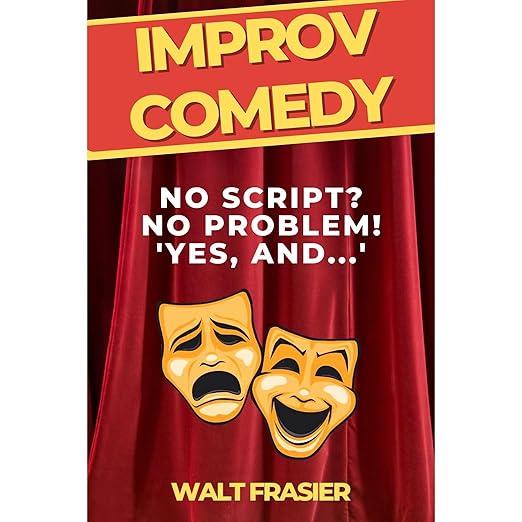
I want to be direct about something before anything else: this is a book narrated by Virtual Voice, Audible’s AI synthetic narrator, and that fact is not incidental to how it functions as an audio experience. Improv Comedy: No Script, No Problem is a guide to embracing spontaneity, human connection, and the vulnerability of live unscripted performance, read aloud by a voice that is the product of machine synthesis and that possesses none of those qualities. That irony is not merely aesthetic. It shapes every minute of the listening experience.
This does not mean the content has no value. Walt Frasier brings 20 years of improv experience to the material, and the substance of what he is teaching, the Yes And principle, active listening, scene-building, the dozens of games included for various ages and skill levels, is sound. This is the fifth book in his Comedy 4 Life series, which suggests an established pedagogical framework rather than a one-off manual. The advice on overcoming stage fright and maintaining focus has the texture of material tested in actual rooms with actual students.
What Gets Lost in Synthetic Translation
The core problem is that improv comedy is, more than almost any performing art, an embodied practice. The Yes And principle is not merely a rhetorical rule; it is a physical and relational commitment to be present with another human being and respond to what they are actually doing. Teaching this through the flat, affectless delivery of AI narration is like teaching swimming through a text message. The information can be transmitted. The feel of the thing cannot.
Consider the detailed instructions for improv games. Each game is described with its rules, variations, and appropriate age groups. In print, this works as reference material; you set the book down and try the game. In audio, narrated by a voice with no experience of the games, no memory of the moment a room of students clicks into the exercise, no instinct for where to pause and let something breathe, the descriptions become lists. The pedagogical warmth that presumably characterizes Frasier’s in-person teaching does not survive the synthetic narration.
The Content That Does Survive
The sections on practical application, improv skills beyond the stage, using improvisation to navigate unexpected situations, building confidence for non-performers, translate better to audio because they are essentially reflective essays rather than instructional sequences. The argument that improv training enhances communication and resilience in professional contexts is made clearly enough that it survives the narration. This is the portion of the book most likely to reward casual listening rather than active note-taking.
At 2 hours and 45 minutes, the runtime is short enough to complete in a single session. For listeners already committed to improv practice who want to add Frasier’s framework to their knowledge base, this is accessible enough to be worth the time. The single review giving it 3 stars reflects an experience somewhere between disappointment and usefulness, which is about right.
The Series Context and Who Returns
Being the fifth book in the Comedy 4 Life series means there are four predecessors that a returning Frasier reader might find valuable. Without access to those earlier volumes, it is difficult to assess how self-contained this entry is or whether the instructional framework assumes prior knowledge. The synopsis does not address series continuity directly. New listeners approaching this as a standalone guide should be able to follow it, but the lack of orientation material in the early chapters suggests Frasier may be assuming a returning audience familiar with his previous frameworks.
Who Should Listen and Who Should Skip
Listen if you are already a practicing improv teacher or student who wants additional game frameworks and wants to hear Frasier’s approach in the most convenient format available, and you can tolerate synthetic narration for instructional content. The games alone, as reference material, have practical value.
Skip if you are coming to improv for the first time and hoping the audiobook will communicate the aliveness of the practice. For that experience, you need a human teacher in a room. Also skip if you find Virtual Voice narration actively distracting; at nearly three hours, there is no relief from it. The print version of this material would serve most listeners better.
Frequently Asked Questions
Is this book appropriate for someone who has never tried improv, or does it assume prior knowledge?
The synopsis pitches it to beginners, teachers, and experienced performers alike, and the fundamentals-first structure suggests it was designed to be accessible to newcomers. However, the instructional format works better as a supplement to actual practice than as a standalone introduction.
Are the improv games appropriate for use in classroom or workshop settings, or are they more for personal development?
Both, according to the book’s own framing. Frasier specifically addresses teachers in his target audience, and many games have age range specifications and variations that suggest classroom testing. The practical applications section speaks to individual development. The material is designed to be versatile.
This is book 5 in the Comedy 4 Life series, can it be understood independently without reading the earlier volumes?
The synopsis presents it as self-contained, and the foundational framing of the Yes And principle and basic scene work suggests Frasier assumes new readers. However, listeners who have read the earlier volumes in the series may find more connective tissue than those approaching it fresh.
Does the book address teaching improv to children specifically, or is it primarily for adult practitioners?
The multiple age-range specifications for individual games and the explicit inclusion of teachers in the target audience indicate that children’s applications are meaningfully addressed. The developmental appropriateness guidance for each game reflects 20 years of classroom experience across different age groups.