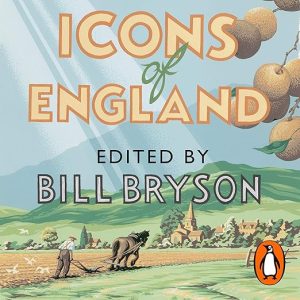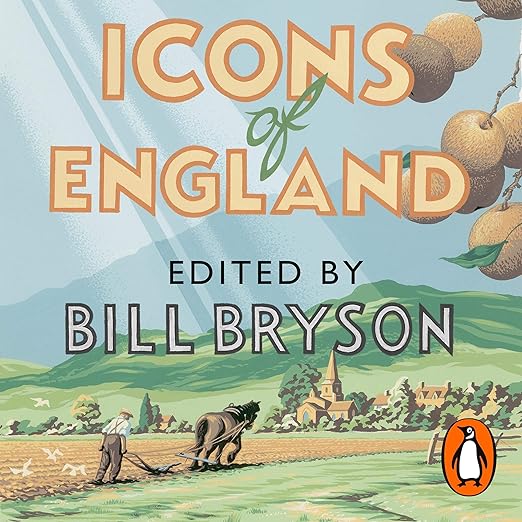
- Read by: David Rintoul brings a warm, measured authority to the anthology format, giving each contributor's voice its own texture without overplaying the variety.
- At its heart: National identity and belonging, the personal and the pastoral, what we choose to treasure
- Vibe: Nostalgic and eclectic, occasionally surprising in its range
- Short version: A genuine pleasure for Anglophiles and anyone drawn to the personal essay form, though listeners expecting Bill Bryson's comedic voice will need to recalibrate quickly.
I came to Icons of England expecting something close to Notes from a Small Island and found something stranger, quieter, and more interesting instead. That recalibration happened somewhere around the second essay, when I realized that Bill Bryson's contribution to this collection is almost entirely framing. He is the curator, not the artist. The recognition that I was holding the wrong set of expectations did not diminish the experience; it actually opened it up considerably.
The anthology format in audio is always a gamble. What works on a printed page, where your eye can skip and graze, demands a different kind of attention when delivered linearly through headphones. What saves Icons of England in that regard is David Rintoul's narration and the genuine breadth of the contributors, whose essays range from Eric Clapton's unexpectedly humble account of his attachment to Crossroads to Tony Robinson's poignant remembrance of archaeologist Mick Aston, made more affecting by Aston's death shortly after the book's publication.
Our Take on Icons of England
The single most important thing to understand about this audiobook before you start it is the thing several reviewers discovered the hard way: this is edited by Bill Bryson, not written by him. His introductory passage is genuinely lovely and sets a tone of affectionate inquiry, but the book belongs to its contributors. That list is remarkable by any measure. Michael Palin, Benjamin Zephaniah, Kate Adie, Antony Beevor, Joan Bakewell, Sebastian Faulks, and Kevin Spacey are among those weighing in on their personal icons, from pub signs to canal boats, from village cricket to cattle grids.
The diversity of that contributor list is precisely what makes the audio format work better than you might expect. Rather than a single sustained argument or narrative, you get a series of short, often elegant personal essays that function like a curated playlist. Each one lands differently, and Rintoul navigates the transitions with skill. The range of subjects is deliberately eccentric; this is not a Greatest Hits of English Heritage but a collection of genuinely personal attachments, some grand, some almost absurdly modest. The absurdly modest ones are occasionally the most memorable, precisely because they reveal something true about how affection actually works.
Short essay anthologies can feel choppy in audio, each piece barely establishing its rhythm before the next begins. At six hours and thirty-seven minutes, Icons of England avoids that problem through pacing and the consistently high quality of the writing. The contributions are tight and purposeful. No essay overstays its welcome, and several accumulate a quiet emotional weight that you don't anticipate from an essay about, say, seaside piers or nimbies.
One listener comparison that surfaced repeatedly in reviews was the contrast with Bill Bryson's solo work. An expat reviewer noted appreciatively that the book captures something specific about English natural heritage that Bryson himself addressed in A Walk in the Woods for America's Appalachian Trail. That parallel is earned. This collection does for the English countryside and its cultural furniture what that book did for wilderness: it asks ordinary people to articulate what they love about a place and discovers, in the articulation, something that resists easy summary. The best essays in the collection achieve that quality; they say something that the reader recognizes as true without having been able to formulate themselves.
What to Watch For in Icons of England
David Rintoul's narration is one of those performances that risks being taken for granted because it never draws attention to itself. He reads these essays as if he genuinely believes in the material, which for an anthology this varied is no small feat. The challenge of voicing contributions by Eric Clapton, then Antony Beevor, then Kevin Spacey, in sequence, requires a narrator who can subordinate his own interpretive instincts to the register of each writer. Rintoul manages this consistently. There is no monotony in his delivery, but equally no showboating. The collection's eccentricity is honored without being parodied.
The expanded edition that forms the basis of this recording doubles the original contributor list and includes a new preface by HRH Prince Charles, which adds range but also a few essays that feel thinner than the rest. The standout pieces are enough to carry the weaker ones, and at under seven hours total the pacing rarely lags. This is a gentle, intelligent listen that rewards exactly the kind of lateral attention it demands, the attention you bring to a well-curated exhibition rather than a novel.
Who Should Listen to Icons of England
Listeners with genuine affection for England, its landscapes, its oddities, and its cultural particularity will find this deeply satisfying. Fans of the personal essay form in audio will also find much to appreciate, particularly in the stronger contributions from Zephaniah, Beevor, and Robinson. Anglophones curious about what the English themselves value, and why, will find the collection illuminating in unexpected ways.
If you want sustained Bryson humor across six hours, this will disappoint. His presence is real but limited to the framing essays. Listeners who find anthology format unsatisfying in audio, preferring a single sustained narrative arc, should look elsewhere. The pleasure here is cumulative and lateral rather than linear, built from the accumulation of many small, specific enthusiasms rather than from a single propulsive argument. The book rewards the kind of relaxed, associative attention you might bring to a long afternoon rather than the focused forward-leaning attention of a thriller listener. Meet it on those terms and it gives considerably more than it costs. At under seven hours with an extraordinary roster of contributors, it is one of the more efficiently pleasurable listens available for anyone who loves England and its peculiarities.
Frequently Asked Questions
How much of Icons of England is actually written by Bill Bryson?
Bryson serves as editor and provides the introductory framing passages, but the essays themselves are written by a diverse group of contributors including Michael Palin, Eric Clapton, Benjamin Zephaniah, Antony Beevor, and many others. His own writing is a relatively small portion of the total runtime.
Does the anthology format work in audio, or does it feel choppy?
David Rintoul's narration smooths the transitions considerably, and the essays are short enough that the shifts feel natural rather than jarring. At under seven hours total, the format holds together well as a listening experience.
Do I need to be British to appreciate this audiobook?
Several of the most enthusiastic reviews come from expat listeners and Anglophiles based in the US, New Zealand, and elsewhere. The material rewards anyone with genuine affection for England, though listeners without that attachment may find some of the more parochial entries less engaging.
Is this the original edition or the expanded one with more contributors?
This recording is based on the expanded edition, which doubles the original contributor count and includes a new preface by HRH Prince Charles. The expanded edition adds range and depth to the original collection.