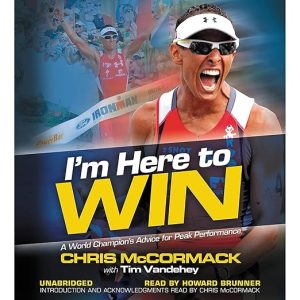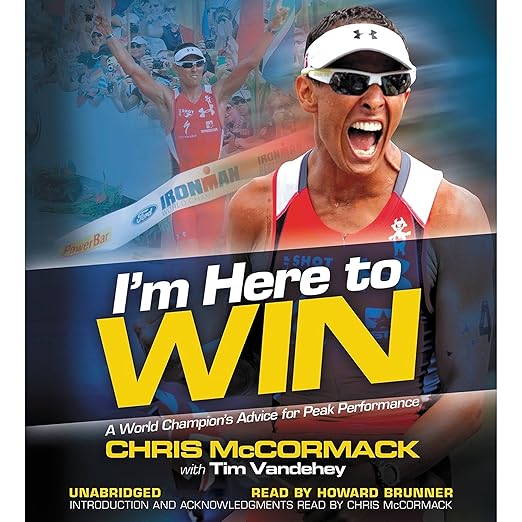
Kona's lava fields in October, the finish chute lit up for the Ironman World Championship: that is the scene Chris McCormack keeps circling back to across this audiobook, and for good reason. In 2010, at 37, McCormack won the race for a second time in what many called the most dramatic finish in its history, a year after finishing fourth and returning with an entirely new strategic approach. I'm Here To Win runs eight hours and forty-nine minutes, narrated by Howard Brunner, and it treats that Kona comeback as the spine of a much longer argument about how champions actually think.
Swim, Bike, Run as Three Tactical Problems
McCormack, known to the triathlon world as Macca, is not shy about his own confidence, and this book does not soften that quality into false modesty. What makes it work as a listen rather than just a highlight reel is the specificity of the 2009-to-2010 turnaround: a fourth-place finish that clearly stung, followed by a deliberate rebuild of his race strategy rather than just more training volume. The audiobook treats the swim's 2.4 miles, the bike's 112, and the marathon's 26.2 as three separate tactical problems rather than one long slog, which is the kind of detail that separates an athlete's real playbook from a generic motivational memoir.
One longtime reader, a triathlete of nineteen years who followed the Macca era closely, called it 'a worthwhile, engaging, interesting read' for anyone who tracked his career, while cautioning newer fans to expect some rougher patches in the writing. That mixed but genuine enthusiasm is a fair snapshot of the book's actual audience: it rewards people who already care about the sport more than it converts total newcomers.
The book's title itself is a useful clue to its actual argument. This is not framed as a memoir about loving triathlon or finding purpose through endurance sport, the more common framing for this genre; it is framed as a statement of intent, and McCormack structures the Kona chapters specifically around the strategic decision to stop merely competing and start racing to win outright. That distinction, between competing well and racing to win, recurs often enough across the book that it functions as something close to a thesis statement for how McCormack approached the back half of his career.
Brunner Keeps the Triathlon's Momentum Intact
Howard Brunner brings real forward momentum to the narration, matching the propulsive, competitive tone McCormack writes in without tipping into overplayed cockiness, which would have been the easy failure mode for a book this confident in its own voice. The energy holds up well through the training-philosophy chapters and lands hardest during the race recaps themselves, where Brunner's pacing keeps the tension of a triathlon's shifting momentum intact rather than flattening it into a list of splits and finish times.
The book's real value beyond the Kona story is how directly McCormack addresses different tiers of athlete at once, from weekend warriors to seasoned racers to what he calls armchair athletes just looking for a push. One reader who came to triathlon after years of marathon running specifically wanted insight into Macca's race-day approach and his rivalry with the sport's other top names during that era, and came away satisfied on both counts. That range is unusual for a single sports memoir to pull off without diluting the training advice into vagueness.
Brunner's Narration Doesn't Replicate an Australian Accent
McCormack is Australian, and Brunner's narration, while energetic and well-paced, does not fully replicate an Australian accent or cadence. Listeners who know McCormack's actual speaking voice from interviews or commentary may notice the gap, particularly in the more conversational, needling passages where his personality is most present on the page. It is a minor point next to the narration's overall competence, but worth naming for anyone who has heard Macca talk before.
This is also, by its own design, a book for people who already have some stake in triathlon or endurance sport. The technical detail around race strategy and training blocks is genuinely useful to a competitive audience, but a listener with no interest in the sport at all will find long stretches of it dense. The listing also notes an enhanced ebook edition exists with embedded video and audio, which the standard audiobook obviously cannot replicate, so do not expect multimedia race footage layered into the listening experience itself.
The Ironman distances themselves, a 2.4-mile swim, a 112-mile bike leg, a full 26.2-mile marathon to close it out, are worth sitting with for a moment before starting the book. Completing that sequence once is already an extraordinary physical feat; McCormack is describing doing it at a world-championship pace, against the best endurance athletes on the planet, on a lava field course known for brutal heat and crosswinds. Keeping that scale in mind while listening makes the strategic detail land with more weight than it would as an abstract training discussion.
A Playbook Meant to Be Studied and Applied
Competitive triathletes and Ironman hopefuls get the most out of this one, especially anyone training for Kona specifically or trying to understand how a top racer adjusts strategy after a disappointing result rather than just training harder. The chapters breaking down the swim, bike, and run as distinct tactical challenges function almost like a coaching session wrapped inside a memoir, which is a genuinely useful structure for listeners who want to apply what they hear.
Casual sports fans without a personal stake in triathlon should calibrate expectations before committing to nearly nine hours, since this leans technical rather than broadly inspirational in long stretches. Readers hoping for a tell-all about the era's rivalries will get some of that flavor but not the full gossip; McCormack keeps the focus mostly on his own preparation and mindset rather than dwelling on other athletes.
Coaches working with age-group or amateur triathletes may also find real practical use here beyond personal listening, since McCormack pitches his advice explicitly across skill levels rather than only to fellow elites. The book's own framing, addressing weekend warriors and seasoned racers in the same breath, suggests it was written with an eye toward being genuinely useful training material, not simply a victory-lap memoir cashing in on one dramatic Kona finish.
The synopsis itself says McCormack 'opens his playbook and reveals everything it takes', language borrowed deliberately from team sports rather than the usual solo-endurance framing triathlon memoirs tend to reach for. That choice signals early what kind of book this is: less a meditation on individual willpower and more a tactical document meant to be studied and applied, consistent with how directly the training-advice chapters read once the Kona narrative gives way to instruction.
The Short Version
- Read by: Howard Brunner brings energetic, forward-driving pace that suits the competitive material, though his delivery does not fully capture McCormack's Australian accent.
- At its heart: Endurance racing strategy, comeback after defeat, triathlon mindset
- Vibe: Confident and propulsive, tactical more than sentimental
- Short version: A strong pick for triathletes and Ironman-curious listeners, less essential for casual sports fans.
Frequently Asked Questions
Does this audiobook explain Chris McCormack's actual race-day strategy at Kona?
Yes. The book treats the swim, bike, and run as three distinct tactical problems, and spends real time on the strategic changes McCormack made after finishing fourth in 2009 before winning in 2010.
Is the narrator's accent a problem on this audiobook?
Howard Brunner's narration is energetic and well-paced, but it does not precisely reproduce McCormack's Australian accent, which listeners familiar with his interviews may notice.
Do I need to know triathlon to enjoy this audiobook?
Some background helps. The training and race-strategy detail is genuinely useful to competitive athletes, but listeners with no interest in the sport will find long stretches technical rather than broadly inspirational.
Is I'm Here To Win only about the 2010 Kona win?
No. The 2010 win anchors the narrative, but McCormack also covers his path from junior racing through NFL-level stardom in triathlon and offers concrete training advice for athletes at multiple levels.