At a Glance
- Narrator: Author and narrator are one person here, which makes this edition the closest thing to hearing the memoir from the source.
- Subjects: Childhood displacement, Jim Crow bigotry, sexual violence and its aftermath, literature as rescue.
- Tone: Calm, exact, and quietly devastating.
- Bottom line: The edition to choose if you want this memoir at all, with a serious content warning attached for survivors.
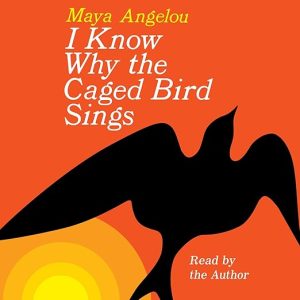
Sent away by their mother, two children arrive at a devout and self-sufficient grandmother's house in a small Southern town. That is where the memoir begins, and the reason to seek out this particular audiobook is who delivers it: Maya Angelou holds the byline and the narrator credit alike on Random House Audio's ten-hour edition, published in January 2011, long after the book had settled into its status as a modern American classic. An autobiography spoken by its subject is a different object from an autobiography performed by somebody else.
A Silent Shadow Playing Along the Walls
Childhood here keeps being interrupted. Maya and her brother Bailey are sent south to their grandmother, absorb the ache of abandonment and the everyday cruelty the copy names with the local word for poor white contempt, then return to their mother in St. Louis, where an eight-year-old is assaulted by a grown man and left to carry it. San Francisco comes later, and with it the discovery the description quotes directly: I met and fell in love with William Shakespeare.
Authorship and narration sitting in the same name changes what the recording is. A writer reading her own childhood decides where the weight falls in every sentence, and no other reader could make those decisions with equal authority. That is a fact about provenance rather than a promise about polish, and it is the single strongest reason to choose this edition over any other reading of the same text that might appear.
What holds the prose together is precision rather than heat. A June 2014 response quotes a line to prove it, about a wife who had been charming and ready to smile changing into a silent shadow that played infrequently along the walls, and calls the language profound. The same entry reaches for a second passage, on how a formidable woman is met with amazement, distaste and even belligerence instead of being recognized as the outcome of a struggle. Angelou writes social analysis in the shape of description.
Angelou's Nonchalance as the Book's Real Lesson
Testimony is the first reason, and a July 2014 five-star explains why it still lands. That reader describes growing up on the other side of the racial divide, having assumed some understanding of what the Jim Crow decades felt like from the inside, and finding the assumption corrected. The entry names the specifics it took away: the older brother Bailey, the grandmother the family called Momma, the small town of Stamps. Particulars are what make a period argument stick.
Tone comes second, and a November 2025 four-star puts its finger on something the marketing never mentions. It observes that Angelou tells her life story with a kind of nonchalance, moving through traumas and healings in a calm, unhurried register, and treats that steadiness as the book's central lesson rather than as a stylistic quirk. Anyone braced for a misery memoir will find something considerably stranger and more useful.
Marketing copy earns its place in the argument too. It promises the longing of lonely children, the brute insult of bigotry, and the wonder of words that can make the world right, which is a fair three-part summary of what the chapters actually do. James Baldwin's endorsement, quoted at the end of the description, calls the book a liberation achieved through moving wonder and luminous dignity. Blurbs are usually noise. That one describes the reading experience accurately.
An Oprah Introduction This Recording May Not Include
Assault is not a passing episode in this book, and buyers deserve the warning plainly. A January 2026 five-star says the book was hard to read at times and can be triggering for survivors of sexual assault, arriving as it did from a reader who knew Angelou only through the poetry and did not expect the memoir's material. That same entry closes by recommending it to anyone objecting to book bans, which is where this title tends to sit in public arguments now.
A February 2026 response introduces a different complication: it praises an introduction by Oprah Winfrey as part of what makes the edition lovely, and no field on this record confirms whether that introduction, or any front matter at all, appears in the recording. The same entry arrives under a display name that reads like a complaint about a worn-out pair of shoes, which is a useful reminder that the column beneath a book on a retail page is pooled from an entire storefront.
Classification adds a smaller puzzle. This memoir sits in biographies and memoirs and in literature and fiction simultaneously, tagged art and literature, which is defensible for a book taught as literature and confusing for anyone filtering by whether the events happened. No field here records which text this 2011 recording follows or what supplementary material rides with it, so an edition-conscious buyer should confirm before purchase rather than after.
A Pace That's Unhurried by Design
Anybody who knows Angelou only as a poet should start here, since the memoir shows the same ear working across long stretches of narrative rather than in compressed lines. Students meeting the book on a syllabus get an enormous amount from hearing its author handle her own sentences. And listeners who want American history delivered through one specific childhood, rather than through summary, will find this among the most durable examples of it in print or in audio.
Approach carefully if sexual violence against a child is material you cannot be near, because it is central rather than incidental and the recovery takes years of book time. Consider a different entry point if you want a conventional life story with a resolved ending, since this covers childhood and adolescence only and stops where it stops. Period vocabulary, including terms the copy itself reproduces, appears throughout and is part of the historical record the book is making.
Angelou's title comes from a caged bird that sings anyway, and the memoir spends its length earning that image rather than decorating itself with it. The record settles the essentials: a ten-hour file, a 2011 publication, one voice, and that voice belonging to the woman whose childhood is being described. Sample it for the pace, which is unhurried by design, and then give it the attention a book this deliberate deserves.