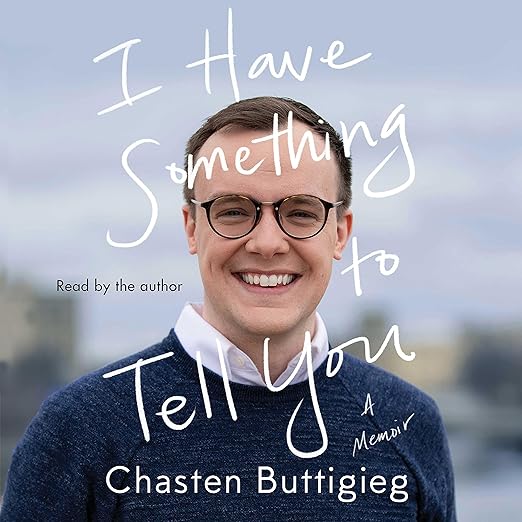
Chasten Buttigieg reads his own coming-out story here, and that choice alone tells you something about the book's whole approach: this is testimony, not a ghostwritten political product engineered for maximum palatability. Buttigieg was a South Bend, Indiana schoolteacher before he became a familiar face on the presidential campaign trail alongside his husband, former mayor Pete Buttigieg, and this audiobook traces the long road that got him there, starting with a childhood in rural Michigan where he says he felt different from his father and brothers well before he had language for why. The result is less a campaign-adjacent memoir than an intimate account of growing up gay in a place and time that offered him almost no visible models for what his life could look like.
First, the Big Picture
The memoir's real subject is not the campaign trail, despite the public profile that makes this book marketable; it is the slower, harder work of coming out to family, building a stable sense of self, and finding a partner while carrying that history. Kevin M. Roddy's review draws a direct personal parallel, noting he is also a Midwesterner, from Nebraska rather than Michigan, who found real parallels to his own life in the experiences Buttigieg describes, which speaks to how specifically Midwestern this particular coming-out story is rather than a generic one.
Richard March's review highlights the strange experience of watching Buttigieg and his husband navigate 'the excessive attention of two new very public national figures' in real time, a layer of scrutiny most memoirists never have to write about because most memoirists were not simultaneously living through a presidential campaign while the book's events were still unfolding.
Pete Buttigieg's 2020 presidential campaign, launched from his position as mayor of South Bend, Indiana, made the couple's relationship unusually visible for a first-term national candidate, and Chasten's account of that specific experience, being newly public as a couple while an entire campaign apparatus formed around them, adds a layer most political-adjacent memoirs simply do not have access to.
Samarth's brief review, simply 'Love it' with an emoji, is a reminder that this book has found an audience well beyond political junkies or LGBTQ+ memoir specialists; its accessibility is part of the design.
Since the campaign ended, Buttigieg has continued building a public platform around education and LGBTQ+ advocacy specifically, and this memoir reads as a foundational text for that ongoing public role rather than a one-off campaign-cycle release, the kind of book that keeps making sense years after the specific news cycle that made it possible has passed.
Self-narration is close to essential for a memoir this personal; Buttigieg's own voice carries the specific cadence of someone who spent years teaching theater and choir to teenagers before any of this became public, and that background shows in his comfort with vulnerability out loud, a genuinely different skill from simply being a public figure willing to talk about hard things.
At seven hours and eighteen minutes, this sits on the shorter end for a full memoir, which keeps the pacing tight and prevents the campaign-trail material from crowding out the more intimate personal history that gives the book its actual weight.
Buttigieg's pre-politics career as a middle and high school theater and choir teacher is more than a biographical detail; it shaped how comfortable he is narrating emotionally difficult material out loud, a skill distinct from simply being willing to discuss hard things in an interview setting, and that comfort is audible throughout the memoir's more vulnerable passages.
That intimacy is exactly what self-narration is best suited to deliver, and it is a genuine loss whenever a memoir this personal gets handed to a professional voice actor instead of the person who actually lived it.
What to Watch For in I Have Something to Tell You
Listeners expecting a detailed political memoir or campaign strategy account should recalibrate; the presidential run is present mostly as a backdrop and a catalyst for Buttigieg stepping into public life, not the book's main subject.
Only two written reviews are attached despite the strong 4.7 rating, a thin sample size for a book with this much public visibility; the enthusiasm in both is genuine and specific rather than generic praise, which helps, but it is still a small data set.
This edition includes a new preface not present in the original release, worth knowing if you already own or have listened to an earlier printing and are deciding whether a re-purchase adds anything substantive.
The book moves between several distinct timelines, childhood in rural Michigan, college and early adulthood, meeting Pete, and the campaign itself, and listeners should expect a memoir structured around emotional throughlines rather than strict chronology, closer to a series of connected essays than a linear autobiography.
This is a manageable single-weekend listen, shorter than most political-adjacent memoirs, which keeps the focus tight on Chasten's own voice rather than diluting it with extensive campaign-trail reporting.
The book's candor about specific family tension, particularly with his father and brothers growing up, avoids the easy, fully-resolved-by-the-end arc that tidier memoirs often reach for; some relationships described here remain genuinely complicated rather than neatly healed by the book's close, which reads as more honest than a cleaner resolution would.
Who It's For
This is a strong match for LGBTQ+ listeners looking for a specifically Midwestern, small-town coming-out narrative, and for anyone curious about the private cost of a public political life; the warmth and directness Buttigieg brings to difficult material make this accessible even to listeners who do not typically read memoir.
Skip it if you are looking primarily for policy or campaign analysis, since this is a personal story first; for listeners wanting Chasten's actual voice, literally and figuratively, telling his own coming-of-age story, this delivers exactly that.
This also belongs on the shelf next to other recent political-spouse memoirs and LGBTQ+ coming-of-age narratives, though it distinguishes itself by focusing far more on the personal journey to self-acceptance than on campaign strategy or policy positions, which some readers expecting the latter may find surprising.
For younger LGBTQ+ listeners specifically, the audio format may offer a kind of privacy a physical book on a nightstand does not, worth naming plainly since Buttigieg's own memoir is so concerned with what it costs to hide an essential part of yourself for fear of being seen.
In Brief
- Narration: Chasten Buttigieg narrates his own memoir, and the self-narration is close to essential here, lending genuine vulnerability a hired narrator could only approximate.
- Themes: Coming out in a small Midwestern town, family acceptance, life under sudden public scrutiny
- Mood: Intimate and warm, more personal than political
- Verdict: A genuinely moving self-narrated memoir best suited to listeners wanting the personal story behind the public figure.