At a Glance
- Voice: Seth Andrews brings a clear, respectful delivery to a story that requires careful handling of Muslim faith contexts, conversion, and spiritual autobiography.
- Big ideas: Conversion and spiritual transformation, identity under social pressure, the personal encounter with the divine
- Atmosphere: Intimate and searching, occasionally tense given the social stakes Bilquis Sheikh describes
- Worth it?: A spiritual autobiography of genuine weight and historical significance, best approached as what it is: an honest account of one woman's faith encounter told without softening its costs.
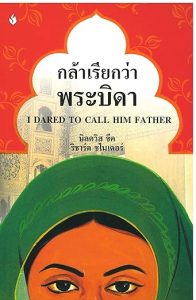
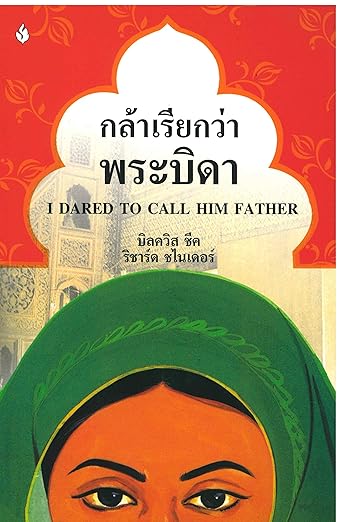
I came to I Dared to Call Him Father through the religion and spirituality section of an audiobook catalog I was working through systematically, and I will admit that I approached it with a certain professional caution. Conversion narratives in Christian publishing can range from the theologically serious to the sentimental, and the title alone carries enough of the genre's familiar signals to put a critical reader on guard. What I found was a book of considerably more substance and honesty than that caution prepared me for.
Bilquis Sheikh was a high-ranking Pakistani Muslim woman, the granddaughter of a notable leader of the Muslim League, who converted to Christianity in the late 1960s. The social, familial, and potentially physical consequences of that conversion in her specific context were not abstract; conversion from Islam in Pakistan carried and carries legal and social dimensions that make Sheikh's account something more than a conventional Western conversion memoir. This is a story told from inside a genuine crisis of identity and belonging, and it reads that way throughout the seven-hour runtime.
What We Made of It
The metadata lists this audiobook under the Islam tag rather than Christianity, which initially seems counterintuitive for a conversion narrative. It is, in fact, exactly right: to understand what Sheikh is describing, you need to understand the Islamic world she is leaving, and she describes it with the familiarity of someone who lived inside it deeply rather than as an outsider making assumptions. The world of a Pakistani woman of her generation and social standing, the obligations of family, the framework of Islamic practice, the social networks built around religious identity, is rendered with specificity that grounds the conversion story in something real rather than in a generalized religious contrast.
That grounding matters because it prevents the book from becoming a simple before-and-after narrative. Sheikh does not present Islam as empty or deficient in order to make Christianity more appealing; she presents a woman for whom Islamic practice was genuine and meaningful, whose encounter with the Psalms and then with Christianity arrived as something unexpected rather than as the answer to an obvious spiritual vacancy. That honesty is rare in conversion literature and is one of the book's primary virtues. It is also what explains the book's fifty-year run in continuous print.
What Makes I Dared to Call Him Father Worth Hearing
Seth Andrews is best known in some circles for work in a very different context from devotional Christian publishing, which makes his presence as narrator here worth noting. He brings a clear, unaffected delivery to Sheikh's autobiography that serves the material well. The temptation with a story like this is to narrate it with the kind of devotional intensity that would signal to a Christian audience that the narrator himself endorses the conversion journey. Andrews reads with respect rather than advocacy, which actually serves the story better; Sheikh's own conviction carries the weight it needs to carry without requiring the narrator to amplify it.
The seven-hour runtime is appropriate for a spiritual autobiography of this scope. Sheikh moves through her life in Pakistan, her marriage, her social standing, her encounter with the biblical Psalms through a chance circumstance, and then through the long process of her conversion and its consequences with a pacing that feels neither rushed nor inflated. Each section earns its length, and the narrative builds to moments of genuine emotional force rather than manufactured climax. Andrews reads the most intimate passages with a restraint that honors their weight.
What Might Not Land
A 4.8 rating from nearly 1,900 listeners for a spiritual autobiography published initially in the early 1970s and reissued multiple times since represents something specific: an audience of serious religious readers who found the book genuinely significant rather than merely satisfying. Spiritual autobiography tends to generate strong listener investment when it connects; the ratings cluster at the extremes more than in most genres because the personal dimension of the material produces personal responses.
Sheikh's book has been continuously in print for over fifty years, which is a different kind of evidence for its quality and significance. Books that survive that long in religious publishing are either institutional fixtures of denominational curricula or genuine literary achievements. I Dared to Call Him Father reads as the latter: a book that endures because it addresses something true about the experience of religious transformation rather than because it services a particular market. The audio version makes that quality accessible to listeners who have not encountered it in print.
Who Should Listen to I Dared to Call Him Father
Christian readers, particularly those interested in conversion narratives from Islamic contexts, will find this essential. Readers interested in Pakistani history and social life of the 1960s and 1970s will find the cultural context both illuminating and well-rendered. Those interested in spiritual autobiography as a literary form will find Sheikh a skilled practitioner of the genre, managing the balance between interiority and narrative event better than most.
Secular listeners and those without an existing interest in interfaith religious experience will find the book's devotional register challenging to maintain distance from; this is not a book written in a neutral register about religion but a book written entirely from within faith. The intimacy that makes it compelling for its primary audience is also what makes it demanding for readers outside that frame. Approached with genuine openness to a sincere and specific religious account, it rewards that openness more fully than almost anything in its category.