At a Glance
- Performance: the reader field repeats the byline, so the timing that the whole memoir is built around may be delivered by the man who wrote it, and the page does not confirm it.
- What it covers: comedy as survival, a Brooklyn childhood, addiction and illness, the cost of a public marriage ending.
- Feel: Loud, abrupt and unexpectedly tender in the last third.
- Our call: An afternoon well spent if you already know the persona, and a confusing four hours if you do not.
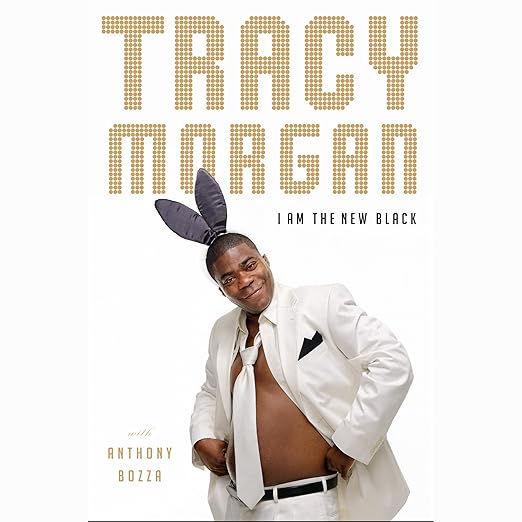
A comedian reading his own memoir is a particular kind of audiobook, and Random House Audio built one out of four hours and nine minutes. Tracy Morgan's name sits in the author field and again in the reader field, which is the whole of what this record says about how it was made. The book runs from the Tompkins Projects in Bed-Stuy through the Harlem comedy clubs, seven years on Saturday Night Live, 30 Rock, and the parts nobody puts on a resume: a father's death, dealing, alcohol, diabetes, the end of a twenty-year marriage. That is a great deal of life to move through before the file runs out.
Called Humble, Then Hungry, in One Response
The most substantial response in the column, a five-star from December 2012, starts somewhere unexpected: with prologues. That reader does not ordinarily read openings at all, saves forewords and afterwords for books that have already earned them, made an exception here, and then found the intro good enough to say so twice. The word chosen for Morgan is humble, followed straight away by hungry, and the same entry admits to bracing for a rough read that did not arrive in the shape expected. Being surprised by the opening pages of a celebrity memoir is not a small compliment.
That surprise is structural. The description sets out a list of identities and asks which one is really Tracy Morgan: the unpredictable Saturday Night Live performer, the actor behind Tracy Jordan, the party fixture calling himself Chico Divine, or the family man who came out of a hardscrabble childhood with a career intact. Its own answer is that he is all of them, which reads as marketing until the book starts doing it, shifting register inside a single anecdote.
The description also carries a small wound. A line that plainly once ended with a fifty-cent soda now ends with a 50 soda, a word short. It is trivial in itself, and it is a useful reminder that product copy on pages like this gets transcribed and re-transcribed until pieces fall out. Nothing about the recording is affected by it. The page is damaged, not the book.
The Joke as a Tool Rather Than a Performance
An April 2010 five-star gives the clearest account of who this works for and why. That entry describes arriving as a fan from Martin and Saturday Night Live, then, with unusual self-awareness, describes being demographically the wrong audience for the comedy, right down to age, race and class, before reporting that it landed anyway. The same response says the laughs are only half of it, that the book turns serious, and that a softer side shows through. It also delivers the sharpest warning in the column: with no idea who Morgan is, you will not follow where the humor comes from.
Take that warning seriously, because the material assumes recognition. Half-Baked, The Longest Yard, Martin, 30 Rock and the Tracy Jordan character are all treated as shared ground rather than introduced, and the comic timing depends on a listener already knowing the persona the jokes are being told against. Familiarity does most of the work that context would otherwise have to do.
Where the book earns its keep is the Brooklyn material. Being funny starts as a survival tactic in the Tompkins Projects, a way to shut down bullies picking on him and on a physically disabled older brother, and it later becomes an exit from the drug trade and from the South Bronx during the crack years. The joke as a tool rather than as a performance is this memoir's actual subject, and it holds together better than the celebrity chapters do.
A Duplicated Byline a Ninety-Second Sample Can Test
A three-star from June 2013 supplies the necessary corrective in two sentences: it is not overly funny, but it does open up the story of the man, which is more than the stand-up and the interviews manage. Read that as a genre correction rather than as a complaint. Anyone buying this expecting a recorded comedy set will be disappointed early, and anyone buying it as a life story told by someone with excellent timing will not be.
The reader field repeats the byline exactly, which would make this an author-read memoir, and on a comedian's book that casting would be the entire point. Nothing else on the page confirms it, and the written column never touches the recording. So a duplicated field is the only evidence available, and a sample settles in ninety seconds what the metadata will not: whether the delivery carries the timing the material is built around.
Counting the column is instructive too. Of the five written responses, three describe reading the book. One is a February 2024 four-star recording that it was bought as a gift and that the recipient liked it. Another is a five-star praising the premise, a rise from the projects to stardom, without indicating that any of it was read. Both grades feed the 4.2 average across sixty-nine ratings, and neither tells a buyer anything about the pages, let alone about the audio.
One Afternoon, and a Warning to Expect Compression
This one lands for listeners who already know the persona and want the biography underneath it, and it lands hardest on anyone who watched the Saturday Night Live years in real time. Four hours and nine minutes is a single afternoon, which is a fair investment for a memoir covering a childhood, a criminal apprenticeship, a television career, an illness and a divorce, and an unfair amount of ground for four hours to cover well. Expect compression.
Pass on it if you want jokes at set density, or if the names on the resume mean nothing to you, since the book never stops to explain them. Buyers who care most about the Brooklyn chapters should know that a four-hour memoir carrying this much has to move, and the early years are competing with a television career for room.
Common Questions
Does Tracy Morgan narrate the I Am The New Black audiobook himself?
His name appears in the author field and again in the reader field, which points at an author-read edition, though nothing else on the listing states it outright. Random House Audio published the recording in October 2009. A sample is the fastest way to confirm the voice before you commit to it.
How long does the audiobook run, and is that enough for the story?
Four hours and nine minutes, or a single afternoon. The description promises Bed-Stuy, the drug trade, Harlem comedy clubs, seven years on Saturday Night Live, 30 Rock, alcohol, diabetes and the end of a twenty-year marriage. That is a lot of territory, so expect a brisk pass rather than a deep one.