Quick Take
- Narration: Tom Brooks brings professional clarity to the material, but his capable performance cannot compensate for content that one reviewer describes as entirely misaligned with the actual HVAC journeyman exam.
- Themes: HVAC system fundamentals, refrigeration cycles, electrical controls for HVAC
- Mood: Dense and methodical, but undermined by a single damaging review alleging the practice questions bear no relation to the actual exam
- Verdict: Approach with caution. The one available review calls the content fraudulent relative to its claims, and that signal is too significant to ignore for anyone using this as primary exam preparation.
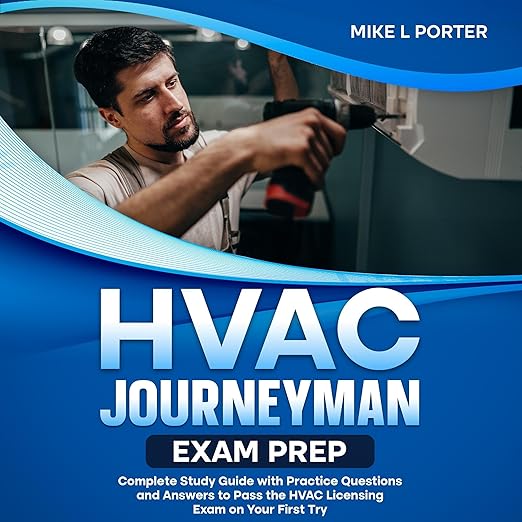
I want to be direct about this one because the stakes are real. Anyone sitting down with Mike L. Porter’s HVAC Journeyman Exam Prep is presumably spending time and money preparing for a licensing exam that will determine whether they can practice their trade professionally. In that context, the lone available review deserves serious weight before any recommendation is made.
The single reviewer, Hamed, gave this guide one star and titled his review “Fakes.” His complaint was specific: “There is not a single question related to hvac journeyman test waste of time and money.” That is a precise and damaging claim. It doesn’t allege that the content is confusing or poorly written. It alleges that the practice questions, which are the core utility of any exam prep resource, have no connection to what actually appears on the HVAC journeyman exam.
What the Synopsis Promises
The guide’s description is genuinely ambitious. Porter promises coverage of furnaces, boilers, heat pumps, air conditioning systems, refrigeration cycles, and ductwork design alongside electrical concepts including voltage, current, resistance, motors, transformers, relays, and thermostats. It pledges OSHA coverage, lockout/tagout procedures, load calculations, Manual J and Manual D fundamentals, SEER/AFUE/HSPF ratings, and 200 unique multiple-choice practice questions with complete answers and explanations.
That scope, if delivered, would constitute a thorough exam preparation resource. The problem is that the synopsis describes ideal content coverage without any external validation that the practice questions map to real HVAC journeyman licensing requirements. HVAC journeyman exams vary by state and certifying body, and a guide that doesn’t clearly specify which exam it targets is already on shaky ground before a reader opens it.
The One-Review Problem
A single review doesn’t definitively condemn a resource, and I want to be fair about that. One reviewer’s experience may not represent universal outcomes. The reviewer might have been expecting state-specific content that this guide was never designed to provide, or may have had different baseline expectations about what “journeyman exam prep” means. These are legitimate caveats.
But here’s the counterargument: one detailed, specific review alleging that the core product offering is fabricated, with no other reviews to balance it, is a pattern I’ve seen before with low-effort exam prep content. The warning signs are real. The guide was narrated by Tom Brooks, which suggests some investment in production quality, and the synopsis coverage is plausible for the field. But without more reviewer data, the only honest position is to flag the risk clearly.
Tom Brooks’ narration at the six-hour runtime would, under normal circumstances, be adequate for absorbing the described material. His work on Tony Boyd’s ASE guides shows he handles technical content professionally. The narration is not the problem here.
Evaluating the Content Framework
HVAC journeyman exams in most US states test refrigerant handling, electrical fundamentals, load calculations, safety protocols, and code knowledge drawn from standards like ASHRAE and the uniform mechanical code. If Porter’s guide covers the topics it claims, there should be meaningful overlap with these domains. The issue is alignment: general HVAC knowledge and exam-specific preparation are not the same thing, and a guide that delivers the former while promising the latter is misrepresenting its utility.
The 200 practice questions are the pivotal element. If they genuinely simulate journeyman exam conditions, the guide has value. If they’re generic HVAC knowledge questions with no connection to licensing exam structure, they’ll give you false confidence rather than genuine readiness. The one review suggests the latter.
Who Should Listen and Who Should Skip
Anyone using this as their primary preparation resource for a state HVAC journeyman licensing exam should first seek out state-specific study materials and compare them against what this guide offers. The risk of arriving at the exam underprepared because your practice questions bore no resemblance to the actual test is too high. If you can find the guide at minimal cost and want HVAC systems review as background knowledge rather than exam prep, the content coverage may still have educational value. But as a licensing exam preparation resource, the available evidence doesn’t support confidence.
Frequently Asked Questions
Which specific HVAC journeyman exam does this guide prepare you for?
The guide does not specify a state or certifying body, which is a significant limitation. HVAC journeyman licensing requirements vary widely by state. Candidates should verify whether this guide’s content aligns with their specific state exam before relying on it for preparation.
The one review says the practice questions are unrelated to the real journeyman exam. Should I trust that?
One review is a limited data set, but the specificity of the complaint warrants caution. The reviewer’s claim that no questions relate to the actual HVAC journeyman test is serious. Candidates with time and exam fees at stake should seek corroboration from additional sources before committing to this resource.
Does the guide cover refrigerant certification requirements, such as EPA 608?
The synopsis mentions refrigerant charging and system performance but does not specifically reference EPA 608 certification, which is a federal requirement for anyone handling refrigerants. Candidates needing EPA 608 prep should verify this is covered or seek a dedicated resource.
Is Tom Brooks’ narration effective for absorbing technical HVAC content?
Tom Brooks is a capable narrator of technical material, as demonstrated in his work on other exam prep titles in this space. His performance adds clarity to the delivery. The narration quality is not the concern here; the alignment of content with actual exam requirements is.