Quick Take
- Narration: Mike Cooper reads with clean academic authority that suits this survey format, though the brevity of the text limits how much the narration can do.
- Themes: paleoanthropology history, fossil record and human origins, genomics and evolutionary biology
- Mood: Compact and scholarly, best treated as an informed orientation rather than an immersive listen
- Verdict: A useful and well-constructed introduction to a rich field, with the limitations that honest brevity always brings.
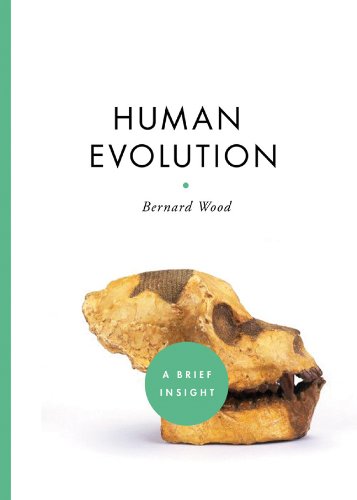
At three hours and forty-five minutes, Human Evolution is one of the shortest audiobooks I have spent time with this year, and that brevity is both its clearest virtue and its most significant constraint. Bernard Wood is a genuine authority, a renowned evolutionary scholar whose career spans decades of paleoanthropology, and he uses these few hours to trace the history of his field from its eighteenth-century foundations to the most recent fossil discoveries and genomic research. The question is not whether he is qualified to write this book. He clearly is. The question is what this particular format can and cannot do.
I listened on a long Sunday afternoon, the kind of afternoon that suits a contained intellectual project. By the time I finished, I had a cleaner map of the field than I started with, including a sense of its key debates, its most colorful figures, and the ways in which genetic evidence has complicated and enriched what the fossil record alone could show. That is a real achievement in under four hours. But I also finished with the sense that I had read a very good encyclopedia entry rather than a book with a sustained argument.
Our Take on Human Evolution
Wood’s approach is that of an insider giving a guided tour. He introduces us to the cast of characters in paleoanthropology, both historical figures like the nineteenth-century naturalists who first began assembling the pieces of the human fossil record, and the contemporary researchers whose field discoveries and genomic interpretations have reshaped the field in the past two decades. The tone is knowledgeable and authoritative without being condescending, and Wood is willing to acknowledge where genuine scientific disagreement exists rather than pretending the field has reached more consensus than it has.
The single review available for this audiobook called it very concise, readable, and a lifelong companion and quick reference, which is a precise description of what the book is aiming to be. It succeeds at that aim. The fossil finds, from the earliest members of the genus Homo to the Neanderthals and Denisovans whose genetic material we now know exists in modern human populations, are organized clearly and with enough narrative context to make them memorable rather than merely listed.
Why Listen to Human Evolution
The audio format actually serves this kind of survey reasonably well. Mike Cooper’s narration is composed and clear, with a pace that allows the scientific terminology to land without feeling rushed. For listeners who want an orientation to paleoanthropology before diving into longer, more focused works, this is a sensible starting point. The field can feel overwhelming from the outside, with dozens of species names and hundreds of competing interpretations of specific fossil finds, and Wood’s survey provides enough scaffolding to make subsequent reading more navigable.
The book’s focus on the history of the discipline itself, not just the findings but the researchers and the debates and the institutional contexts in which the research took place, gives it a human dimension that pure science writing sometimes lacks. Wood clearly finds the cast of characters in his field as interesting as the fossils, and that enthusiasm comes through even in a format this compressed.
What to Watch For in Human Evolution
The limitations are inseparable from the format. At under four hours, Wood cannot do more than introduce the major topics. Listeners who want depth on any specific area, the Australopithecus lineages, the Out of Africa debate, the implications of ancient DNA for our understanding of interbreeding between Homo sapiens and Neanderthals, will need to go elsewhere. This is a primer, not a complete picture, and listeners who arrive expecting the latter will finish feeling underserved.
The publication date of 2011 is also worth noting. The field of paleoanthropology has moved quickly in the years since, with significant new fossil discoveries, particularly in South Africa and the Philippines, and genomic research that has fundamentally altered our understanding of human prehistory. Some of what Wood presents as recent and cutting-edge has since been revised or superseded. Listeners who want a current picture of the field should supplement this audiobook with more recent sources.
Who Should Listen to Human Evolution
This is the right starting point for listeners who are curious about human origins and want a structured, credible introduction before committing to longer and more demanding works. It pairs well with books like Richard Wrangham’s Catching Fire or Yuval Noah Harari’s Sapiens for listeners who want to build a broader picture of human prehistory. Those already familiar with the field will find it too introductory. Treat it as an informed orientation rather than a definitive account, and it will serve its purpose well.
Frequently Asked Questions
Is this audiobook up to date with recent discoveries in paleoanthropology?
It was released in 2011, which means significant developments since then, including new Homo naledi fossils in South Africa and major advances in ancient DNA research, are not covered. Use it as an orientation to the field and supplement with more recent sources for a current picture.
How technical is the content, and can non-scientists follow it comfortably?
Wood writes for a general audience and keeps the technical terminology manageable. The species names and anatomical descriptions are introduced with enough context to follow without prior training in biology or anthropology. This is genuinely an introductory text.
At under four hours, how much ground does Human Evolution actually cover?
Wood covers the history of paleoanthropology as a discipline, introduces the major fossil species in the human lineage, and touches on the role of genomics in recent research. Each area gets enough treatment to be useful as orientation. None gets the depth that a longer, more focused work would provide.
How does Mike Cooper’s narration handle the scientific and Latin species names?
Cooper handles the terminology with confidence and consistency. The pronunciation of species names like Australopithecus and Homo ergaster is delivered cleanly and without hesitation, which matters for a text where technical vocabulary is unavoidable.