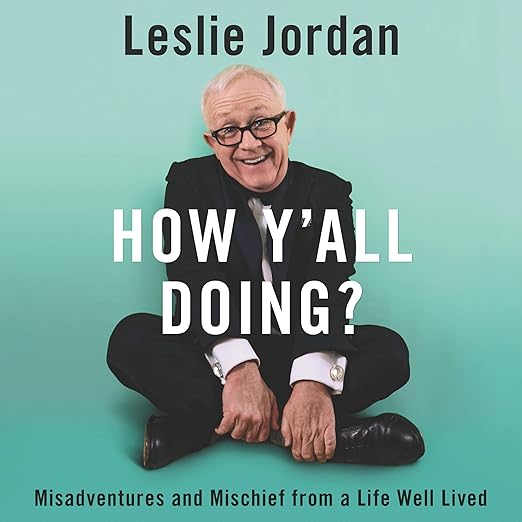
- Performance: Leslie Jordan's self-narration is essentially the book itself; his Southern cadence and comic timing are the material, not just the delivery method.
- What it covers: Viral late-life fame, Southern storytelling, humor alongside real hardship
- Feel: Warm, sassy, unexpectedly moving in places
- Our call: A short, genuinely funny essay collection where the Audie Award-winning self-narration is the main reason to choose audio over print.
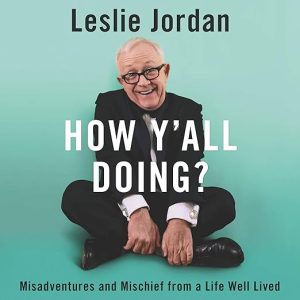
Leslie Jordan had no idea what "going viral" even meant when his Instagram videos started reaching millions of people, and that gap between accidental internet fame and Jordan's decades of stage and screen work before it is the real setup for this audiobook. How Y'all Doing? collects his essays into a portrait built on stories like an unexpected phone call from Debbie Reynolds and a tense run-in with a group of self-described ruffians at a West Hollywood Starbucks, all filtered through what the publisher calls his "puckish Southern charm."
An Audie Award-Winning Essay Collection
The book arrived as a New York Times and USA Today bestseller and went on to win an Audie Award for Humor, which places it in genuinely strong company for audio comedy specifically, and the publisher's own comparison list, Amy Sedaris, Jenny Lawson, David Rakoff, Sarah Vowell, situates Jordan within a recognizable tradition of personal-essay humorists rather than treating his viral fame as the whole story.
Structurally, the book stays in essay-collection mode throughout rather than building one continuous narrative, moving between lighter comic set pieces and material described as helping listeners "laugh and lift our spirits even in the darkest days," a phrase in the publisher description that hints at real difficulty sitting alongside the humor without the book ever losing its fundamentally warm, sassy register.
Instagram Fame Began During COVID Lockdowns
Jordan's Emmy Award, referenced in the publisher description, came for his recurring role as Beverly Leslie on Will & Grace, a character built on the same big, unapologetic Southern energy that carries through into these essays, which means listeners who know him primarily from that show will recognize the same comic instincts here in a more personal, unfiltered register.
The viral fame itself has a specific, well-documented origin: Jordan's Instagram videos took off during the COVID-19 lockdowns of 2020, when he started posting short, unscripted check-ins from home that read as genuinely funny company during an isolating stretch for a huge number of people discovering him for the first time. That context matters for understanding why the book leans so heavily into themes of connection and finding joy in hard circumstances rather than reading as a standard celebrity cash-in on a trending moment.
Essay collections built around a single strong comic voice are, as a category, one of the more reliable audiobook-to-print upgrades in publishing generally, since the format removes the one variable, imagining the writer's actual voice and timing, that a silent reader has to supply on their own, and this collection is a clean example of that general pattern working exactly as expected.
Reviewer Georgia Heard His Voice Already
Self-narration is essentially non-negotiable for a book this dependent on Jordan's specific vocal delivery; his Southern cadence and comic timing are load-bearing elements of the material itself, not incidental flavor, and a hired narrator attempting to replicate that voice would inevitably come across as an impression rather than the genuine article. The Audie Award for Humor specifically recognizes that the audio version isn't just a reading of the essays but a performance inseparable from Jordan's own delivery.
Reviewer Georgia's short review makes the case for the audio format almost by accident, writing, "I could hear his voice in my head as I read his book," which is a striking thing to say about a print reading experience and points directly to why the actual audiobook, hearing Jordan's real voice rather than imagining it, is arguably the better way to experience this specific material.
Jordan died in October 2021, which adds a layer of poignancy to a book already explicitly framed around finding joy inside hard days; listeners now experience essays about newfound fame and a long career knowing this collection turned out to be among his final creative works rather than an early chapter in a much longer one.
Short-form comic essay collections built for audio tend to live or die on whether individual chapters work as self-contained listens rather than requiring the whole book heard in order, and this collection is structured exactly that way, each essay a complete, standalone story, which makes it unusually well suited to being picked up in short bursts rather than demanding a single long sitting the way a plot-driven memoir would.
Few Ratings Despite the Audie Award
One honest number worth flagging: despite the bestseller status and the Audie Award, this title carries only a handful of ratings on this particular edition, a reminder that commercial success and a large volume of individual audiobook reviews don't always move together, and prospective listeners shouldn't read a small rating count here as a signal about quality.
At four hours and fourteen minutes, the book is compact enough that reviewer Kate describes keeping a physical copy specifically for guests to enjoy "over a weekend," and that same brevity applies to the audio edition: this rewards a concentrated sitting or two more than a long-haul commute companion, and listeners wanting a sprawling, career-spanning memoir should recalibrate toward a tight, focused essay collection instead.
Just a Southern Greeting, Never Ironic
The book's title itself, a warm, familiar Southern greeting rather than anything clever or ironic, sets the tone for the whole collection before the first essay even starts; Jordan isn't performing folksy charm as a bit, it's simply how he talks, which is part of why reviewers consistently describe the audio experience as feeling like a genuine conversation rather than a scripted performance.
Listeners looking for a structured, chronological life story with clear before-and-after chapters won't find that here; the essay format means the book jumps between different periods and subjects rather than building toward a single narrative arc, which suits dipping in and out but may frustrate anyone expecting a traditional memoir's steady chronological momentum.
Real Laughter and Real Tears Together
Newcomers to Jordan's work before his viral Instagram period should know the essays stand on their own, though some of the emotional weight lands harder with context. Reviewer Barbara Belfus describes his life as "not easy" while noting he "always made lots of lemonade," and that resilience reads more clearly against the many years he'd already spent building a career on stage and screen, years a listener who only knows him from Instagram might not be aware of.
Anyone wanting a genuinely funny, comparatively short listen to get through a rough stretch will find real comfort here, since the publisher's own framing around lifting spirits even in hard times is backed up by reviewer accounts of real laughter and real tears in the same sitting. Fans of Southern storytelling specifically, the oral, front-porch, everybody's-got-a-story tradition Jordan draws from, get an especially strong match, since that regional voice is doing as much work in this book as the celebrity anecdotes are.
Longtime fans who followed Jordan's entire career, from his early television guest spots through Will & Grace and into his viral Instagram era, will get the fullest emotional payoff, since the essays gain resonance from already caring about the arc of his career rather than meeting him for the first time on the page.
Before You Listen
Does Leslie Jordan narrate this audiobook himself?
Yes, and it won an Audie Award for Humor specifically for that narration, since his Southern cadence and timing are central to how the essays land.
How long is the How Y'all Doing? audiobook?
It runs four hours and fourteen minutes, short enough for a weekend or a couple of longer sittings rather than a long commute companion.
Do I need to know Leslie Jordan's earlier career to enjoy this audiobook?
Not strictly, the essays work on their own, but some of the emotional payoff around his later-life viral fame lands harder with a little prior context about his decades of stage and screen work.
Is this audiobook only comedy, or does it get more serious in places?
It stays fundamentally warm and funny throughout, but several essays sit closer to real hardship than pure comedy, giving the collection more emotional range than a straight joke collection would have.