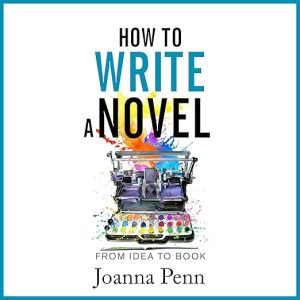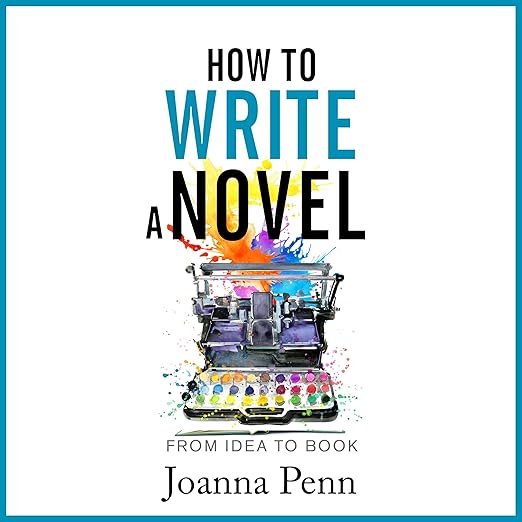
Can eighteen novels' worth of craft knowledge actually fit into under seven hours of audio? Joanna Penn, the New York Times and USA Today best-selling author behind that catalog, bets that it can in this audiobook, structuring the material around the full arc implied by its own title: mindset, ideas and research, the craft fundamentals, drafting a full manuscript, and editing that draft into a finished book. Penn narrates her own material, drawing on nearly a million copies sold across more than a hundred countries as the practical evidence behind advice that could otherwise read as purely theoretical.
Writer's Block Is Real, Penn Insists
What distinguishes this from a lot of writing-craft content is how directly Penn addresses the psychological obstacles alongside the mechanical ones. The synopsis promises a book covering mindset as much as craft mechanics, and that balance holds up: Penn spends real time on the specific mental blocks that stop most aspiring novelists before they finish a first draft, not just plotting structure or prose technique. That emphasis matters because most people who buy a book on how to write a novel already know roughly what a novel needs; what stops them is usually something closer to fear or inconsistency than a lack of technical knowledge.
One listener review pushes back specifically on Penn's treatment of writer's block, noting that some current writing advice tries to argue the phenomenon isn't real and simply gets relabeled as something else. Penn's own position, per that same review, treats the experience as genuinely real rather than reframing it away, a more useful stance for listeners who have actually stalled out mid-manuscript than a tidy claim that the obstacle was never real to begin with.
The book's own opening line, that writing a novel 'will change your life,' is a bold claim to lead with, and Penn spends real time earning it rather than leaving it as an unsupported assertion. Her argument is not that publishing success is guaranteed or even likely in a purely commercial sense; it is that the specific discipline of finishing a full manuscript changes how a person understands their own capacity for sustained creative work, a psychological claim rather than a commercial promise, and one that holds up regardless of what happens to any individual book afterward.
Self-Narration Backs Penn's Eighteen-Novel Track Record
Self-narration is close to essential for this specific book. Penn narrates with the calm, practiced authority of someone who has built The Creative Penn podcast and platform around exactly this kind of instructional voice, direct, practical, unpretentious, and that established register transfers cleanly to long-form audio instruction. A professional narrator reading Penn's material secondhand would lose the sense that the advice comes from someone who has personally written and published the eighteen novels the synopsis cites as her own track record.
One reviewer specifically praised the book for including 'links to various writing tools' alongside its conceptual advice, pointing to a practical, resource-forward approach rather than purely inspirational writing-craft content. Another reviewer, already mid-manuscript on a second novel and looking to sharpen storytelling skill specifically, described finding 'a wealth of information' across the different aspects of craft the book covers, a meaningful endorsement from a listener who was not a total beginner going in.
Penn's own catalog outside this specific book is worth knowing as context: she writes thrillers and dark fantasy under the same J.F. Penn byline that appears on this audiobook's craft guides, giving her advice about fiction craft specifically the weight of someone still actively working in the genre fiction trenches rather than a former novelist now teaching from memory. That currency matters for a subject where trends in reader expectations and market genre conventions shift meaningfully over even a five or ten year span.
Broad Coverage Means Less Depth Per Stage
This audiobook covers the full arc from idea to finished manuscript, which means any single stage, drafting technique, editing process, mindset work, gets proportionally less depth than a book devoted entirely to that one stage would offer. Listeners looking for an exhaustive deep dive into, say, line editing specifically should treat this as a broad map of the whole process rather than a specialist's manual on any single part of it.
Penn's own background is heavily rooted in independent publishing and genre fiction, and while the book's craft advice is framed broadly enough to apply across approaches, listeners planning to pursue traditional publishing specifically may want to supplement with material more focused on agents and submissions, since that is not this book's primary lens.
This is also worth knowing as a scope caveat: the book's title promises coverage from idea to book, and it does follow through on drafting and editing specifically, but the finer mechanics of formatting, cover design, and actual publishing logistics once a manuscript is finished get comparatively lighter treatment, since Penn covers that material in depth in separate titles within the same Writing Craft Books series rather than folding it into this one.
Audio Can't Flip Back Like a Reference Book
The audiobook format also means listeners cannot easily flip back to a specific section for reference the way a print or ebook reader could, which matters for a book explicitly structured as a sequential craft guide, mindset, then ideas, then drafting, then editing, meant to be revisited at different stages of a listener's own writing process rather than consumed once and set aside.
The practical tools Penn references throughout, specific software, editing resources, market research approaches, date quickly in a fast-moving self-publishing landscape, so listeners should treat those specific recommendations as a snapshot of what worked for Penn at the time of recording rather than a permanently current resource list, even though the underlying craft and mindset advice ages much more slowly.
Novelists at Any Stage, Idea Through Edit
This audiobook suits aspiring novelists at any stage, from someone with only an idea to someone stalled partway through a draft, who wants both the craft mechanics and the mindset work addressed together rather than separately. It is also a good fit for listeners already familiar with Joanna Penn's podcast who want her full, structured take on the writing process in one place. It is also a genuinely good fit for listeners who absorb instructional content better through audio than text, since Penn's own conversational delivery style translates written craft advice into something closer to a mentoring conversation than a textbook.
Skip it if you are looking for a narrow deep dive into one specific craft element, like dialogue or structure alone, or if traditional publishing guidance is your primary need; this book's breadth is a genuine strength for beginners but leaves less room for any single topic than a specialist title would offer.