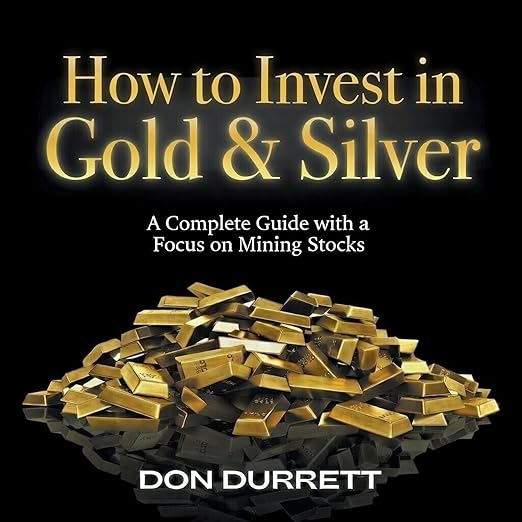
Quick Take
- Narration: Chase Crandall delivers Durrett’s practical, methodical prose clearly and without embellishment, well-suited to reference-style listening.
- Themes: Precious metals as portfolio protection, mining stock valuation, navigating the junior mining sector
- Mood: Practical and bullish, with the energy of someone who genuinely believes in what they are teaching
- Verdict: A thorough introduction to precious metals investing that is strongest on mining stock methodology, though its gold-bug perspective shapes the analysis throughout.
I listened to the bulk of this one on a morning commute during a week when the financial headlines were particularly unsettling, which is probably when this book works best. Don Durrett’s How to Invest in Gold and Silver is designed for a specific kind of moment, one where conventional asset classes feel unstable and investors are looking for a framework to think about hard assets. Chase Crandall’s narration is functional and clear, which is exactly what you want from a financial guide: no theatrics, just the information.
Published through Durrett’s own imprint and released in audio in February 2026, this is a nearly ten-hour guide that covers the full landscape of precious metals investing: physical bullion and coins, ETFs and options, and the mining company sector that Durrett clearly regards as the most interesting and potentially most lucrative corner of the market. His systematic approach to mining stock valuation, developed through his own years of investing in the sector, is the book’s most distinctive and practically useful contribution.
Our Take on How to Invest in Gold and Silver
Durrett is explicit throughout that this is a guide written from a particular perspective: he believes gold and silver are undervalued, that the current economic environment favors precious metals, and that the mining sector in particular offers asymmetric upside for investors willing to do the research. That perspective shapes every chapter. One reviewer noted that “gold bugs can be such one-eyed zealots about precious metals that it blinds them to possibilities in other asset classes,” and that critique applies to some degree here. Durrett is not trying to give a neutral overview of asset allocation theory; he is trying to help people invest in gold and silver effectively given a prior conviction that they should.
Within those parameters, though, the guidance is solid. The step-by-step strategy for bullion and coins is clear and practical, covering storage, insurance, and the considerations that distinguish coins from bars from ETFs for different investor situations. The explanations of how ETFs and options function in the precious metals context are accessible without being dumbed down.
Why Listen to How to Invest in Gold and Silver
The second half of the book, focused on mining companies, is where most reviewers found the highest value. One investor who had previously operated in the sector without Durrett’s framework noted that “I used valuation techniques not suitable for the mining industry” before reading this book, and that the methodology here pointed them toward better approaches. The distinction between major, mid-tier, and junior mining companies, and the specific criteria Durrett uses to evaluate each, gives listeners a usable mental model for a sector that can otherwise seem opaque.
Crandall’s narration handles the technical terminology well. He reads figures and ratios clearly without rushing through the comparative analyses that require the listener to process numbers in real time. For a finance audiobook, that pacing discipline matters more than most listeners realize until they encounter a narrator who gets it wrong.
What to Watch For in How to Invest in Gold and Silver
The book’s bullish perspective on precious metals is consistent enough to function as a worldview rather than a conclusion derived from evidence. Durrett presents the case for gold and silver investment as essentially self-evident given macroeconomic conditions, and listeners who want to stress-test those assumptions will need to do so independently. The book does not spend significant time on the strongest counterarguments to precious metals as a significant portfolio allocation.
The release date of February 2026 means the macroeconomic context Durrett references is recent, but financial markets move quickly, and some of the specific conditions he describes may have shifted by the time any given listener encounters the book. The methodological content ages better than the market commentary.
Who Should Listen to How to Invest in Gold and Silver
Investors who are already interested in adding precious metals exposure to their portfolios and want a systematic framework for thinking about how to do it will find this the most comprehensive single-source guide available in audio. It is particularly strong for listeners curious about mining stocks who have not found a clear framework for evaluating companies in the sector. Skip it if you want a balanced overview of asset allocation that treats gold and silver as one option among many. Come to it if you have already decided you want to invest in this space and need practical guidance on how.
Frequently Asked Questions
Is How to Invest in Gold and Silver suitable for complete beginners with no prior investing knowledge?
Durrett describes the book as written for investors new to gold and silver markets, and the early chapters are genuinely accessible. Some familiarity with basic investing concepts, like what an ETF or portfolio allocation means, will help you move through the later chapters more efficiently.
Does the book cover physical gold and silver as well as paper investments like ETFs?
Yes, both in detail. Durrett covers bullion, coins, ETFs, options, and mining stocks. The book is organized to help you understand the differences between these vehicles and choose based on your situation and risk tolerance.
How does Chase Crandall’s narration handle the technical financial content?
Clearly and without embellishment. He reads the valuation methodologies and numerical comparisons at a pace that gives listeners time to process. This is a narration built for comprehension rather than entertainment.
Does the book’s bullish stance on precious metals make it unreliable for someone wanting a balanced view?
It depends on what you are looking for. The practical methodology for evaluating investments within the precious metals sector is sound regardless of your prior beliefs. The macroeconomic framing is explicitly partisan toward precious metals. Readers wanting a balanced case for and against the asset class should supplement this with other sources.