At a Glance
- Narrator: Dennis Holland delivers the material in a clear, workmanlike style that suits the practical, step-by-step tone Adams favors: no dramatic flourishes, just clean instruction.
- Subjects: REO investing, foreclosure market navigation, deal negotiation
- Tone: Direct and confidence-building
- Bottom line: A solid entry point for anyone new to bank-owned properties, though experienced investors may find the coverage surface-level.
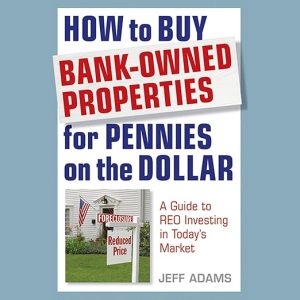
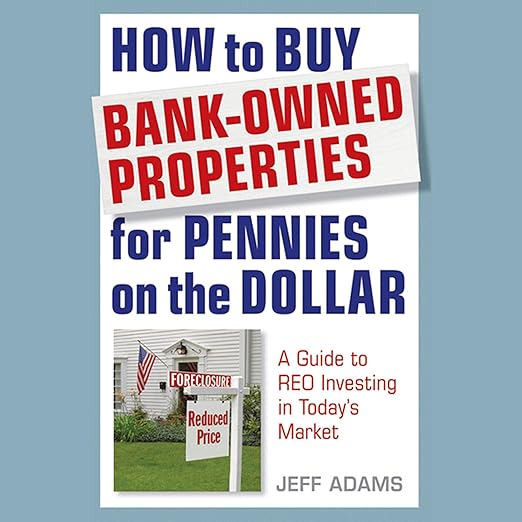
REO investing does not announce itself with fanfare. Jeff Adams opens this audiobook in the quieter corner of real estate investing, a place most beginners overlook while they chase short sales and pre-foreclosure deals that drag on for months. I put this on during a long drive after a conversation with a friend who kept losing bids on distressed properties to investors who seemed to know something he did not. By the time Dennis Holland had finished the first chapter, I understood exactly what that something was.
The core argument is deceptively simple: banks do not want to own houses. When a lender forecloses, the property lands on its books as a liability, not an asset. Banks have entire REO departments whose only job is to move those properties off the balance sheet, often at prices well below market. Adams built a 15-year career exploiting this structural mismatch, and this audiobook is his attempt to systematize what he learned into repeatable steps any investor can follow.
Holland's Deliberate Pace Suits Numbered REO Steps
What separates this audiobook from the crowded shelf of real estate guides is its specificity about process. Adams does not spend much time on motivational language or abstract mindset work. He goes straight into how to identify REO listings, how to research fair market value, how to approach the REO department directly, and how to structure an offer that a bank will actually accept. The PDF companion that comes with the audiobook adds a layer of utility, giving listeners worksheets and checklists they can bring to actual deals. For a medium of instruction where visual aids are usually absent, that inclusion is a meaningful addition.
Dennis Holland's narration is functional without being bland. He reads at a deliberate pace that serves the instructional content well, never rushing through the numbered steps or glossing over the negotiation frameworks Adams sets up. Holland does not inject personality into the delivery, which some listeners might find dry, but for a guide structured around process over story, the measured approach is appropriate. The tone Adams writes in rewards this kind of straight delivery: the text is confident, direct, and built for listeners who want information rather than entertainment.
REO Deals Beat Short Sales on Motivation Alone
Adams makes a compelling case that the pre-foreclosure and short sale markets, which attracted enormous attention from deal hunters in the years following the 2008 crash, are far messier than REO investing. Short sales require lender approval that can take six months or longer and frequently fall apart. REO deals, by contrast, involve a motivated institutional seller who has already resolved the legal complications of foreclosure and simply wants to close. That asymmetry of motivation is the engine of the strategy, and Adams explains it clearly enough that a first-time investor can act on it.
Reviewers consistently note the book's accessibility. One listener described it as an ideal introduction, the kind of resource that cuts through the jargon and lays out a clear path for someone new to the foreclosure market. Another appreciated the focus on flipping, which makes the guide particularly relevant for investors aiming to buy, renovate, and resell rather than hold. For homebuyers looking for a primary residence at below-market prices, much of the strategy still applies, since the same REO departments deal with both groups of buyers. A third reviewer, already familiar with Adams's earlier free guides on the subject, noted that the expanded detail and structured progression in this audiobook justify the investment even for those with prior exposure to his work.
The audiobook's duration of just over six hours keeps the material from growing bloated. Adams resists the temptation to pad the content with anecdotes that serve the author's ego rather than the listener's education. The result is a guide that respects the listener's time and delivers its framework without unnecessary digression.
Written for an Elevated-Inventory Market, Skewed Toward Flips
The most important caveat is timing. The book was written during a period when bank-owned inventories were significantly elevated, and while REO properties remain a feature of any real estate market, the conditions Adams describes as exceptional may not exist in the same form in every local market today. Listeners should treat the underlying framework as durable and the specific price assumptions as historical context rather than current data. Market cycles shift, and a strategy built for a buyer's market requires calibration when inventory tightens.
The book also skews toward investors who intend to flip properties. Adams acknowledges this bias openly, but listeners seeking guidance on buy-and-hold REO strategies or rental portfolio building will find the coverage thinner in those areas. The chapter on estimating fair market value, while useful, is brief enough that listeners without prior experience in property valuation may want to supplement it with additional resources before making offers. Pairing the audiobook with a more detailed comparative market analysis guide would give the REO strategy a stronger foundation in local pricing reality.
Right for First-Timers Intimidated by Short Sales
This audiobook is best suited to first-time real estate investors who have been intimidated by the complexity of short sales and pre-foreclosures, and who want a cleaner entry point into distressed property investing. It also works for homebuyers willing to navigate the REO process in exchange for a lower purchase price. Experienced investors who have already worked with REO departments will find the foundational content familiar and may not gain much new ground. Anyone hoping for deep coverage of rental strategy, legal frameworks around foreclosure law, or market-cycle analysis will need to look beyond this title for that depth.
Frequently Asked Questions
Does the audiobook cover how to find REO listings without a real estate agent?
Yes. Adams dedicates significant time to direct outreach strategies for locating REO properties through bank REO departments, online listings, and other channels that bypass the need to rely solely on agent relationships.
Is the PDF companion included with the audiobook purchase?
The publisher notes that the PDF companion is included in your library when you purchase the audiobook title, making the worksheets and checklists accessible alongside the audio.
How much capital does Adams suggest you need to start REO investing?
Adams explicitly argues that REO investing does not require a large amount of starting capital, positioning the strategy as accessible to buyers who cannot compete with cash-heavy institutional investors in hotter market segments.
Is this audiobook suitable for someone with no prior real estate investing experience?
Listener reviews strongly suggest it is. The book has been described as a guide for newcomers to the foreclosure market, with clear explanations of concepts like fair market value estimation and REO department negotiation that assume no prior investing background.