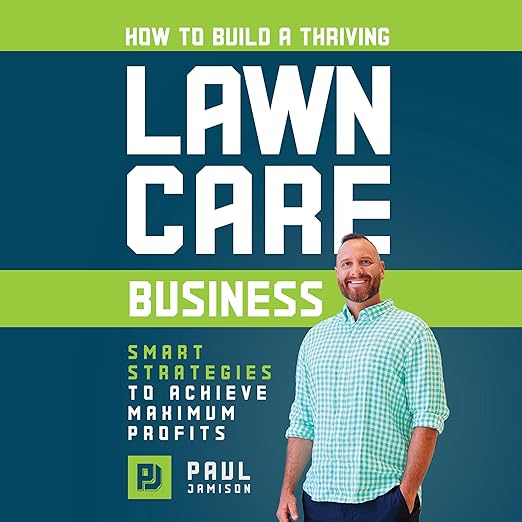
Quick Take
- Narration: Mr. Producer delivers a serviceable, clean read suited to the practical business content, without distracting style choices.
- Themes: Entrepreneurial mindset, operational systems, client relationship and pricing discipline
- Mood: Straightforward and encouraging, with a practical industry voice
- Verdict: A focused, no-padding business guide for lawn care operators who want systems rather than inspiration, delivered by someone who clearly knows the industry.
Business guides for trades and service industries are a category that rarely gets the credit it deserves. The intellectual infrastructure required to run a profitable lawn care operation, pricing correctly, managing client retention, building operational systems that do not depend entirely on the owner’s presence, is not simpler than the thinking required for more conventionally prestigious business forms. Paul Jamison’s How to Build a Thriving Lawn Care Business understands this, and the result is a practical guide that respects the intelligence of its audience without condescending to them with motivational filler.
Jamison is the host of the Green Industry Podcast, which means he is speaking from within an industry rather than looking at it from the outside. That origin matters. The book does not spend time explaining why lawn care is a valid entrepreneurial path or convincing readers that the industry has potential. It assumes you are already in it or seriously considering it, and it moves quickly to the practical mechanics of running the business better.
Our Take on How to Build a Thriving Lawn Care Business
The framework Jamison uses to structure the book is built around what he calls the progression from survival-mode operation to thriving business. He names these states specifically, which is a useful device. The distinction between an operator who responds to immediate pressures and one who has built systems capable of absorbing those pressures without requiring constant owner intervention is the real subject of the book. The tactical content, pricing strategy, customer service standards, operational efficiency, financial management, sits inside that larger frame.
The chapter on pricing is one of the book’s most practically valuable sections. Lawn care operators consistently underprice their services, often because they calculate their rates against their own labor cost without accounting for overhead, growth capital, or the market value of reliable professional service. Jamison addresses this directly and gives concrete guidance rather than generic advice about knowing your numbers. One reviewer described the book as full of systems you can add to your business, which is accurate. The emphasis throughout is on repeatable processes rather than heroic individual effort.
Why Listen to How to Build a Thriving Lawn Care Business
At three hours and forty-nine minutes, this audiobook does not overstay its welcome. Jamison writes without padding, and the brevity is a genuine virtue for an audience that is often listening while working, commuting between jobs, or managing a schedule that does not accommodate long listening sessions. One reviewer specifically noted that the book avoids the extended autobiography common to business books in this genre, a pattern Jamison’s existing podcast audience confirmed and appreciated.
The narrator, credited as Mr. Producer, reads the material clearly and at an appropriate pace for instructional content. There are no distracting performance choices, which is right for the material. The content is the point, and the narration delivers it without competing with it. For a practical business guide of this length and format, that is exactly what the production should do.
What to Watch For in How to Build a Thriving Lawn Care Business
The book comes with bonus coupons for Jamison’s paid business tools, a price increase letter template and a Know Your Numbers course, which are mentioned in the audio. These are promotional materials for his paid offerings, not part of the audiobook content itself. Listeners who find the business framework compelling should be aware that Jamison’s ecosystem includes additional paid resources; the book functions in part as an introduction to that ecosystem. That is not unusual for podcast-based entrepreneurs, and the book stands on its own without requiring additional purchase, but the context is worth knowing.
The audiobook is specifically about the lawn care industry, and while some of the principles translate broadly to other outdoor service businesses, the examples, the client relationship dynamics, the pricing frameworks, and the operational specifics are calibrated to lawn care. Listeners in adjacent industries like landscaping design, pest control, or snow removal will find much of it applicable but will need to adapt rather than apply directly.
Who Should Listen to How to Build a Thriving Lawn Care Business
Lawn care business owners in the early-to-mid stages of building their operation, specifically those who have demonstrated that the service is viable but have not yet built the systems that would allow the business to grow beyond their own daily capacity, will get direct value from this audiobook. It is also well-suited to people considering entering the industry who want a realistic operational preview before committing capital. Experienced operators who have already built pricing discipline, client retention systems, and financial management practices may find the content familiar; the book is oriented toward those who are building those systems rather than refining them.
Frequently Asked Questions
Is this book relevant for solo lawn care operators or only for those with employees?
The content applies to both, but its most actionable guidance is aimed at operators who are either currently solo and want to scale, or who are managing small teams and need better operational systems. The pricing and client retention chapters are relevant regardless of business size.
Does the audiobook include access to the bonus tools mentioned in the book?
The book includes coupon codes for Jamison’s paid business tools, specifically a price increase letter template and his Know Your Numbers course. These are separate purchases; the coupons provide a discount but the tools themselves are not included in the audiobook purchase.
How does Jamison approach the pricing question for lawn care services?
He addresses underpricing as a systemic problem and provides concrete frameworks for calculating rates that account for overhead, target profit margin, and market value rather than just labor cost. The pricing chapter is one of the most practically specific sections of the book.
Is How to Build a Thriving Lawn Care Business useful for adjacent outdoor service businesses?
Many principles translate to landscaping, pest control, snow removal, and similar businesses, but Jamison’s examples and operational specifics are calibrated to lawn care. Listeners in adjacent industries will find it broadly applicable but should expect to adapt some frameworks to their specific service context.