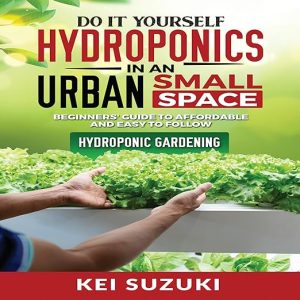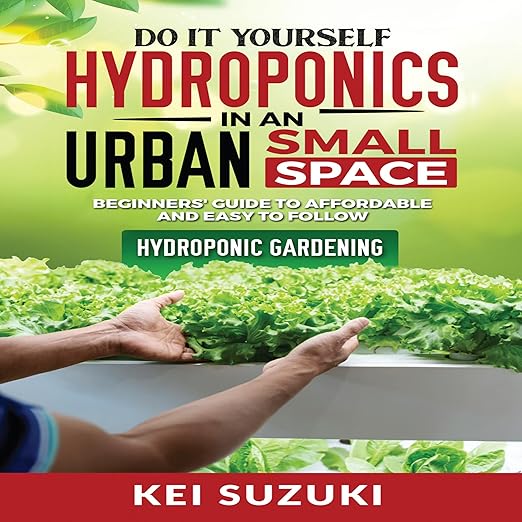
Growing lettuce without soil in a small apartment is the promise, and Kei Suzuki keeps the pitch narrow enough to stay credible. This audiobook runs three hours and thirty-seven minutes and covers what a beginner actually needs: how the main system types differ, what each one asks of you in maintenance, which vegetables, herbs and fruits forgive a first attempt, and the shortcuts for starting seeds and cloning plants once the setup is running.
Snyder Carries a Manual's Sequencing Burden
Coverage is the strength. The most detailed account in the pool, five stars in July 2023, walks through what the book delivers: the history of this kind of growing, why certain environments suit it better than others, which plants to begin with, and practical tips that stay easy to follow. That reviewer also prices the value against the ebook edition, which is a useful reminder that the text has been circulating in other formats for a while.
C. M. Snyder carries the reading of what is, structurally, a manual. Instructional audio has a particular demand attached to it, which is that a listener cannot flip back three pages to re-check a nutrient ratio or a system diagram, so the burden falls on how clearly the material is sequenced rather than on any performance. Sections built as lists survive the format. Sections built as assembly steps struggle with it.
The listing is self-published, with the author's own name in the publisher slot, and it carries eight ratings averaging 4.6. That is a small sample, so treat the figure as a signal rather than as a verdict. It also explains a certain unevenness in how the book is put together, which the written responses notice, and it means nobody at an imprint was standardizing the depth of one chapter against the next.
Ninety Percent Less Water, Framed as Efficiency
The comparison of system types is the most valuable section. One of the two four-star notices credits the book with real detail on the inputs each system needs, the advantages and disadvantages of each one, and the steps required to put a whole setup together, and calls it a beginner's manual for choosing what suits your own space and your own tolerance for maintenance. That decision is the one beginners get wrong most expensively.
The case for growing this way is made with numbers rather than sentiment: water use cut by as much as 90 percent against soil gardening, less fertilizer running off into the water table, produce that has not traveled, and a growing season that ignores the weather outside. Whether or not those figures survive scrutiny, they frame hydroponics as an efficiency problem rather than as a lifestyle, which is a more honest sell.
The plant guidance is more useful than it sounds. Choosing what to grow first decides whether a beginner keeps going or abandons the project after one dead tray, and the book spends real time on which vegetables, herbs and fruits suit water-based systems and which ones punish inexperience. Pair that with the pages on common misconceptions and you get the two lists a first-timer needs most: what to attempt, and what to leave alone.
Audio suits the conceptual half of this book very well. The chapters on how the technique developed, on why plants tolerate having their roots in water, and on which crops reward a beginner are all comfortable listening while you do something else. It is short enough to run twice, and running it twice before buying any equipment is a better use of the time than taking notes on a first pass.
Goodbye to Pests, Then Overcoming Problems
Depth is uneven and readers say so. The other four-star account puts it directly: some parts of this book carry considerably more detail than others, while still calling it a good learning tool and reporting having recommended it to friends who went on to buy it. That is a fair summary. The system comparisons are thorough, and a few of the later practical sections thin out noticeably against them.
The claims deserve a skeptical ear too. A yield improvement of 30 percent over traditional gardening and a 90 percent reduction in water use are presented without a citation, a study or a set of conditions attached. Both figures are plausible for well-run systems, and neither is a guarantee for a first attempt in a rented room. Read them as marketing arithmetic, not as a forecast for your own shelf of lettuce.
The copy also argues with itself. One paragraph promises goodbye to pests, diseases and weeds, and a later line promises to help you overcome common problems and misconceptions. Both cannot be entirely true. Water-based growing does remove weeds and most soil-borne trouble, and it substitutes its own concerns around pumps, nutrient balance and light, which is exactly the sort of thing a beginner needs stated plainly rather than sold around.
Enough Runtime to Decide on Hydroponics
The intended reader is somebody with no experience and limited space, and the book meets that person well. One five-star notice, a single sentence long, says only that it is easy to read and not boring, which sounds slight until you consider how much gardening instruction fails that test. Anyone put off by dense horticultural writing, or by videos that assume a garage full of tools, will find this pitched at exactly the right level.
Experienced growers should skip it, since nothing here goes past the basics. Anyone who wants to build immediately rather than plan will need the visual material open alongside the audio. Listeners hoping for a survey of commercial-scale growing are in the wrong place, and anyone wanting rigorous sourcing for the environmental claims should treat this as an introduction and go looking for the studies separately.
Three and a half hours to decide whether hydroponics belongs in your apartment, and which of the system types you could actually maintain, is a reasonable trade. The book oversells its numbers and underdelivers in a few late sections. It still answers the two questions a beginner most needs answered, which are what to buy first and what to grow in it. For eight ratings and a self-published listing, that is a better hit rate than the category usually manages.
Does this audiobook come with the diagrams and charts?
Yes, and the listing says so explicitly: an accompanying PDF is delivered with the purchase and sits alongside the audio in your library. That matters more here than on most nonfiction, because system layouts, plant tables and nutrient figures are visual by nature. Anyone who ignores the document will lose a real share of the value.
Is the audiobook enough to actually build a working system?
Enough to choose one and understand what it will demand from you, which is the harder decision. The physical build wants the companion document, a parts list and a free afternoon rather than headphones. Treat three and a half hours as orientation and planning, then switch formats once you are ready to buy components.
What sort of practical tips does it give?
Starting seeds, cloning plants from cuttings, matching crops to system types, and heading off the mistakes beginners repeat. A June 2023 notice at five stars reports a book packed with tips and tricks and finishes by hoping to put them to work in the coming season, which is roughly the right expectation to bring.