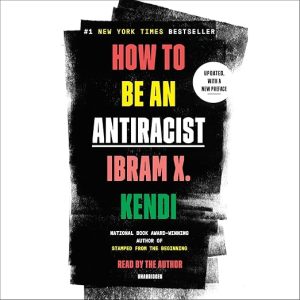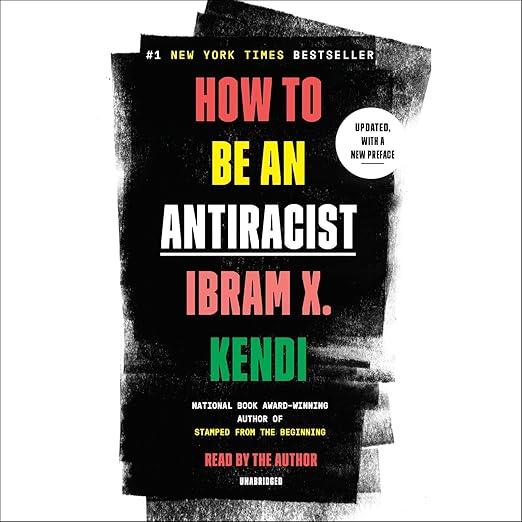
I first encountered How to Be an Antiracist in the months when it was everywhere, recommended with the kind of urgency that tends to produce backlash before the book itself has been read. I deliberately waited. I wanted to come to it without the noise. When I finally listened, on several long walks in autumn, I found a book that is considerably more rigorous and more personally honest than its reputation in either direction suggested.
Ibram X. Kendi structures the book as a hybrid: part definitional framework, part memoir, part policy argument. The memoir element is crucial and often undersold in discussions of what the book is doing. Kendi is not positioning himself as someone who arrived at antiracism fully formed. He is documenting his own intellectual and personal history with racism, including his own internalized racist ideas as a young man, and using that history to demonstrate that the concepts he is developing are not abstract. They came from somewhere real.
First, the Big Picture
The central analytical move of the book is Kendi's insistence on distinguishing between racist ideas and racist policies, and his argument that racist policies tend to come first, generating the ideas that justify them, rather than the other way around. This reorientation has practical consequences for how you think about change: if racist policies are the engine rather than racist ideas, then changing hearts and minds without changing policies is insufficient. Whether or not you find that argument entirely persuasive, it is carefully constructed and it has genuine explanatory power for historical events that the idea-first model struggles with.
The widening circle structure, taking readers from the most basic concepts through increasingly complex intersections of race with class, gender, sexuality, and geography, is well-designed pedagogically. Each chapter begins with a definition, which some readers find useful and others find schematic. On audio, the definitional structure works differently than on the page: you cannot flip back easily to re-read a definition, so Kendi's habit of restating and applying his definitions throughout the text becomes an asset rather than redundancy.
Kendi narrating his own work is not just a marketing decision. It is the right creative choice for this specific book. The memoir sections, which include his adolescence, his experience in school, his early engagement with ideas he would later reject, carry a quality of personal accountability that only the author can convey with full credibility. When Kendi describes his own past racist ideas with intellectual honesty, that honesty registers differently coming from his own voice than it would from any professional narrator's delivery. The vulnerability is real and audible.
His delivery of the analytical sections is clear and direct without being lecturing in tone. He is engaging an audience he clearly believes capable of following complex arguments, which is a respectful posture that the audio format preserves. The book was updated with a new preface, and Kendi's narration of those additions feels continuous with the original text rather than tagged-on, which suggests the production was managed carefully.
Weak Spots in How to Be an Antiracist
This book generated significant controversy on publication and continues to do so. Readers approaching it expecting either a simple activist handbook or an ideological screed will find something more carefully argued than either description suggests. Kendi is a historian and a scholar, and the book's arguments are grounded in historical evidence and social science research rather than in rhetoric alone. Engaging seriously with the argument, including where you disagree, is more productive than reading it as either affirmation or provocation.
The intersectional chapters, particularly those dealing with gender and sexuality in relation to race, are where the book's analytical framework gets its most complex workout. Some listeners will find these chapters less immediately engaging than the earlier definitional work. They are also where Kendi makes some of his most original contributions to the analytical framework he is building, so it is worth staying with them even when they feel more demanding.
Is This One for You?
Essential for readers interested in the structural analysis of American racial inequality who want something more rigorously argued than popular journalism on the subject. Those who have read Michelle Alexander's The New Jim Crow or Carol Anderson's White Rage will find Kendi's framework adds a different analytical layer to conversations those books began. The author-narrated format is a specific advantage of the audio version over the print edition. Come prepared to sit with arguments that may challenge your existing frameworks, whatever those frameworks are.
Frequently Asked Questions
How does the memoir structure interact with the policy arguments, is one more prominent than the other?
They are genuinely interwoven rather than alternating. Kendi uses personal narrative to introduce and ground each conceptual move, which means the memoir and the argument develop together. The personal sections are not illustrative anecdotes; they are the primary evidence for the intellectual journey the book documents.
Does Kendi's narration of his own work affect pacing or listenability over ten-plus hours?
Kendi's delivery is clear and measured, but it is an author's narration rather than a professional audio performance. Most listeners find it engaging and appropriate for the material. Those who prefer the technical polish of professional narrator delivery may occasionally notice the difference, particularly in longer expository passages.