Quick Take
- Narration: Amy Shah MD reads her own work with the warmth and directness of a knowledgeable friend, conversational pacing makes the 30-30-3 protocol feel actionable rather than clinical
- Themes: Perimenopause nutrition, gut-brain connection, hormonal health
- Mood: Practical and encouraging, with a friend-next-door energy
- Verdict: A solid nutritional framework for women navigating perimenopause and menopause, though the PDF companion is essential for retaining the recipes and protocols.
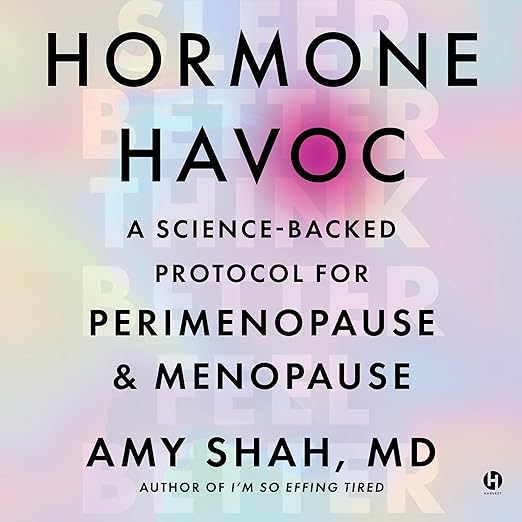
I came to Hormone Havoc on the recommendation of a friend who’d listened to it on a long drive and come back with a notebook full of protein targets and fiber goals. She texted me a photo of her notes, the 30-30-3 framework written out in three neat bullet points, and said it was the first time perimenopause had been explained to her in a way that felt solvable. That’s a specific and promising endorsement, so I cleared out a few commutes and gave it a full listen.
Dr. Amy Shah is a double-board certified physician who has built an audience partly through social media, and her audiobook voice reflects that dual identity. She writes and speaks like someone who has practiced distilling complex endocrinology into formats that a busy, slightly-exhausted woman can absorb on a Tuesday afternoon. That skill matters here. The science of hormone fluctuation, gut microbiome interaction, and circadian fasting is genuinely complicated, but Shah doesn’t reach for jargon when plain language will do. The result is a book that feels accessible without feeling dumbed down.
The 30-30-3 Protocol and Whether It Earns Its Simplicity
The core of Hormone Havoc is a nutritional protocol built on three numbered targets: 30 grams of protein at your first meal, 30 grams of fiber daily, and three servings of probiotic foods. Shah spends considerable time explaining the physiological reasoning behind each number, why protein at the first meal curbs cravings through specific hormonal pathways, how diverse fiber feeds a gut microbiome that in turn influences mood and metabolic stability, why probiotic foods rather than just supplements. The framework is simple to state but the book doesn’t treat simplicity as its endpoint. Shah backs each element with research and explains how these three levers interact, which is what separates a real protocol from a catchy slogan.
Where the audio format stretches is around the twenty recipes and specific supplement suggestions that Shah includes. This is where the downloadable PDF companion becomes less optional and more necessary. You can follow the reasoning through your ears, but retaining specific gram targets, food lists, and recipe components really requires a reference you can return to. This isn’t a criticism of the book, it’s a format reality that listeners should plan for before pressing play.
Perimenopause Starting in Your Late 30s: The Conversation Most Doctors Skip
One of the more valuable contributions Hormone Havoc makes is its insistence on perimenopause as a legitimate health phase that begins much earlier than most women expect, potentially as early as the late 30s. Shah is direct about the fact that the standard medical conversation about hormonal transition typically doesn’t begin until symptoms are already disruptive. Her framing of the gut-immune-metabolic triad as the system that gets destabilized first, before the classic menopause symptoms appear, offers a useful model for women who are experiencing vague but real changes and not yet finding answers in conventional checkups.
The circadian fasting section pairs with this, giving listeners a lifestyle tool that works alongside the nutritional protocol rather than as a separate intervention. Shah is careful not to oversell fasting, she acknowledges that approaches need calibrating for individual circumstances, which adds credibility to the overall argument.
Self-Narration and What It Adds
The decision to have Dr. Shah narrate her own work is the right one here. One reviewer described listening as being like chatting with a best friend, and that quality comes directly from Shah’s voice. She has the energy of someone who has given this presentation many times and still finds it urgent. There’s genuine conviction in how she delivers the line about not settling for feeling awful. Whether you warm to that register or find it slightly motivational-adjacent is a matter of personal taste, but the authenticity is not manufactured. You’re hearing a physician who believes in what she’s written, and that matters when the subject is as personal as hormonal health.
Who Should Listen and Who Should Skip
Listen if you’re in your late 30s through late 50s and looking for a nutritional entry point to perimenopause or menopause management, particularly if you prefer an integrative approach that starts with food before moving to other interventions. Also worth your time if you want a doctor who speaks plainly about the gut-brain-hormone connection without demanding a PhD to follow along.
Skip if you’re looking for a comprehensive clinical reference or detailed HRT guidance, this is a nutritional and lifestyle framework, not a full medical overview of menopause care. For that, Mary Claire Haver’s The New Menopause covers more clinical ground. Also skip if you won’t use the PDF companion, since the recipes and specific protocols don’t translate well to audio alone.
Frequently Asked Questions
Is the PDF companion really necessary for Hormone Havoc, or is the audio sufficient on its own?
The PDF is genuinely useful rather than optional. The twenty recipes and specific gram targets for protein and fiber are difficult to retain through audio alone. Shah’s narration covers the reasoning and principles well, but you’ll want the PDF for practical reference when you’re actually applying the protocol.
How does Hormone Havoc differ from other menopause audiobooks like The New Menopause?
Hormone Havoc focuses specifically on nutritional and dietary intervention, the 30-30-3 protocol, circadian fasting, and gut microbiome support. The New Menopause by Mary Claire Haver takes a broader clinical approach covering HRT, cardiovascular risk, and a full A-to-Z symptom toolkit. They complement each other rather than overlap significantly.
Does the book address women who are still in perimenopause rather than full menopause?
Yes, and this is one of its strengths. Shah explicitly addresses perimenopause as beginning as early as the late 30s and devotes substantial attention to the early hormonal shifts that precede classic menopause symptoms. Listeners in their late 30s or early 40s experiencing vague symptoms will find this more relevant than books that focus primarily on post-menopausal health.
Is Amy Shah’s narration engaging for a nearly eight-hour audiobook?
Generally yes. Shah’s delivery is conversational and energetic without being performative. The pacing is driven by explanation and example rather than clinical recitation, which sustains attention well across the runtime. Listeners who find motivational registers grating may occasionally find her tone slightly enthusiastic, but the substance consistently grounds the energy.