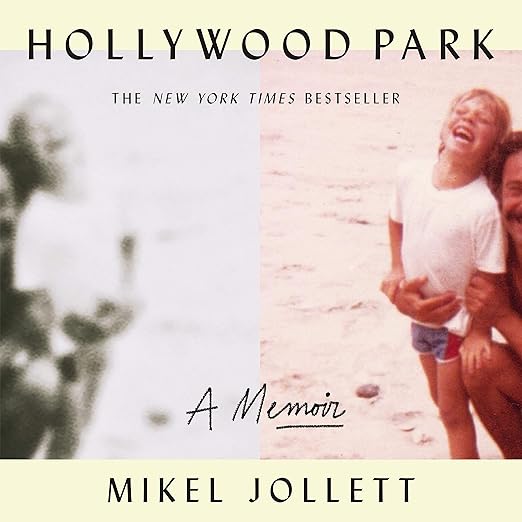
Buried in the promotional block at the foot of this audiobook's description is the only real piece of narration criticism attached to the title. The publisher put it there. Audiofile Magazine calls Mikel Jollett "the tender voice of this harrowing memoir" and gets specific: "Jollett is very giving as he presses on in a raspy voice, sharing details of poverty, deprivation and drugs." It adds this: "The musical interludes soften the harsh realities he recounts." Everything useful anyone has said about this recording comes from the marketing copy.
The Review
Jollett was born into the Church of Synanon, which the copy calls one of the country's "most infamous and dangerous cults," and was separated from his parents at six months old on the leader's orders, then handed to what the cult named its School. The prose the publisher quotes from the book itself is the strongest argument for buying: "We were never young. We were just too afraid of ourselves. No one told us who we were or what we were or where all our parents went." Parents who "would arrive like ghosts, visiting us for a morning, an afternoon."
Escape is not the ending, and the copy is honest about that: "life outside Synanon was even harder and more erratic." What follows is a clinically depressed mother, an angry older brother, a rotation of troubled step-fathers, a father who was "a former heroin addict and ex-con," and the pull of drugs and alcohol. The route out runs through Stanford University and then, as the copy puts it, into "finding his voice as a writer and musician," which is the sentence that ties the memoir to the album folded into this recording. A memoir that treats the cult as the beginning of the damage instead of the whole of it is doing something harder than most.
Paul LaGreca's five-star describes arriving with no idea who the author was, having "never heard of him" and knowing nothing of the music. What surfaced instead was a story about how two brothers "survived living with a mother who denied them their feelings," the cleanest one-line statement of the book's subject on the whole page. Patricia A. ESQ came in from mystery and suspense, bought it "on a whim," expected to struggle, and got up at four in the morning to finish it.
Why Listen to Hollywood Park
Author narration is the entire case for this edition, and the description states it in the first line: "This program is read by the author and includes original music from the Airborne Toxic Event album Hollywood Park." A memoir about being denied your own feelings, read by the person denied them, is a different object from the same text in someone else's mouth. Eleven hours and forty-five minutes, with music the author wrote sitting inside the chapters that produced it. Somebody hired for the job would face a choice about how much grief to perform; the author faces no such choice, which is at once the strength of this edition and the reason some listeners will find it hard to sit through.
Music is the structural feature worth understanding before you buy. Audiofile locates it precisely, describing "short bursts at the beginnings and ends of chapters" and arguing that the interludes work as relief from the material. That is a real editorial decision rather than a bonus track: a book this bleak needs somewhere for the listener to put the weight down, and the album exists because the childhood did. Print buyers get neither the voice nor the score, and the two were made by the same person about the same years, a rare thing to be able to say about any memoir.
Prose quality is what the reviewers converge on, and they arrive from unrelated directions. Scott Bechtloff, a habitual memoir reader, credits the book with working through childhood "through the eyes as a teen and adult trying to process" it. Slugger66 signs off with this: "The easiest 5-star rating I'll ever give." What follows from that unanimity is a fair warning: the enthusiasm here is total, which makes it useful for confirming quality and useless for calibrating whether the subject matter is survivable for you. Even the Mexican entry, before it wanders off into logistics, opens on a long wait to get hold of the book and a following of the band.
The Caveats
Genre placement on this record is close to absurd. A memoir about a childhood inside a violent religious cult is filed under sports and outdoors, with the tag Adventurers, Explorers and Survival. The word survival is doing heavy and unintended work there. No line of the copy supports the classification, and anyone who found this listing through an outdoor or adventure browse should know they have arrived somewhere entirely different.
The review column also has one entry that never gets to the book. The Spanish-language review from Mexico spends its closing lines on delivery: "El producto llegó en el tiempo establecido, incluso creo que antes." It also warns that the reader will need a good level of English. A shipping note and a language warning, filed under a recording that has no shipping and is unmistakably in English. It also spells the author's name with one letter missing, and a second reviewer calls him Mike.
Length is the other oddity here, and it runs opposite to most listings. This description stretches to roughly six hundred words across thirteen paragraphs, and a large share of that is promotional apparatus: two Best Books of the Year citations, a trade review, a morning-television blurb and a magazine's most-anticipated list. Useful in one respect, since the trade review is the only place the recording gets discussed at all. Worth noticing, though, that the page sells its awards about as hard as it sells its book.
Should You Listen to Hollywood Park?
Memoir listeners who want childhood written from inside the child's understanding, then widened as the narrator grows into it, will find the technique executed carefully here, and Jollett's own reading is the version to have. Anyone drawn to cult narratives gets an unusual one, since Synanon is the start of the story, not its climax. Fans of the band have the obvious extra reason. Steer clear if childhood abuse, addiction and parental neglect are not material you can spend eleven hours inside, or when you want distance from a narrator. This one rewards every one of the eleven hours it asks for.
The Short Version
- Read by: Mikel Jollett performs his own memoir, with original music from his band dropped in at the chapter edges.
- At its heart: childhood inside the Church of Synanon, parental neglect and addiction, brothers, escape that solves nothing
- Vibe: Raw, lyrical, heavy going
- Short version: The author's voice and score make this the edition worth owning, if the subject matter is something you can carry.