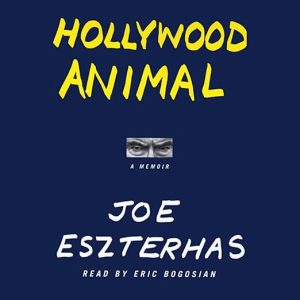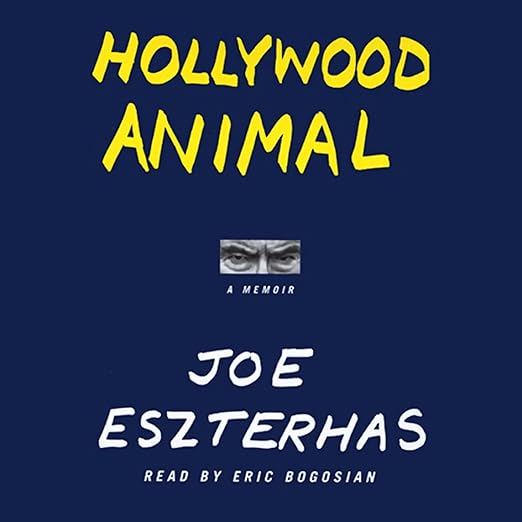
Post-WWII refugee camps gave Joe Eszterhas his earliest memories, and Hollywood Animal spends its opening stretch tracing how a Cleveland kid who stole cars and rolled drunks became the screenwriter behind Basic Instinct, Jagged Edge, and Flashdance, three of the biggest commercial hits of his era, before also writing Showgirls and Jade, two of its most notorious flops. This audiobook runs twenty-eight hours and change, and Scott Brick narrates a life Time magazine once compared, only half joking, to Shakespeare's.
Brick Plays Sinner and Believer Both Straight
Brick has built a career narrating dense, high-stakes nonfiction and thrillers, and that register translates well to a memoir that treats its own author's rebellion, sex, addiction, ambition, and near-death illness as material worthy of the same dramatic weight. The performance never undersells material belonging to a writer that Time magazine once asked about directly: 'If Shakespeare were alive today, would his name be Joe Eszterhas?' Brick delivers that kind of audacious claim completely straight, which is the only way it actually works on audio.
Eszterhas has been called 'the devil' and 'the most reviled man in America' by people other than himself, and the memoir does not shy away from earning some of that reputation while also complicating it. He was also, by his own account, a churchgoer who believed in the power of prayer even at the height of his most notorious Hollywood years, and Brick handles that contradiction, sinner and believer in the same body, without flattening it into either a redemption arc or a condemnation. Eszterhas eventually moved his family away from Hollywood back to Ohio, and the book treats that relocation as its own quiet verdict on everything that came before it.
Twenty-Eight Hours Without Flattening Into Monotone
Twenty-eight hours is a genuine commitment even for an experienced audiobook listener, and Brick's steadiness across that length matters practically as much as it matters artistically. A narrator who cannot sustain intensity for this long either flattens into monotone by hour fifteen or overplays every scene until the drama stops registering as drama. Brick avoids both traps, pacing the performance so that the book's biggest revelations, the cancer diagnosis chief among them, still land with force deep into the second half.
Love and Betrayal Inside a Hollywood Tell-All
The book operates on more levels than a standard Hollywood tell-all. Alongside the industry material, the deals, the backstabbing, the money, it carries a father-son story the synopsis itself calls one that 'defines the concepts of love and betrayal,' plus an account of Eszterhas facing throat cancer that reads as the memoir's most vulnerable stretch. The marriage at the center of the book, a partnership the synopsis frames as his closest and most equal relationship despite years of public accusations of sexism, gives the book an emotional counterweight to all the industry score-settling.
Few screenwriters get a resume like this one to reckon with in a single memoir. The same writer behind three of his era's most bankable commercial hits also turned in two of its most mocked disasters within a matter of years, and the book treats both outcomes as data points in the same unpredictable career rather than separating triumphs from embarrassments. He was named one of the film industry's 100 Most Powerful People, the first screenwriter to receive that distinction, a detail that says as much about how unusual his influence was as any single film credit does.
The synopsis situates this memoir alongside two of Eszterhas's earlier books: American Rhapsody, a best seller, and Charlie Simpson's Apocalypse, a National Book Award nominee. That pairing signals Hollywood Animal arrived from an established literary career rather than a first-time celebrity cash-in memoir, and the sentence-level control of a working novelist shows even at this book's considerable length, in scenes that build toward a punchline or a gut-punch rather than simply recounting events in order.
Abridged Here, Missing the Full Original
The single most important thing to know before starting this audiobook is that this edition is abridged. One listener, who rated it three stars specifically over this issue, wrote plainly: 'This one is abridged. I prefer the hard-to-find and expensive unabridged version.' Eszterhas's original memoir is a famously massive book, and a twenty-eight-hour audio edition, while lengthy by most standards, still represents real compression of that source material. Listeners who want the complete, unabridged account should search specifically for that edition rather than assuming this one delivers it.
Do not expect a craft-of-screenwriting textbook here despite where this title sometimes gets shelved. Hollywood Animal is a personal memoir first, with only incidental insight into the mechanics of writing scripts. Anyone hoping specifically for screenwriting instruction akin to a masterclass will find plenty of atmosphere and war stories from inside the industry, but very little direct technique instruction on structure, dialogue, or format, closer to a working writer's temperament captured in motion than a step-by-step lesson.
DonnaGG, one listener, admitted going in with low expectations 'considering the type of screenplays the author has written in the past,' and found herself hooked once she actually started. That reaction is worth flagging honestly: listeners who dislike Eszterhas's films on principle may bring real resistance into this memoir, and the book does relatively little to argue for the artistic merit of titles like Showgirls, focusing instead on the chaos of how they got made. With only five ratings on record despite a solid 3.8 average, this is also a lightly reviewed title, so any individual listener reaction carries more weight in shaping the overall score than it would for a more widely reviewed release.
Susie2 Calls It Rags to Riches
Film industry insiders, aspiring screenwriters curious about the ugly side of the business rather than the craft side, and readers of showbiz-adjacent memoirs by figures like Julia Phillips will find a kindred, unsparing sensibility here. Listeners who appreciate Susie2's assessment, quoted in one review as calling it 'a success story, rags to riches' that doubles as 'a cautionary tale on life in the fast-lane,' get an accurate preview of the book's tonal whiplash between triumph and self-destruction. Readers who value a memoirist willing to look genuinely bad on the page, not just strategically vulnerable, will find Eszterhas an unusually honest narrator of his own worst behavior.
Anyone who found Showgirls or Jade personally offensive as films may come to this memoir already biased against its author, and Eszterhas does not really attempt to win that listener back through contrition. He explains his choices more than he apologizes for them, which readers hoping for a mea culpa arc should know going in.
- Voice: Scott Brick's high-intensity register is a genuine match for Eszterhas's unrestrained prose, sustaining dramatic weight across a full twenty-eight-hour runtime.
- Big ideas: Hollywood excess and self-mythology, father-son reckoning, survival and reinvention
- Atmosphere: Brash, confessional, and unapologetic, with real tenderness underneath the bravado
- Worth it?: A vivid, well-narrated Hollywood memoir, worth hearing, but confirm you are choosing this abridged edition on purpose before committing twenty-eight hours.
Questions Listeners Ask
Is this audiobook mainly about screenwriting craft and technique?
No. Despite sometimes being shelved near educational titles, Hollywood Animal is a personal memoir with only incidental insight into screenwriting mechanics, not an instructional text.
Do you need to have liked Joe Eszterhas's films to enjoy this audiobook?
No. One reviewer specifically began skeptical of Eszterhas given his filmography and still found the memoir absorbing, though listeners strongly opposed to his work may bring real resistance into it.