Before You Press Play
- Narration: Tom Parker holds the credit on a Blackstone Audio recording from 2005, while the written responses on that page grade a book that has been in print for two decades.
- Themes: obsession and privacy, comeback after near-fatal injury, the manufacture of a sporting myth, poverty and reserve
- Mood: Austere and probing, a portrait rather than a highlight package
- Verdict: Seven hours well spent for anyone drawn to obsessives, with almost nothing in it for a golfer seeking technique.
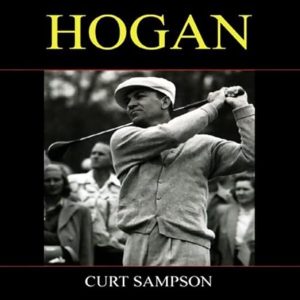
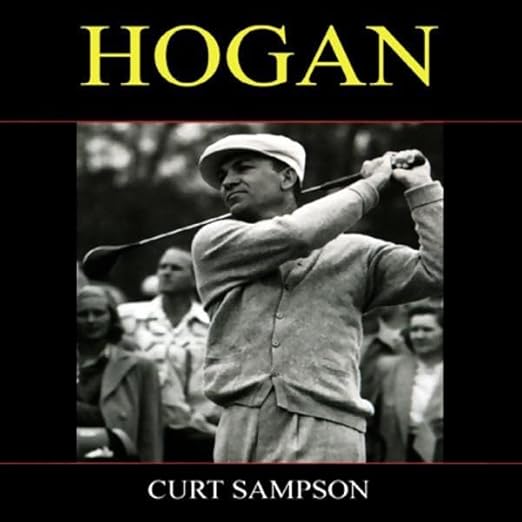
Ben Hogan practiced until his hands bled and nobody around him could say quite why, which is the question this audiobook keeps circling. Curt Sampson describes a man whose silent, almost eerie concentration intimidated opponents before a ball was struck, who hit one so squarely that it sizzled off the club, and who kept a wall around his private life that his contemporaries never climbed. Seven hours and five minutes is a lean running time for a legend of that scale.
Soaking His Hands in Prickle Brine, Read by Parker
I came to this the way Pete Origanel did, knowing the name and a handful of the feats and nothing else, and the detail that hooked that March 2013 response is the same one that hooks most newcomers: Hogan soaking his hands in prickle brine to toughen the skin. That entry calls the result an excellent read rather than a dry biography, and says the payoff was finishing with a sense of who the man actually was. That is the correct measure for this book, and it is the one several of the enthusiastic entries end up applying without quite saying so.
Blackstone Audio credits Tom Parker, on a recording dating back to the end of October 2005. The running time puts it well below what most modern sports biographies carry, and the compression is a feature here. Sampson is not building a shot-by-shot chronicle of a career, he is building a case about a personality, and the shorter form keeps that argument from dissolving into tournament results.
The reporting behind it is the reason the book has outlasted its competition. Sampson gathered interviews with Byron Nelson, Jack Nicklaus, Sam Snead and scores of other golf professionals, then went further out to friends and business associates who had no stake in the legend. The publisher calls it the rare sports book that transcends the genre, which is a claim descriptions make routinely and this one has some right to.
Three of Four Opens Won After One Collision
One listener writing in July 2021 supplies the best argument for the biography's existence. That listener was twelve years old when Hogan was badly injured in the car crash, remembers being pleased when Hollywood made a film of his life, and says the book was what finally explained the personality behind the story. Myth arrived first for that generation, in other words, and Sampson's job was to get behind it decades later.
The mystique itself is the book's real material, and the description lays out its components with unusual precision: the concentration that unnerved opponents, a presence any politician or actor would envy, and a swing nobody could fully account for. Those are properties of a person rather than of a golfer, and they carry for listeners who have never held a club, which is not something most books on this shelf can claim.
The competitive record gives the story its spine. Four U.S. Opens inside six years, three of them won after a head-on collision with a bus that came close to killing him, is an arc no novelist would risk inventing. Sampson has the good sense to let the facts carry their own weight rather than underscoring them, and in audio that restraint pays off, since nobody listening can skim past insistence.
Above all, this is a portrait of a difficult man told without apology for the difficulty. Magazine covers, a ticker-tape parade in New York City and a Hollywood film all sit in the account, and the description is explicit that the acclaim distorted the subject rather than revealing him. Sampson treats the fame as an obstacle to understanding Hogan rather than as evidence about him, which is the right instinct and a rarer one than it sounds. Most sporting biographies are content to relay the acclaim and call the relaying a portrait.
An Inverted Question Mark Where an Apostrophe Should Be
Seth Fuller, writing in April 2025, gives the clearest warning about tone: Curt tells it like he sees it, and he pulls no punches. That is praise in the original, and it is also a fair notice. This is an opinionated biography with a thesis about its subject's character, and a reader who wants a neutral chronicle of Hogan's tournaments will find the interpretation pressing in constantly.
The listing itself needs a proofread. The description refers to insights from Hogan's friends and business associates, except that the apostrophe has been replaced by an inverted question mark, a character-encoding failure left in the copy where a possessive should be. It is a small thing that tells you the text was ported into this page without anyone reading it afterward.
Three of Five Reviews Are About the Print Edition
The aggregate of 4.7 over 191 ratings requires similar care. The five written responses run from 2013 to 2025, and three of them explicitly describe reading it in print, which makes sense for a title that has been on shelves far longer than this 2005 recording has existed. The score measures two decades of editions of a well-regarded biography, and it says nothing about what this recording delivers.
Set expectations about the golf as well. Sampson never sets out to explain the swing, and the publisher's copy files its precision among the things nobody could account for. Anyone shopping for swing mechanics or a technical account of the famous secret will be listening to a psychological portrait instead, and will finish with an understanding of the man rather than the method.
After the Man Instead of the Swing
Instructional listeners looking for a lesson should pass, since the mechanics stay firmly outside the frame. Readers who prefer their sports figures uncomplicated should also think twice, because the account opens on poverty and family tragedy and treats the resulting reserve as the key to everything that followed. Completists who want every tournament logged will find seven hours far too selective for that purpose, and anyone building a reference shelf should note how much of the running time goes to temperament rather than to results.
Golf readers with a sense of history are the natural audience, and so is anyone who enjoys biographies of obsessives regardless of the discipline. A June 2025 entry, four stars, calls this the most comprehensive Hogan book that reader has encountered, which is a useful data point for the audience that has already read two or three of them and wants to know whether a fourth is worth the time.
Sampson went after the man instead of the swing, and two decades on from that 2005 session, it is still the reason this one survives.