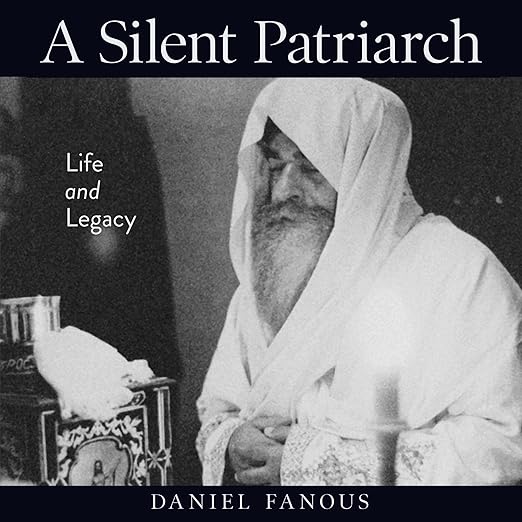
A page title can conceal its own subject. Nothing in the phrase A Silent Patriarch tells a browser that the fourteen-hour audiobook underneath belongs to Kyrillos VI, the desert hermit the description calls a most unlikely patriarch and a silent urban recluse. That first line of description names him plainly. The title does not, the Religious tag does not, and the biography shelf does not, so anyone searching for the man rather than the phrase walks past this page without a flicker of recognition.
Argued Through Outcomes Instead of Speeches
Daniel Fanous is making a scholarly claim rather than a devotional one. The description bills this as the first scholarly biography of its subject and says the research draws on hundreds of letters and sources never before seen, which is specific and checkable in a way pious framing never is. HANY Yacoub, writing five stars on the day the recording appeared, describes the result in the same register: backed by historical evidence and facts, detailed, and a confirmation of what the community already believed.
Silence is the organizing problem of the book and, unusually, of the listening experience too. Kyrillos, by the description's account, stayed quiet through persecution, mockery and criticism while presiding over what it calls a nearly impossible spiritual revolution. Biography normally runs on what a subject said. This one has to run on what he did, on what others wrote about him, and on the correspondence Fanous recovered, which is why the letters carry so much weight and why the pace is deliberate. Description copy closes on the line that by the time he reposed everything had changed, and that clause is the shape of the entire book: a case argued through outcomes instead of speeches.
A Recording Gives Only One Pass
Jonah Martin holds the reading credit, and the assignment carries a specific load. Coptic names, ecclesiastical titles and Arabic proper nouns recur across fourteen hours, and each has to arrive consistently enough that a listener meeting them for the first time can hold onto them. A printed page lets an unfamiliar name be studied for a second. A recording gives one pass, which puts the weight on steadiness rather than on anything performative.
An Unusual Method of Ecclesial Reform
Scarcity is the first argument for buying it. Mariam, filing five stars in March 2025, writes as primarily an English speaker who finds it very difficult to locate books about the history of the Coptic church, and credits Fanous with organizing years of research into something streamlined and creative. That gap in English-language religious history is real, and a full-length treatment of a patriarch fills a shelf with very little else standing on it.
Politics is the second. The church Kyrillos inherited is described as bleeding, confronted by political Islamism, an indifferent Muslim president and the rise of the Muslim Brotherhood, which makes this as much an account of a religious minority under pressure as the life of one man. Fanous frames the response as an unusual method of ecclesial reform rather than as martyrdom, and the description argues that method still speaks to the uncertainties of the present age.
Credentials are the third, and the description supplies them in full. Fanous is dean and lecturer in theology and biblical studies at a Coptic Orthodox theological college in Sydney, Australia, with two earlier books to his name. medhat khalil, who posted five stars in April 2025, recommends pairing the book with an interview the author gave about it, hosted by Upper Room Media, which is a sensible route for anyone who wants the argument compressed before committing.
One Letter Is the Difference for Kyrillos
One letter is the difference between finding this page and missing it. The description prints the name as Kyrillos; the release-day response cited earlier spells it with an o in the second syllable, twice, and clips a letter off the honorific in one of them. Neither version is wrong in a tradition carrying several transliteration conventions, and that is precisely the problem: a buyer typing what they heard in church may never reach a listing that uses the other one.
Numbers on this page are lopsided in a way worth knowing. The counter shows 198 ratings behind a 4.9 average, and the written record holds just five accounts, two of which run to three words and two words. Three substantive accounts are left to represent nearly two hundred graders. That 4.9 is probably telling the truth about how the book lands with its intended readership; it cannot tell you why, and the written record barely can either. Those five accounts are spread thin across time as well, the earliest posted on release day in March 2023 and the most recent in January 2026, which works out to fewer than two written responses a year.
Publisher housekeeping has taken over half the description. An author biography sits there, along with a note that the press's audiobook program is sponsored by a foundation, neither of which tells a buyer anything about the book. Nothing there describes the recording, its structure, whether the letters are read out as documents, or how sources are signposted aloud. For a book assembled from archives, that omission matters more than it usually would.
A Recording That Punishes Half-Attention
Listeners inside the Coptic Orthodox tradition are the obvious audience, and everything written on this page suggests they are the ones finding it. Beyond them, anyone who reads religious history for the politics gets a full account of a minority church negotiating a hostile state. Students of biography as a form will find a genuine craft problem here: how to write a life around a man whose defining act was declining to speak in public.
Devotional listeners hoping for miracles and sayings should weigh the word scholarly in the description, because it is meant literally. Newcomers to the tradition face a second consideration, since nothing pauses to explain the institutional vocabulary and the book assumes you know what a patriarch actually does. Length is the third filter. A biography this size asks for sustained attention across many sittings, and the material rewards that far more than it rewards sampling.
Buy it for the archive, which is what the two most detailed responses noticed first. Expect a serious book that treats its subject as a historical figure rather than as an icon, and expect the political history to occupy as much room as the spiritual life. Weigh the full running time honestly against your own schedule before committing, because this is a recording that punishes half-attention more than most biographies do.