- Voice: Liisa Ivary's crisp, unhurried delivery suits a compact guide meant for fast, practical absorption.
- Big ideas: persuasive narrative structure, audience engagement, presentation design
- Atmosphere: Practical and focused
- Worth it?: A genuinely useful pre-presentation listen, best paired with its companion PDF rather than audio alone.
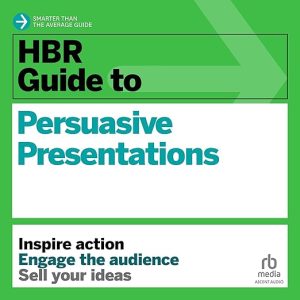
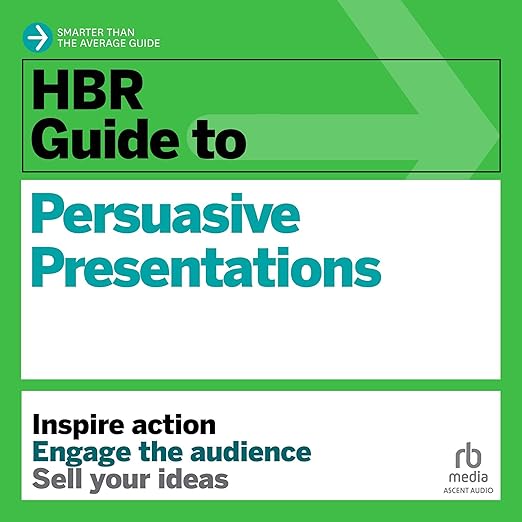
My pitch deck sat open on a second monitor the night before I queued up this audiobook, which turned out to be the ideal way to hear it: with something specific and imminent to test the advice against. The HBR Guide to Persuasive Presentations is Nancy Duarte's compact, practical entry into a genre that usually drowns good advice in either abstract theory or generic confidence-boosting, and it earns its place in the well-known Harvard Business Review guide series by staying almost aggressively concrete throughout.
Duarte, whose reputation as a presentation-design authority is well established through Duarte Design and her earlier books Slide:ology and Resonate, structures this guide around specific, sequential skills: winning over a resistant audience, organizing a coherent narrative rather than a slide-by-slide list, creating powerful messages and visuals, connecting with and engaging an audience, and showing people why an idea actually matters to them specifically rather than just presenting it and hoping it lands.
One reviewer distills the whole book into a tidy formula, persuasion as inspiration plus engagement plus sell, and that compression is a genuinely useful way to hold the material in your head afterward. It's the kind of memorable shorthand that separates a book actually applied from one merely nodded along to and forgotten by the following week, and it's a fair summary of how Duarte structures her advice around actionable, sequential steps rather than abstract principles.
At three hours and seventeen minutes, this is built for focused, pre-presentation prep rather than leisurely listening, and the reviews confirm it delivers on exactly that promise. A 4.6 rating across 778 ratings for a compact professional-development guide is a strong result, especially from listeners who, per the reviews, already knew Duarte's longer books and still found real value here rather than a simple rehash of ideas they already owned.
The Harvard Business Review guide series has built a specific reputation over many titles now: short, no-nonsense, workplace-tested advice from a named expert rather than a generalist ghostwriter, and this entry fits that mold closely. Duarte's insistence on building a presentation's narrative spine before a single slide gets designed is a genuinely useful reframe on its own, since most nervous presenters build outward from their slides instead of inward from the actual story they're trying to tell.
Winning over a resistant audience gets treated as a skill of its own rather than a natural side effect of good content, a useful distinction for anyone who has delivered a technically solid presentation to a room that simply wasn't buying it. Duarte's separation of the emotional work of winning trust from the structural work of organizing content is one of the guide's more quietly useful moves, since most presenters conflate the two and wonder why a logically sound pitch still falls flat in the room.
Ivary Is New Territory for This Genre
Liisa Ivary narrates, marking a new entry in these notes for business narration specifically, with nothing on record yet to judge her against. What this specific material needs is crisp, unhurried clarity, business narration that reads as authoritative without tipping into stiffness, since the whole point of a three-hour guide is fast absorption under real time pressure the night before a talk, when a listener needs the material to land clearly the first time through.
One reviewer, having already read Slide:ology and Resonate, went in expecting the material to feel stale or redundant and came away surprised, finding this new guide oriented more specifically toward professional application than the earlier, more conceptual books. That's a meaningful distinction for anyone weighing whether Duarte's other work already covers this ground, since this guide seems built specifically for the moment right before you actually have to stand up and present.
Reading a Room Resists Easy Audio Instruction
The listing notes that a companion PDF is included alongside the audio, which matters more here than it would for most business books, since presentation design is inherently visual. Slide layout examples and visual structure are hard to fully convey in audio alone, so treat the PDF as a real component of this purchase, not an optional extra tucked away and forgotten in a download folder.
Complete presentation novices might get more out of pairing the audio with that PDF actively, pausing to look at visual examples as they come up, rather than trying to absorb the whole guide passively during a commute. The content rewards active application more than most professional-development audio, given how directly it's aimed at an imminent, specific task rather than general career development.
Striking the right tone in any situation, one of the specific skills the synopsis names directly, turns out to be the hardest of the bunch to teach in the abstract, and Duarte wisely spends real time on reading a room rather than treating tone as a fixed setting to dial in once and forget. That's a harder thing to convey in a short guide than the more mechanical skills like slide design, and it's arguably where this guide earns its keep the most.
A specific, honest use case sits at the center of this format: prep for one identifiable event, rather than gradual long-term skill building, and Duarte's guide is refreshingly upfront about which of those two jobs it's actually doing. Compact, task-specific guides like this one have become a real category of their own in professional-development audio, distinct from the sprawling multi-week leadership books that dominate a lot of business shelves.
One Evening Before an Actual Pitch
Anyone with an upcoming pitch, talk, or presentation who wants fast, structured, practical prep is the ideal listener here, along with readers of Duarte's longer books who want a condensed, applied companion. The three-hour runtime is a real asset for this specific use case rather than a limitation, letting a nervous presenter absorb the whole thing in a single evening.
Skip it if presentation design is entirely new territory and the companion PDF won't get opened, since audio alone will underserve the genuinely visual parts of the material. Listeners wanting deep conceptual grounding rather than applied tactics should start with Resonate instead, saving this guide for closer to an actual deadline.
How long is the HBR Guide to Persuasive Presentations audiobook?
Three hours and seventeen minutes.
Who narrates this audiobook?
Liisa Ivary.