Quick Take
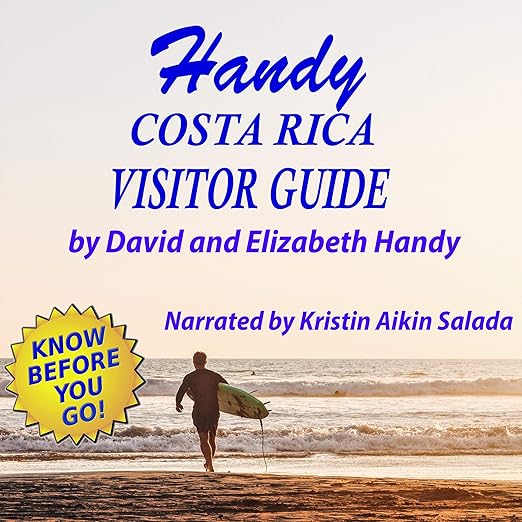
- Narration: Kristin Aikin Salada reads with warmth and clarity, a natural fit for the friendly, conversational tone David and Elizabeth Handy use throughout.
- Themes: First-time travel preparation, cultural etiquette, navigating infrastructure and local customs
- Mood: Friendly and practical, like advice from well-traveled friends
- Verdict: One of the more genuinely useful travel audio guides available for Costa Rica first-timers, particularly strong on cultural orientation and airport logistics.
I have listened to enough travel audiobooks to know that the genre has a chronic problem: most of them are either too thin to be useful or too packed with logistics to hold attention. The Handy Costa Rica Visitor Guide, by David and Elizabeth Handy, manages something I did not quite expect from a self-published travel audio guide. It manages to feel like a conversation with people who have actually lived there.
The authors position this explicitly as a first-visit companion, the kind of guide you listen to on the plane so that you land with orientation rather than confusion. In practice, it covers considerably more than basic logistics. The cultural etiquette section, which one reviewer specifically singled out as particularly helpful, addresses how to behave in ways that respect local norms rather than inadvertently offend. The warning about gringo pricing, and where to find goods at local rates versus tourist-inflated ones, is the kind of insider knowledge that most official travel guides either omit or bury.
Our Take on the Handy Costa Rica Visitor Guide
What the Handys have built here is a knowledge transfer from experienced hands to nervous first-timers, and they do it without condescension. The airport walk-through, which several reviewers cite as unexpectedly valuable, takes you through arrival in enough detail that the first moments in-country feel navigable rather than chaotic. For anyone who has ever landed in an unfamiliar country and immediately felt the gap between their pre-trip research and actual conditions, this kind of granular preparation is worth considerably more than it sounds.
The vocabulary section, threading Spanish words and phrases into the content throughout rather than isolating them in a glossary, is a smart structural choice for audio. You pick up the terminology in context, which means it actually sticks. One reviewer who described knowing nothing about Costa Rica before listening emerged from the guide feeling genuinely prepared, which is the goal the book sets for itself and the measure by which it should be judged.
Why Listen to the Handy Costa Rica Visitor Guide
Kristin Aikin Salada’s narration is warm and unhurried, which suits the conversational register of the Handys’ writing. She does not read like a GPS voice or a customer service script; she reads like someone sharing information they find genuinely interesting. For a three-hour practical guide, that tonal quality matters more than it might for longer narrative content, because it keeps the logistics from feeling like a list.
The coverage of transportation, including car rental, taxis, buses, and private drivers, with honest assessments of the trade-offs involved in each, is more comprehensive than comparable guides. The section on the differences between restaurants and sodas, pulperias, ferias, and macrobioticas gives visitors the vocabulary to navigate daily life rather than just tourist infrastructure.
What to Watch For in the Handy Costa Rica Visitor Guide
One reviewer who used the guide before a trip to Santa Teresa noted that the packing suggestions did not match the extremely casual dress culture of that particular region, where shorts and flip flops were worn at all times of day. That is a useful caveat: the guide covers Costa Rica broadly, and some advice will fit certain regions better than others. The more beach-casual or adventure-oriented the destination, the more the packing section should be treated as a starting point rather than a prescription.
This is also a guide for first-time visitors specifically. Return travelers or those who have already spent time in Central America will likely find the cultural orientation sections more familiar than revelatory. The guide’s value is concentrated in the preparation it provides for people who genuinely do not know what to expect.
Who Should Listen to the Handy Costa Rica Visitor Guide
Exactly the audience it describes: first-time visitors to Costa Rica who want to arrive informed rather than overwhelmed. The airport walk-through alone is worth the listen for anyone with airport anxiety. Cultural etiquette coverage makes it useful for travelers who care about engaging respectfully rather than just consuming efficiently. Experienced Central America travelers or Costa Rica returnees will find less new material. Listen on the plane as the authors suggest; that is genuinely the right context for it.
Frequently Asked Questions
Is the Handy Costa Rica Visitor Guide useful for repeat visitors or just first-timers?
It is aimed specifically at first-time visitors. Reviewers who had prior Costa Rica experience found less new material, while true first-timers describe it as genuinely valuable preparation.
How does the guide handle transportation options within Costa Rica?
It covers car rental, taxis, buses, and private drivers with honest assessments of the practical trade-offs involved in each. This is one of the more detailed sections and consistently praised by reviewers.
Does the Spanish vocabulary instruction work in audio format?
Yes, and the format choice to weave vocabulary into context throughout rather than list it separately is specifically suited to audio. Words and phrases appear when they are relevant, which helps retention.
How accurate is the packing advice for beach and adventure destinations specifically?
One reviewer who traveled to Santa Teresa found the packing suggestions ran more formal than the actual casual dress culture of that region. The guide covers Costa Rica broadly, so beach-focused travelers should treat packing advice as a starting point and adjust for their specific destination.