- Read by: Vikas Adam takes the microphone for eight hours of coined terms and numbered levels, where the whole job is keeping a vocabulary audible.
- At its heart: Personal branding, attention as a market, expertise versus visibility, creator-economy systems
- Vibe: Brisk, systematized, evangelical
- Short version: A usable vocabulary for overlooked experts, sold with rather more certainty than its evidence supports.
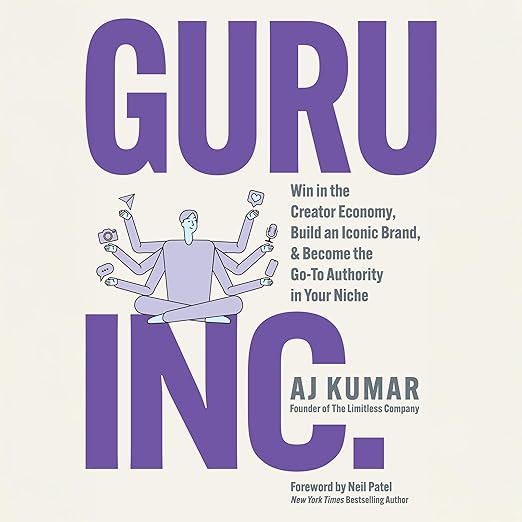
Acronyms arrive early and keep coming. Inside one bulleted stretch of this audiobook's description you meet the Guru Ladder, the 3 Strategic Moves, Return on Attention Created, the Personal Media Company Model, the Hidden Language of Virality, and something called the VOLT, which expands to the Virus of Limited Thinking. Six proprietary frameworks in a single list is a large promise, and it tells you precisely what kind of business book AJ Kumar has written: a systematized one, with named parts you are expected to remember and repeat. Eight hours and three minutes is the space allotted to teaching them.
Mental Association Beats Being the Best
Expertise is not the product, according to this book, and that claim carries everything else. The opening position is that social media now works as personal television, so the contest is no longer over who is best at the job but over who is best at getting the right people to watch. Kumar's sharper version of the argument comes a line later: the goal is a mental association strong enough that people cannot think about your field without thinking of you. Anyone who has watched a mediocre practitioner own a category while better ones stayed invisible will recognize the diagnosis instantly. It is accurate, it is uncomfortable, and it is not new.
Guru is a loaded word and this book leans on it deliberately. The copy explains where the frame came from, describing an author who grew up around spiritual gurus and later worked with television personalities before helping experts build large personal brands, so the religious vocabulary is a borrowed posture and not an accident. What comes with the borrowing is the promise the genre keeps making, that the difference between the ignored expert and the sought-after one is internal. The closing pitch says so outright: positioning is the subject, and the real transformation happens in how you see yourself. That pivot from tactics to interior change is where books like this stop being checkable.
Vikas Adam Keeps the Vocabulary Audible
Eight hours of positioning advice earns its place if you accept the premise, and the premise is defensible. Attention has become the scarce resource in most professional markets, and treating your own output as a media property, with a schedule, a format and a reason for somebody to come back, describes what successful independent experts actually do more honestly than the modesty most of them perform in public. Return on Attention Created is the most useful idea on offer, because it insists on measuring which views produce value instead of counting views, which is the most common way a small operator wastes a year.
Vikas Adam is credited with the reading, and on business nonfiction that matters more than the genre admits. A book of named systems has to keep its terminology audible, since the difference between a level, a move and a model must survive being spoken aloud, and eight hours of proprietary vocabulary can sound like a working framework or like a sales seminar depending almost entirely on pace. Brilliance Audio published it on February 24, 2026. The record credits one voice, so nothing is layered over the text and nothing stands between the argument and your judgment of it.
Neil Patel's Foreword Is Missing From the Byline
Frameworks are the delivery mechanism and they are also the risk. Numbered ladders, three-letter coinages and levels you climb work well on a page, where a reader can flip back to the diagram. By ear they slide, and this book asks you to hold at least six of them at once, with a reference to going beyond Level 3 that turns up in the description before the ladder has been explained anywhere. No companion PDF is mentioned on this listing. Anyone planning to apply the material should expect to take notes, or to relisten with a pen, because the vocabulary is the product and vocabulary is what gets lost between the car and the office.
Zero votes sit on this record. The rating field carries nothing, the counter carries nothing, and not one buyer has left a written word since publication, which on a book about becoming the name people default to is an irony worth a second. It also means the usual signal is unavailable: nobody can tell you whether the frameworks hold across eight hours or thin out after the third chapter. New releases begin this way and most of them fill in. Until this one does, the description is the only evidence available, and the description was written to sell.
Credentials in the copy are anecdotes rather than results. Growing up around spiritual gurus, working with TV stars, helping experts build million-dollar personal brands: three claims, and not one of them is a case study you could check. A foreword by Neil Patel is announced in the copy and appears nowhere in the byline field, so the record credits a single name for a book the description says two people wrote parts of. That is a small crediting failure, and a useful reminder to read the contents before assuming what you have bought.
For Overlooked Experts, Not Attention Market Skeptics
Consultants, coaches and specialists who are demonstrably good and reliably overlooked are the target audience, and they are the right one. If you can do the work but cannot win the work, the diagnosis in this book is probably yours, and the systematizing instinct that makes it tiring to listen to is the same instinct that makes it usable, since a named framework is easier to act on than good advice. Anyone building a practice around a personal brand, particularly someone doing it alone, will find the media-company framing more practical than the influencer language it replaces.
Skeptics of the whole enterprise should stay well clear, as should anyone hoping for an analysis of how attention markets function, because this is an operating manual and makes no pretense otherwise. Employees will get less from it than the self-employed, since the model assumes you own your audience. Listeners who have already worked through two or three books in this category will recognize most of the architecture under the new names. A vocabulary and a sequence are what is genuinely on sale, and whether that is worth eight hours depends on how badly you need somebody else's system to begin.
Good to Know
Does this audiobook come with a workbook or PDF?
Nothing of the kind is mentioned on the listing. Given how much of the book is built from named ladders, models and three-letter terms, that absence matters, since you will be holding the framework in your head. Anyone intending to apply the material should plan on taking notes instead of counting on a supplied summary.
Is this aimed at beginners or at established experts?
At established ones. The premise assumes you already have the expertise and are losing ground to people who are simply better known, so the entire argument concerns visibility and not competence. Someone still building the underlying skill will find the sequencing backwards for their situation and should come back later.
What is the VOLT the description keeps referring to?
The copy expands it as the Virus of Limited Thinking, presented as the internal block that keeps capable experts stuck in obscurity, and breaking it is one of the six named frameworks promised. How it gets diagnosed and dismantled is nowhere spelled out on the listing, so that section is bought unseen.
Should I expect tactics or mindset from this audiobook?
Both, with the balance tilting late. Most of the promised material is procedural, covering positioning moves, a measurement idea and a content model, while the closing pitch insists the real change is internal, in how you come to regard your own standing. Listeners who want only mechanics should be ready for the motivational turn.