Quick Take
- Narration: Christopher P. Brown handles Russell Maddicks’s cultural overview with measured clarity, steady and informative, appropriate for the reference-style material.
- Themes: Mayan heritage and contemporary identity, Spanish colonial legacy, navigating cultural difference as a visitor
- Mood: Informative and respectful, the tone of careful preparation rather than armchair tourism
- Verdict: A focused cultural primer that tells you who Guatemalans are and how they see the world, not where to eat or what to photograph.
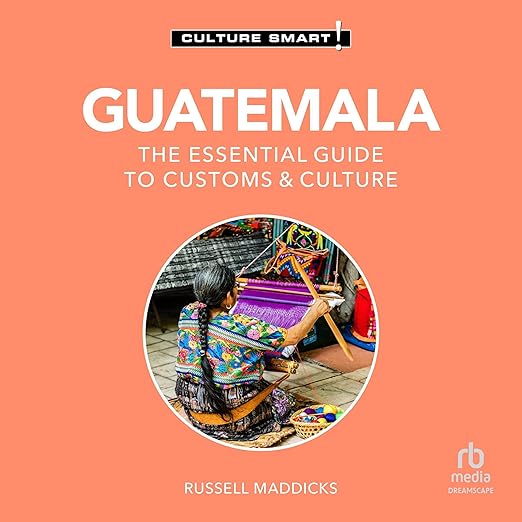
I picked up this audiobook before a trip that ended up not happening, a common enough story in recent years, and found myself listening to it anyway, which tells you something. Russell Maddicks’s Guatemala from the Culture Smart! series is a different kind of travel preparation than a guidebook. It is not interested in hotels or restaurants or transport logistics. It is interested in what it actually means to be Guatemalan, in the values and attitudes and historical weight that shape daily life in a country that is far more complex than most outside coverage suggests.
The Culture Smart! series has built its reputation on exactly this kind of preparation: not practical logistics, but cultural intelligence. Guatemala is a characteristically good example of what that looks like when executed well.
Our Take on Guatemala
Maddicks opens with the observation that Guatemala is the largest and most populous Central American country, a land of contrasts and contradictions, a phrase that might sound like a tourism brochure opening, except that the book immediately begins filling in what those contradictions actually look like. More than half the population is of Mayan Indian origin. The country reflects an uneasy combination of ancient Mayan heritage, Spanish colonialism, and modern Western influence primarily from the United States. Those three forces are not reconciled here, Maddicks is too careful a writer to pretend they are, but he traces the tensions between them across chapters on history, values, attitudes, festivals, cuisine, socializing, and business conduct.
One reviewer planning a mission trip described it as meeting their needs exactly, not a guidebook, but a resource for understanding the people they would encounter. Another described it as good background information that gives just enough insight to appreciate the people and places you visit. Both descriptions are accurate. The book gives you the vocabulary and context to be a more thoughtful guest without either romanticizing or pathologizing the country.
Why Listen to Guatemala
Christopher P. Brown narrates with the measured, authoritative tone that suits reference material, steady, clear, and without the theatrical quality that can make informational content feel performed rather than conveyed. For a book that moves through history, social structure, religious practice, and business customs in relatively quick succession, that steadiness keeps the listener oriented.
At just over four and a half hours, the audiobook is short enough to complete before a trip without becoming a significant time commitment, and structured enough that specific sections can be returned to for reference. Listeners going to Guatemala for business will find the business customs chapter particularly applicable; those going for cultural or mission purposes will lean on the history and values chapters.
What to Watch For in Guatemala
This is emphatically not a practical travel guide. If you need recommendations for accommodation, transport, or restaurants, this book will not help you. One reviewer noted it is not really a guide book to keep with you when you are there, which is the right framing. It is preparation for understanding context, not navigation of logistics.
The series format means that chapters cover fixed themes across all Culture Smart! editions, history, values, customs, communication, business. That standardization is useful for building cultural literacy broadly, but it also means the Guatemala-specific material occasionally feels organized around the template rather than around what is most distinctive about this particular country. Maddicks mostly overcomes this, but the structure occasionally shows its scaffolding.
One reviewer writing from outside Guatemala also noted the limitation of any outsider’s account: the author has spent extended time in the country and clearly brings genuine knowledge, but it is knowledge filtered through a non-Guatemalan perspective. That is worth keeping in mind when reading any entry in this genre.
Who Should Listen to Guatemala
Anyone traveling to Guatemala for business, volunteer work, mission travel, or cultural immersion will find this a genuinely useful pre-trip resource. It is particularly well-matched to people who want to show up with appropriate cultural awareness rather than as a tourist moving through a backdrop. Casual travelers primarily interested in logistics should pair this with a practical guidebook rather than using it alone. Listeners with no planned Guatemala connection who are simply curious about Central American culture and the Mayan world will find it engaging, though a longer, narrative-driven account of the country might serve that curiosity better.
Frequently Asked Questions
Is this audiobook a practical travel guide with hotel and restaurant recommendations?
No. The Culture Smart! series focuses entirely on cultural understanding, history, values, social customs, business etiquette. It will not tell you where to stay or eat. Pair it with a practical guidebook like Lonely Planet if you need logistical information.
How current is this edition’s information on Guatemala?
This is described as a new and updated edition, published January 2026. It reflects contemporary Guatemalan society while grounding that context in the country’s historical arc. Political and economic conditions change quickly; use this alongside current news sources for the latest context.
Is this useful for business travel to Guatemala specifically?
Yes. The Culture Smart! format includes dedicated coverage of business customs, meeting etiquette, and professional relationship-building norms. Several reviewers used it specifically to prepare for business and organizational work in the country.
How does Christopher P. Brown’s narration work for this kind of reference material?
Brown reads with steady, measured clarity, appropriate for informational content that covers a wide range of topics across short chapters. His delivery keeps the material accessible without making it feel like a lecture.