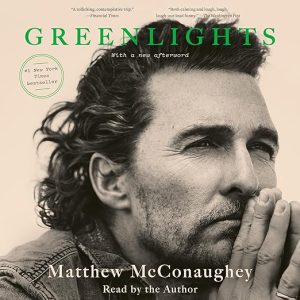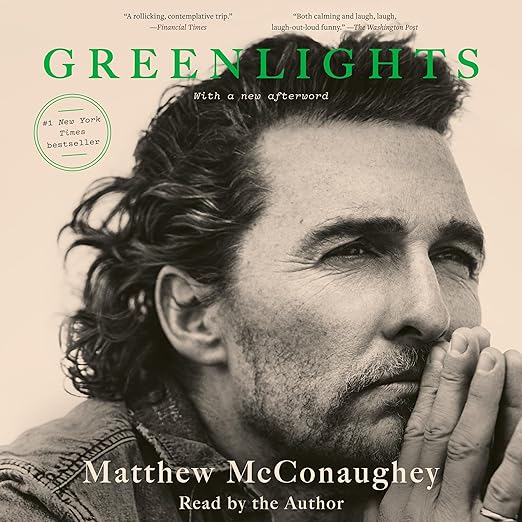
Celebrity memoirs earn their audiobook editions or they do not, and the case for this one is easy to state: the person who kept the diaries is the person reading them out loud. Six hours and fifty-one minutes covers fifty years, Random House Audio released the file in October 2020, and the same name sits on the byline and on the reading credit. What arrives is not a tour of Hollywood. It is a pile of bumper stickers, poems, prayers and prescriptions hauled out of thirty-five years of notebooks and read back by the person who filled them.
That casting decision is most of the product, and the response column knows it. A five-star filed in May 2021 spends much of its length on the reading rather than the writing: the flow is called flawless, and the effect is compared to a phone call from someone who decided to tell you their stories. The same entry ordered a hard copy afterward, which says something useful about how the two formats split the work between them. A hired reader could deliver these sentences competently. Only one voice can deliver them as the person who wrote them in a notebook and then decided, decades later, to say them aloud.
Structurally the book refuses to behave like a memoir. The copy describes an album, a record, a story so far, and the prose backs that up with invented compounds: sights and seens, felts and figured-outs, cools and shamefuls. Typeset, those coinages look like affectation. Spoken, they pass as ordinary speech, because the ear accepts a made-up plural far more easily than the eye does. Around them sits the organizing idea, the greenlight, defined here as knowing how and when to deal with what is coming rather than as a run of good luck that happens to you.
Like Sitting in a Bar With an Old Friend
Choosing the recording over the page is not a convenience decision here. A December 2020 five-star says outright that the reason for picking audio was to hear the words in their Texan twang, and describes the result as sitting in a small-town bar with an old high school friend while a guitar plays through the speakers. That entry expected glamour and glitz and did not get it. It then bought the hardcover for the pictures, which is the pattern this record keeps producing: the recording for the voice, the printed edition for everything the voice cannot carry.
Length works in the book's favor. Fifty years of material fits into nine forty-five-minute sittings or one long day, and the diary structure lets you stop anywhere without losing a thread. Compression is why it works at all. The trade is depth: episodes arrive as anecdotes with a lesson attached rather than as chapters that build on each other, and anyone who wants a career examined rather than recounted will read the pace as evasion. Weighed against a padded twelve-hour version of the same life, the compression is clearly the right call.
The argument underneath is more disciplined than the delivery suggests. Getting relative with the inevitable is the phrase the book keeps returning to, and it lands close to stoic practice: you do not choose the light, you choose what you do at it. Yellows and reds eventually turn green too, the copy promises, which sounds like a slogan until the chapters make you sit through several yellows in a row. Whether that adds up to a philosophy is arguable. As a set of operating instructions from someone who wrote them privately first and published them second, it holds.
A Five-Star Verdict on a Parcel From Singapore
Print keeps leaking into an audio listing. The description advertises exclusive new content from the paperback edition, mentions photographs among what came out of the diaries, and pitches itself at a reader holding an object. Down in the responses, a five-star filed from Singapore in February 2024 reports that the item arrived in excellent condition and that the print is fine, which is a verdict on a parcel rather than on a recording. None of that is dishonest and all of it is confusing, because a buyer clicking on a file dated October 2020 cannot tell from this page whether the later paperback additions were ever recorded.
Read the displayed column carefully before trusting it. All five visible entries sit at five stars while the average displayed above them sits lower, so the handful you can actually read is not a sample of the number you are being shown. A January 2025 entry written in Portuguese praises the useful life lessons alongside the chance to know the person better. Another runs to three sentences. Detailed English-language responses that engage with the recording itself number two out of five, which is a thin evidence base for a memoir the copy says has sold six million copies.
Shelving is the last thing to weigh. The record sits under biographies and memoirs and again under relationships, parenting and personal development, and the second shelf oversells what is here. No program appears. No exercises, no chapter summaries, no framework anyone could apply at work tomorrow morning. The book offers one metaphor and fifty years of evidence for it, which is a different proposition from a method, and listeners arriving from the self-improvement aisle with a notebook open will finish holding a page of aphorisms rather than a plan. The memoir shelf is where this belongs, and where it is genuinely good.
The Voice, More Than the Biography
Listeners who want the voice more than the biography are the obvious buyers, and this edition was built for them. Anyone who enjoys a long unhurried anecdote told by someone genuinely good at telling one is in the right place. So is anyone curious about how a person builds a public character and then has to live inside it, since the book is more candid about that process than the movie-star framing implies. Fans of the films will find far less about the films than they expect, and most of them will not mind at all.
Pass on it if you came looking for a method. Hesitate too if the photographs matter, since the description promises images and extra paperback material that no audio file can hand over, and the printed editions stay the place to find those. Anyone allergic to aphorism should look elsewhere, because the bumper stickers are not decoration in this book, they carry the structure. Everyone else gets a memoir whose author had the sense to read it aloud and the judgment to keep it short, a combination rarer in this category than it ought to be.
- Narration: Author-read, which for a book assembled out of private notebooks is the only casting that makes sense.
- Themes: Self-invention, luck and how to read it, family, and the work hiding behind an easy drawl.
- Mood: Loose, aphoristic, and warmer than the movie-star framing suggests.
- Verdict: Six hours well spent for the voice, with a printed copy worth keeping nearby if the photographs matter.
Who reads Greenlights, and how long does the audiobook run?
Matthew McConaughey wrote it and reads it, and Random House Audio issued the file in October 2020 at six hours and fifty-one minutes. That is short for a memoir covering fifty years, and the diary structure breaks cleanly enough that short sittings cost you nothing in continuity.
Does the audiobook include the exclusive new content mentioned in the description?
The copy promises material added for the paperback edition, while the file carries an October 2020 date and no line on the page says whether those additions were recorded. Treat the promise as belonging to the paperback until the publisher clarifies it, and use the sample before assuming either way.
Is this a self-help book or a memoir?
It is filed on two shelves, biographies and memoirs plus relationships and personal development, and only the first fits. The book supplies a metaphor, the greenlight, and fifty years of episodes that illustrate it. No exercises, frameworks or chapter takeaways appear, so anyone who came looking for a method will need to adjust expectations early.
Do the photographs make the printed edition worth owning too?
Photographs are part of what the diaries yielded, according to the copy, and no recording can reproduce them. The listing advertises no accompanying PDF either, which some publishers include for illustrated memoirs. If the images are part of why you want this one, the recording covers the storytelling and the printed edition keeps the album.