Quick Take
- Narration: Virtual Voice renders a dense grammatical text with zero tonal variation, which is a significant problem for material that requires patience and encouragement to sustain engagement.
- Themes: Koine Greek grammar, Biblical exegesis, translation accuracy in New Testament texts
- Mood: Dense and scholarly, demanding prior motivation, the audio format adds friction rather than reducing it
- Verdict: Students of Biblical Greek who need this specific exegetical approach will find the content substantive, but the Virtual Voice narration makes this a print-first, audio-supplementary experience at best.
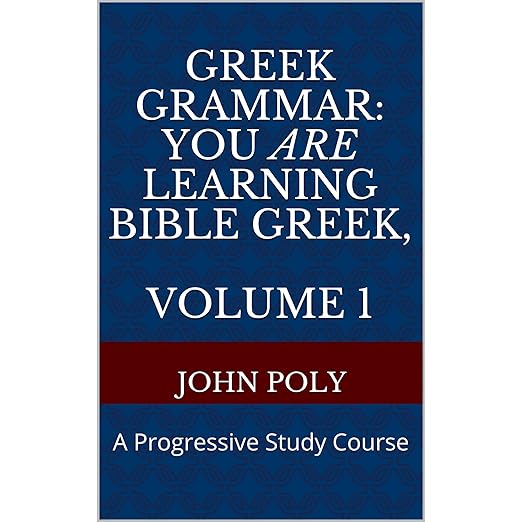
I want to be upfront about something before getting into this one: Greek Grammar: You ARE Learning Bible Greek Volume 1 is not a language learning audiobook in any conventional sense. It is a grammar reference text, the kind of book that lives open on a desk alongside an interlinear Bible and a Greek lexicon, marked up and returned to repeatedly over years. That one reviewer put it exactly this way: it is a resource for study over a very long period of years, not a listen-through course. That distinction is load-bearing for how you should approach this review.
John Poly’s stated project is ambitious. Across three volumes, he aims to guide serious students through the grammatical structures of Koine Greek, the Greek of the New Testament, with a specific emphasis on exegetical accuracy. Volume 1 establishes the foundational grammar while planting flags on specific contested texts: John 1:1 on the nature of Christ, 1 Timothy 3:16, Revelation 3:14. The author is not shy about the theological stakes of grammatical precision, and that stance gives the series a clarity of purpose that distinguishes it from more neutral pedagogical grammars.
The Grammar Beneath the Theology
Poly’s method is to treat Greek grammar as self-explanatory rather than imposed upon by theological tradition. This is a defensible and intellectually serious approach: let the grammatical structures of the original language determine interpretation rather than working backward from doctrinal positions. The introduction of modern Greek pronunciation alongside Koine, specifically, the argument that modern Greek parallels Koine more closely than the Erasmian pronunciation widely used in seminaries, is one of the more interesting pedagogical positions the series takes, and worth engaging with even if you ultimately favor Erasmian conventions.
The content, in other words, is substantive. For a student of Biblical languages working outside formal seminary contexts, a grammar that takes exegetical accountability seriously and reasons through contested texts openly is a genuinely useful reference. Reviewer Kindle Customer confirms the book is what they were looking for and planned to use over years. That is the right relationship to have with this material.
The Virtual Voice Problem
Here is where I have to be direct: this particular text is one of the worst possible pairings with a synthetic narrator. Greek grammar demands precise phonetic demonstration, the reader needs to hear the correct pronunciation of Greek terms, the distinction between similar declension endings, the rhythm of a Greek sentence. Virtual Voice delivers a flat, tonally uninflected reading that cannot communicate the subtleties of pronunciation that are central to the book’s own argument about modern versus Erasmian Greek.
One reviewer specifically cited the Kindle edition’s formatting issues and the preference for Greek in actual Greek letters rather than transliteration. The audio version compounds this: Greek terms read by a synthetic voice with no phonological awareness are less useful than silence for a student trying to internalize pronunciation. The book deserves a human narrator with Greek language competency. It does not have one.
How to Use This If You Still Want It
If you are committed to John Poly’s exegetical framework and need this series, treat the audiobook as a way to review content you have already encountered in print. Listen after reading a section, not instead of reading it. The narration can reinforce familiarity with terminology, but it cannot replace the visual engagement that grammar study genuinely requires.
The print edition remains the primary text. The audio edition is an adjunct at best, and a counterproductive one for the pronunciation instruction that Volume 1 includes. That honest assessment should shape your purchasing decision. The content warrants attention; the format warrants caution.
Frequently Asked Questions
Is this audiobook appropriate for someone with no previous Greek study?
Technically yes, it is designed as Volume 1 of a progressive course. But the combination of dense grammatical content and Virtual Voice narration makes independent audio-only learning genuinely difficult. A complete beginner would benefit from pairing this with a print edition and additional resources for phonetic guidance.
Does John Poly’s approach to Koine Greek reflect mainstream seminary scholarship?
Not entirely. His argument in favor of modern Greek pronunciation over the Erasmian system used in most seminaries is a minority position in formal academic settings, though it has its scholarly defenders. His exegetical conclusions on specific texts like John 1:1 reflect particular theological positions. Students in formal programs should know this is a supplement to, not a replacement for, standard academic grammars.
Why does this grammar focus so heavily on contested Biblical texts?
Poly’s explicit purpose is to demonstrate that grammatical accuracy leads to specific exegetical conclusions on passages that have been the subject of theological controversy. The grammar instruction is the vehicle; the exegetical accountability is the goal. Readers who want a theologically neutral grammar reference should look elsewhere.
Is the PDF companion that comes with the Audible purchase useful for this kind of grammar study?
Potentially more useful than the audio itself for certain sections. Given the formatting concerns raised in reviews and the fact that Greek grammar requires visual presentation of paradigms, declension tables, and actual Greek script, the PDF companion should be downloaded and used actively alongside listening.