Quick Take
- Read by: Jen Winston self-narrates with a conversational wit and emotional precision that transforms the essays into something between a reading and an intimate conversation.
- At its heart: Bisexual identity and its erasure, the male gaze internalized, the freedom in refusing to make yourself smaller
- Vibe: Sharp, funny, and intimately confessional
- Short version: Winston's self-narration makes this the definitive version of Greedy, and the essays are among the smartest in the bisexual coming-of-age canon.
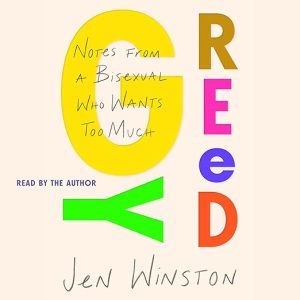
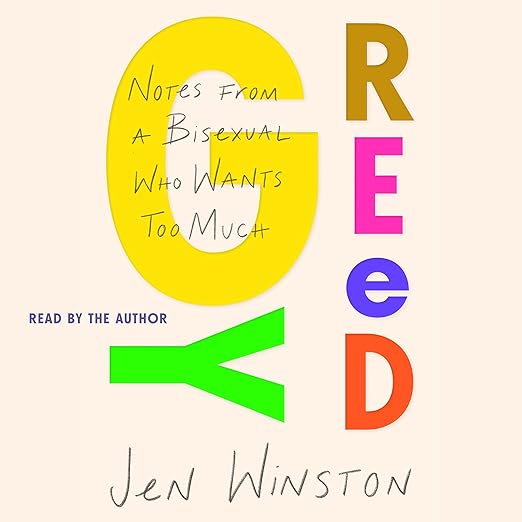
Greedy: Notes from a Bisexual Who Wants Too Much earned its Best Books of 2021 recognition across Oprah Daily, Glamour, Shondaland, and BuzzFeed through a combination of structural intelligence and genuine confessional bravery that most essay collections do not risk. As an audiobook narrated by Jen Winston herself, it becomes something more immediate than a book. Winston's voice has the quality of someone who has rehearsed these stories enough times that they feel lived-in rather than performed, and that quality, the sense that you are hearing something that cost something to say, is what makes the audio format the essential version of this particular work rather than a supplement to the print edition.
The collection opens with a deceptively simple question: is she bisexual? Winston is certain. Except when she is not. The essays that follow are not a linear answer to that question so much as a series of investigations into why the question keeps destabilizing itself, why identification as bisexual carries so much social and internal friction even for the person claiming it. If you have read Lindy West, Samantha Irby, or Rebecca Solnit, you will recognize the tradition Winston is working in, though her register is specifically and thoroughly her own and the subject she brings to that tradition has not been handled at this level before.
External Biphobia Versus the Internalized Kind
The essays cover significant ground across their seven and a half hours. The childhood girl crush essay is funny and slightly mortifying in the best way. The threesome quest essay, which Winston describes as an onerous undertaking, combines genuine comedy with a clear-eyed examination of what she was and was not actually seeking in that project. The sections on the male gaze, on how she had absorbed its logic into her own self-perception without fully realizing it, are among the most analytically precise pieces in the collection. Winston does not write about biphobia as something that happens to her from outside. She writes about the ways she internalized it and had to actively excavate it from her own thinking over years.
This is the book's most durable contribution: the distinction between external biphobia, the stereotypes about bisexuality as a phase, as greediness, as slutty confusion, and the internal version, the way those stereotypes embed themselves in the bisexual person's own self-narration. One reviewer describes it as changing their internalized biphobia, and another says it articulated feelings they had carried for years without language for them. That kind of impact is difficult to manufacture. It comes from specificity and from a writer who has done the actual difficult work of examining their own thinking without flattering themselves in the process.
Laughter and Reactions the Print Edition Missed
Winston self-narrating is not merely a bonus but a structural element of the experience. Her comic timing in the funnier essays is precise in a way that depends on her knowing exactly where she wants the laugh to land. Her voice in the more vulnerable sections, the parts about fear, about the specific anxiety of not being queer enough, about the loneliness of bisexual erasure even within LGBTQ+ spaces, carries a weight that a third-party narrator would struggle to access without the lived experience behind it. Several reviewers specifically mention that the audiobook version produced different emotional responses than the print reading, including laughter and emotional reactions that surprised them. That specificity is the case for audio over print.
The queer history and politics woven through the personal essays are accessible to readers without prior knowledge of bisexual theory or LGBTQ+ history, but reward listeners who bring some context to them. Winston writes about the research as part of her process, incorporating what she learned into the shape of her self-understanding, which means the intellectual and personal tracks reinforce each other throughout rather than alternating in separate sections as they might in a more academically structured collection.
A Molasses Pace in the Analytical Essays
The pacing across seven and a half hours is not entirely uniform. One reviewer notes that some essays move at what they describe as a molasses pace, and that is an honest observation. The collection includes pieces that are primarily analytical where the intellectual argument takes precedence over the comic or emotional propulsion. These sections are not weaker, exactly, but they require a different mode of attention than the funnier pieces, and some listeners find the gear shifts between registers slightly jarring on first listen.
The book was published in 2021 and reflects the cultural conversation of that particular moment. Listeners encountering it later may find that some of the cultural references, specific social media dynamics, specific visibility conversations, have a slightly dateable quality. The underlying arguments are durable; the texture of a few examples is time-specific.
Start With the Audiobook, the Print Comes Second
The bisexual and queer community will find this audiobook among the most honest and funny accounts of the specific internal terrain of bisexual identity available anywhere in the current catalog. Listeners who loved Samantha Irby or Lindy West and want a voice in that tradition addressing LGBTQ+ experience specifically will find exactly what they are looking for. Anyone who has made themselves smaller in response to a social script that told them they were too much will find the collection speaks to something beyond its specific subject. The self-narration makes this the recommended format without qualification. If you are deciding between print and audio, start with the audiobook and save the print for a second pass.
Before You Listen
Does Jen Winston's self-narration make this audiobook significantly better than reading Greedy in print?
Multiple reviewers who have done both strongly recommend the audio version. Winston's comic timing and emotional precision in the self-narration produce a different, richer experience than the text alone. Her delivery of the funnier essays in particular depends on beats that only she can place correctly. If you are deciding between formats, audio is the recommended starting point.
Is this audiobook appropriate for listeners who are not bisexual or queer?
Yes. The collection's central arguments, about internalized self-shrinking, about the gap between how you identify and how society allows you to identify, about refusing to be less than you are, have broad resonance. Reviewers across multiple identity positions have found the essays personally meaningful. The subject matter is specifically bisexual, but the emotional and intellectual terrain is widely accessible.
How explicit is the content in this audiobook, and does it affect the listening experience?
The book is candid about sexuality, including specific discussions of sexual experiences and desire, in ways that are frank rather than gratuitous. The tone is more analytical and comic than erotic. Winston discusses sex as a site of self-discovery and social performance rather than for shock effect. The audio version handles this material exactly as the text does, with Winston's particular blend of humor and seriousness.
Does this audiobook cover bisexual history and theory, or is it primarily personal memoir?
Both. Winston integrates research into queer history, bisexual theory, and the sociology of the male gaze throughout her personal essays. The intellectual content is woven into the memoir sections rather than segregated into separate chapters. Listeners come away with both an understanding of Winston's personal experience and a broader contextual framework for bisexuality as a political and cultural phenomenon.