Quick Take
- Narration: Virtual Voice AI narration handles the comic content competently but cannot capture the timing and warmth that this kind of family comedy demands.
- Themes: Multi-generational family travel, the gap between Italian fantasy and chaotic reality, the comedy of getting everything slightly wrong in a beautiful place
- Mood: Laugh-out-loud funny, chaotic, and genuinely affectionate
- Verdict: A light and genuinely funny family travel romp through Cinque Terre that does what the best travel comedy does: makes you want to go despite, and because of, all the chaos.
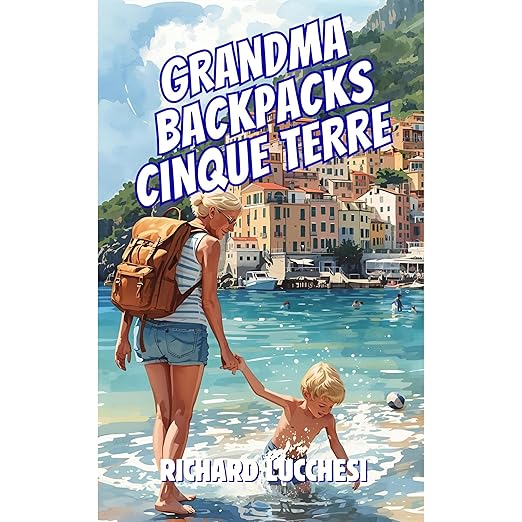
I want to start with the toddler. Because when a travel memoir decides to bring both an 85-year-old grandmother and a toddler to one of Italy’s most photographed and steeply terraced coastal regions, it has committed to a specific kind of comedy. Richard Lucchesi knows exactly what he has signed up for, and Grandma Backpacks Cinque Terre delivers on the implicit contract with the reader from the opening pages. This is the fourth book in the Under the Tuscan Blunder series, and by now Lucchesi has his rhythm.
The Cinque Terre as a setting for this kind of misadventure is inspired. The five cliffside villages of Riomaggiore, Vernazza, Corniglia, Manarola, and Monterosso al Mare are spectacular precisely because they are difficult: steep trails, crowded trains, gelato that costs more than it should, and a geography that punishes anyone who overestimates their fitness level. Add Grandma with nothing but a backpack, an unscheduled detour to Viareggio that nobody saw coming, and a toddler who has opinions about pesto, and you have the architecture for sustained comedy.
Our Take on Grandma Backpacks Cinque Terre
The book’s genuine achievement, beyond the obvious set pieces, is Grandma herself. One reviewer described her as unforgettable, sharp, fearless, and funny, deeply human without being sentimentalized, and that assessment holds. Lucchesi writes her with affection rather than condescension, which is the difference between family comedy that lands and family comedy that ages poorly. Grandma is not the butt of the joke; she is frequently its author. Her one-liners, delivered with the confidence of someone who has earned the right to say exactly what she thinks, are the book’s sharpest moments.
At two hours and forty minutes, this is a short listen, and the runtime is well-matched to the content. Travel comedy in this register works best when it does not overstay its welcome; the comic situations need room to breathe, but they also need to move before the reader’s patience with the chaos exceeds their amusement. Lucchesi manages this calibration effectively across four books in the series, and this installment is no exception.
Why Listen to Grandma Backpacks Cinque Terre
The book functions simultaneously as a comedy and as a legitimate travel portrait of Cinque Terre. Lucchesi writes the villages with enough specificity that readers who know the region will recognize their detail, and readers who are planning a visit will absorb genuinely useful atmospheric context alongside the comic chaos. The Viareggio detour is a particularly good example of how the book earns its travel memoir credentials; Lucchesi treats the unexpected side trip not as a failure but as evidence that the best travel stories are the unplanned ones.
The Virtual Voice narration is a missed opportunity here. This kind of family travel comedy depends heavily on comic timing, and AI narration cannot deliver the beats that make a well-set-up punchline land. A skilled human narrator with good comedic instincts would transform this into an extremely enjoyable audio experience; as it stands, the comedy comes through but at something less than full effectiveness. Listeners who find AI narration tolerable rather than distracting will still enjoy the content.
What to Watch For in Grandma Backpacks Cinque Terre
The multi-generational dynamics are what give the book depth beneath the comedy surface. Three generations navigating the same physical challenges produce not just comic contrast but genuine observations about how different ages experience travel, what each generation prioritizes, and how family bonds operate under the pressure of steep trails and full gelato cups. Lucchesi understands this and does not let the comedy crowd out the affection that motivates the whole enterprise.
The pesto and food content is more than set dressing. Liguria’s cuisine is the culinary anchor of the Cinque Terre region, and Lucchesi treats it with the respect it deserves even while finding the comic potential in a toddler’s relationship to trofie al pesto. Readers who appreciate the food dimension of Italian travel writing will find the culinary material genuinely engaging rather than merely atmospheric.
Who Should Listen to Grandma Backpacks Cinque Terre
Families who have survived their own chaotic multi-generational travel and want to laugh in recognition will find this deeply satisfying. Travelers who are planning a Cinque Terre visit and want something lighter than a guidebook to set the scene will also find it useful. Fans of the previous Under the Tuscan Blunder books will want this without needing any further recommendation. Listeners who need serious narrative stakes or literary ambition should look elsewhere; this is comic travel memoir that knows exactly what it is and executes it very well. The Virtual Voice narration is worth flagging for listeners who find AI delivery particularly off-putting.
Frequently Asked Questions
Does Grandma Backpacks Cinque Terre work as a standalone, or should I start from the beginning of the Under the Tuscan Blunder series?
It works as a standalone; Lucchesi provides enough family context to orient new readers. The comedy lands without needing prior series knowledge, though reading the earlier books enriches the Grandma character considerably.
How accurate is the portrayal of Cinque Terre for someone who is actually planning to visit?
The geographical and atmospheric detail is genuine; Lucchesi writes the villages, trails, and trains with specificity that reflects real experience of the region. The chaotic family experience is obviously particular to this group, but the setting details are trustworthy travel portrait material.
Is the Viareggio detour a significant portion of the book, and does it pay off comedically?
The synopsis treats it as one of the book’s comic highlights, and the review suggests Lucchesi handles unexpected travel detours as evidence of the best travel stories rather than failures. It appears to be a substantial and well-executed set piece rather than a minor aside.
Is this appropriate for listening with children, given the family travel theme?
The content is family-friendly; the comedy is situational rather than adult-oriented. Older children who have experienced family travel chaos will likely find it relatable and funny. Younger children may not follow the humor, but there is nothing inappropriate for family listening.